
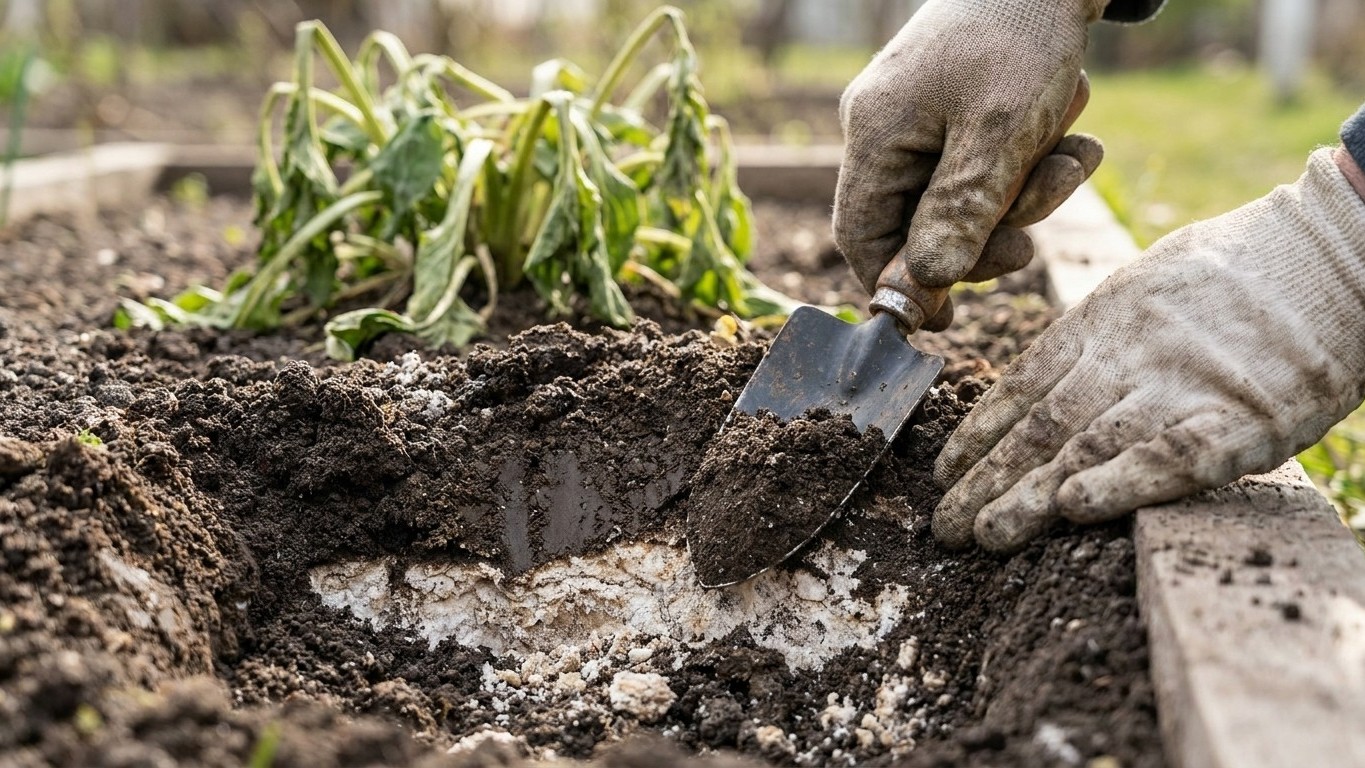
Six months. That’s roughly how long it took for a well-intentioned kitchen shortcut to turn a perennial bed into a scene of quiet die-off. The idea seemed harmless: instead of dumping the water used to boil pasta down the drain, why not pour it, once cooled, onto the flower beds? Reuse the water, feed the soil with a bit of starch, cut down on the hose bill. Then came the digging. Beneath the surface, where roots should have been drinking freely, sat a pale, hardened crust, unmistakable evidence of the one ingredient that never belonged in that watering can: salt.
Key takeaways
- A gardener’s well-intentioned kitchen shortcut created an underground salt crust that reversed water flow—making plants thirstier, not thirsty-free
- Salt works through osmosis to pull water OUT of roots and INTO the soil, while simultaneously starving plants of essential nutrients like potassium and calcium
- Recovery requires aggressive flushing with plain water over weeks, but the real lesson is knowing when kitchen scraps belong in the sink, not the soil
Why Salted Water Dehydrates Instead of Hydrates
The instinct to recycle cooking water isn’t wrong on its own. The problem starts the moment salt enters the picture, because most pasta recipes call for salting the boiling water, often generously, before the noodles ever go in. Horticulturist Andrew Gaumond has explained the mechanism plainly: if plants are given too much sodium, it can immediately affect the nutrient base in the soil negatively and also cause your plants to quickly dehydrate as the salt sucks out the moisture. That’s not a metaphor. Salt works by osmosis, and once sodium concentration builds up in the soil solution, the gradient that normally pulls water into roots reverses itself.
Cornell horticulture researchers describe this reversal as a kind of chemical drought: salt water directly damages plants by accumulating chloride and sodium ions that can be toxic as they accumulate in plants, and can also create a kind of chemical drought where water in roots can diffuse out into the saltier soil. watering a plant sitting in salty soil can make it thirstier, not less. Research on root physiology backs this up at the cellular level. Aquaporins, the membrane proteins that facilitate water transport across root cells, get downregulated under salinity, decreasing root hydraulic conductivity and overall water uptake. The roots are technically surrounded by moisture. They just can’t pull it in anymore.
The Soil Doesn’t Forgive: How the Crust Forms Underground
What looked like a whitish crust when the soil got scraped back wasn’t cosmetic. It was the visible signature of sodium reshaping the ground itself. In soils with high sodium content, soil particles can disperse, which degrades the soil’s structure, reduces its porosity and aeration, and ultimately decreases its ability to transmit water. Once that structure collapses, even plain water struggles to soak in properly, which explains why the perennials kept looking parched no matter how often the bed got a splash from the kitchen.
The scale of what’s needed to cause damage is smaller than most gardeners assume. Extension researchers studying winter road salt found that it just takes one teaspoon of salt in a five-gallon bucket of water before it starts to create problems. Applied repeatedly over months, even modestly salted pasta water adds up fast. Michigan State University’s landscape research shows a similar chain reaction happening at the root level: sodium chloride that builds up in the soil dissolves in water, creating separate ions of sodium and chloride, and sodium ions reduce root uptake of necessary plant nutrients, such as potassium, calcium and magnesium. The plant isn’t just dehydrated. It’s also nutritionally starved, because sodium physically competes with the minerals roots actually need.
Rescuing the Bed, and What to Do Differently
The good news is that salt doesn’t stay in soil forever if it’s given a way out. Salt is readily soluble and will leach out of the soil with successive rains, and a more porous, fast-draining soil will leach the salt faster. That means the fastest recovery plan is aggressive flushing: repeated deep waterings with plain, unsalted water, spaced out over several days, to push the sodium down past the root zone rather than leaving it concentrated where the roots sit. Improving drainage around the bed, working in compost or coarse sand where the soil has compacted, gives that leaching process somewhere to go.
Going forward, the fix is less about abandoning the habit of reusing pasta water and more about being honest at the pot. Several horticulture sources agree on the same bottom line: if you have heavily salted your water, it is best to forgo using it on your plants entirely. If the pasta pot must be salted for cooking, that batch of water belongs in the kitchen sink, not the garden bed. Unsalted pasta water, or water from boiling vegetables and rice, can still be diluted roughly half and half with fresh water and used sparingly, maybe once every couple of weeks, as a mild starch boost rather than a primary irrigation source. Watch for early warning signs before a full crust forms: root exposure to high sodium concentrations causes wilted foliage and stunted plant growth, because excessive salts in soil impede plants’ uptake of water and cause plant tissues to become dry and discolored. Wilting that shows up despite regular watering is the plant’s way of saying the water it’s getting isn’t actually available to it.
What makes this particular mistake sting is how counterintuitive it is. The whole point was conservation, doing more with less, and yet the soil ended up worse off than if the beds had simply been watered less often with plain tap water. Salt doesn’t announce itself immediately either. It waits, layer by layer, until the crust six inches down finally explains the months of stunted growth above it.
Sources : livingetc.com | waterquality.montana.edu