
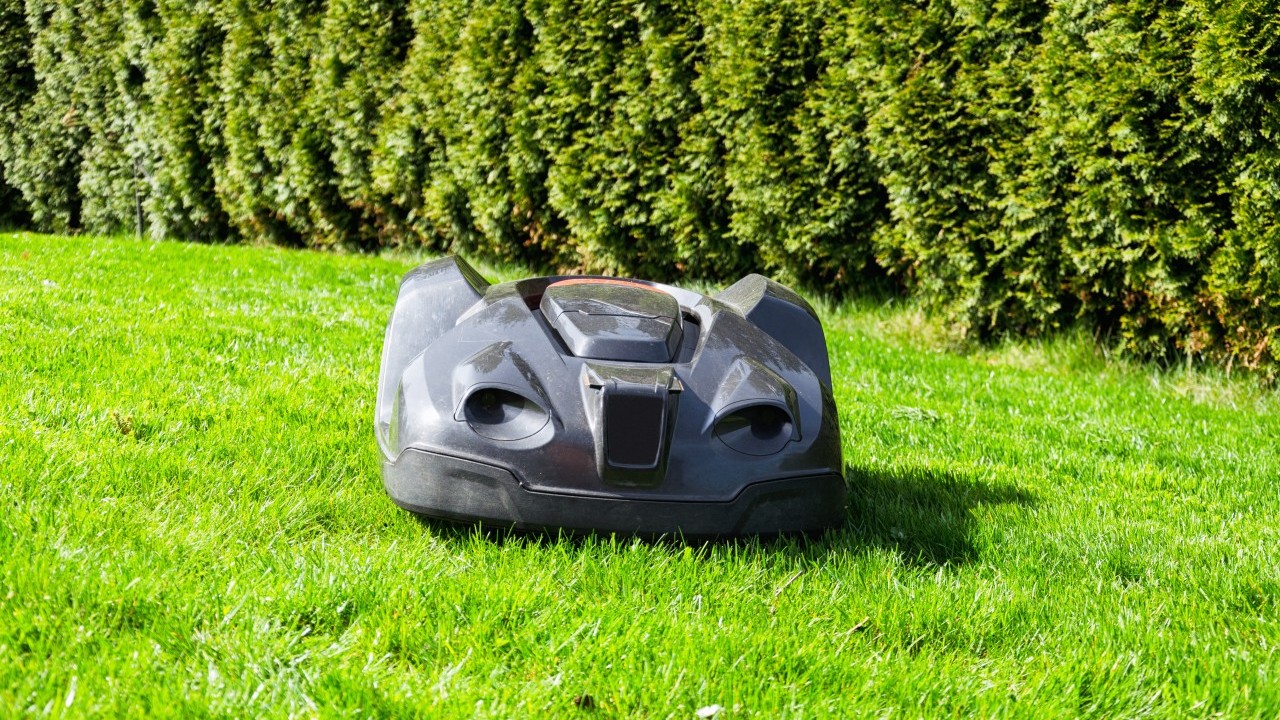
The morning routine started innocently enough: coffee, back door, a glance at the freshly trimmed lawn. The robot had done its job. But one July dawn, something small and motionless sat near the garden’s edge, a toad, badly cut. The next week, it happened again. By August, stepping outside at sunrise had become something close to dread.
Running a robot mower at night feels like the obvious move. The machine handles itself while you sleep, avoids the heat of the day, and nobody complains about noise. Manufacturers even lean into this selling point: unlike other electric lawn mowers, robotic mowers are allowed to be used at night, on Sundays, and on public holidays, precisely because of their low noise emissions. Convenient, and, as it turns out, quietly catastrophic for whatever lives in your grass.
Key takeaways
- Hedgehogs curl into a ball when threatened—the one instinct that fails against a machine that won’t stop
- Scientists found nearly 50% of injured hedgehogs didn’t survive, suffering alone for hours or days after accidents
- Major German cities are banning nighttime robot mower operation as hedgehog populations plummet 30% in a decade
A Garden at Night Is Not Empty
The fundamental mistake of the night-schedule approach is treating the garden as a patch of inert vegetation. It isn’t. At night, many small animals are most active, and your lawn is their territory, not yours. Amphibians like frogs and toads, which move slowly and often at night, along with pollinators resting in grass, are directly in harm’s way. These animals don’t recognize a robot mower as a threat. They have no reason to.
Hedgehogs face a particularly grim situation. Hedgehogs don’t flee in the face of danger, they curl up into a ball. This survival instinct, perfectly suited to foxes and owls, is catastrophically wrong against a machine that doesn’t stop for anything it can’t register as an obstacle. Unsupervised operation at night is particularly dangerous for hedgehogs, as they are nocturnal and do not run away from danger, but remain stationary and as quiet as possible. The mower rolls forward. The hedgehog holds its ground. The outcome is predictable.
Pollinating insects such as bees, bumblebees, and butterflies play a vital role in plant reproduction and ecosystem health. During the night or early morning, some species may rest in tall grass or among low-growing flowers. A robot lawn mower in operation at these times risks destroying their temporary habitat. These aren’t rare, exotic species, they’re the very creatures that make a garden function.
The Scale of the Problem, in Numbers
This isn’t anecdotal. Researchers at the Leibniz Institute for Zoo and Wildlife Research in Germany built a dataset of hard evidence. Scientists analyzed 370 documented cases of hedgehogs being injured by electric gardening tools in Germany. Almost half of the hedgehogs found between June 2022 and September 2023 did not survive the injuries. Most were only found hours or even days after the accidents. Hours or days, which means the animal suffered alone, undiscovered, while the mower continued its scheduled rounds.
As one researcher noted, “Cut injuries from robotic lawnmowers are placing an enormous burden on many hedgehog care centers and using up important resources, as these injuries often require above-average care and treatment.” The downstream cost of a single night-shift mowing session extends far beyond the garden fence.
The population context makes this worse. Hedgehog populations dropped by at least 30% over the past decade, pushing them onto the International Union for Conservation of Nature’s ‘near threatened’ red list in 2024. Thirty percent. That’s not a species bouncing back from a rough patch. This species is already in serious decline, with reasons including habitat loss, road traffic accidents, intensive agriculture, and injuries from dog bites and garden strimmers. Robot mowers are simply the newest item on a very long list of pressures.
Scientists also tested 18 different mower models directly. None of the robotic lawn mowers tested was able to detect hedgehogs without physical interaction, and none detected dependent juveniles. Not one. The sensor technology that stops a mower before it hits a patio chair simply doesn’t register a young hedgehog nestled in the grass.
Cities Are Now Drawing Lines
The response from policymakers has been unusually swift for a consumer product issue. Several German cities including Cologne, Leipzig, and Munich have already enacted local bans on nighttime operation. The city of Bochum went further: the municipality approved a night ban running from half an hour before sunset to half an hour after sunrise to reduce incidents involving hedgehogs.
Tens of thousands of people signed petitions backing these measures, reflecting broad public support for stronger wildlife protections in urban areas. The debate has moved well past niche conservation circles. Scientists are calling for political measures such as a ban on night-time operation to be implemented alongside more educational work directed at garden owners.
Manufacturers are also under pressure to respond. Research shows that specific technical features, pivoting blades, skid plates, and front wheel drive, significantly increase the safety index of robotic lawn mowers. Some newer models are beginning to incorporate improved obstacle detection. But scientists confirm that alternatives to current robotic mowers are technically feasible without entailing animal suffering, meaning the industry has the capacity to fix this. It’s a matter of will, not engineering limits.
What to Do Instead
The fix is genuinely simple. The main rule is to avoid operating the robot during nighttime and in the early morning hours, when hedgehogs and other animals are most active. Scheduling mowing during daylight hours drastically reduces the risk of accidents. Mid-morning to early afternoon is the window most wildlife experts point to, when nocturnal animals are tucked away and the garden’s daytime visitors are most predictable.
Beyond scheduling, the structure of the garden itself matters. A constantly short lawn significantly reduces biodiversity in the garden and offers numerous insects neither sufficient protection nor food. Leaving a corner unmowed, adding a log pile, or planting a strip of wildflowers costs nothing but creates habitat that more than compensates for whatever the rest of the lawn loses in tidiness. The lawn does not need to be mowed every day: a more moderate and sustainable use helps fauna and plant biodiversity.
Before any mowing session, the single most effective action is also the simplest: garden owners should check for any active hedgehogs, or other potentially vulnerable wildlife such as leverets, amphibians, or baby birds on the lawn before turning on the robotic lawn mower. Two minutes of walking the perimeter. That’s the entire intervention.
One fact worth sitting with: the robot mower market was already growing at over 12% annually through the mid-2020s, putting these machines in millions more gardens every year. The wildlife toll, if night-scheduling remains the default, scales with every unit sold. The same autonomous logic that makes these devices so appealing, set it, forget it, wake up to a perfect lawn, is precisely what makes unsupervised nocturnal operation a collective problem, not just a personal one.
Sources : izw-berlin.de | sciencedaily.com