
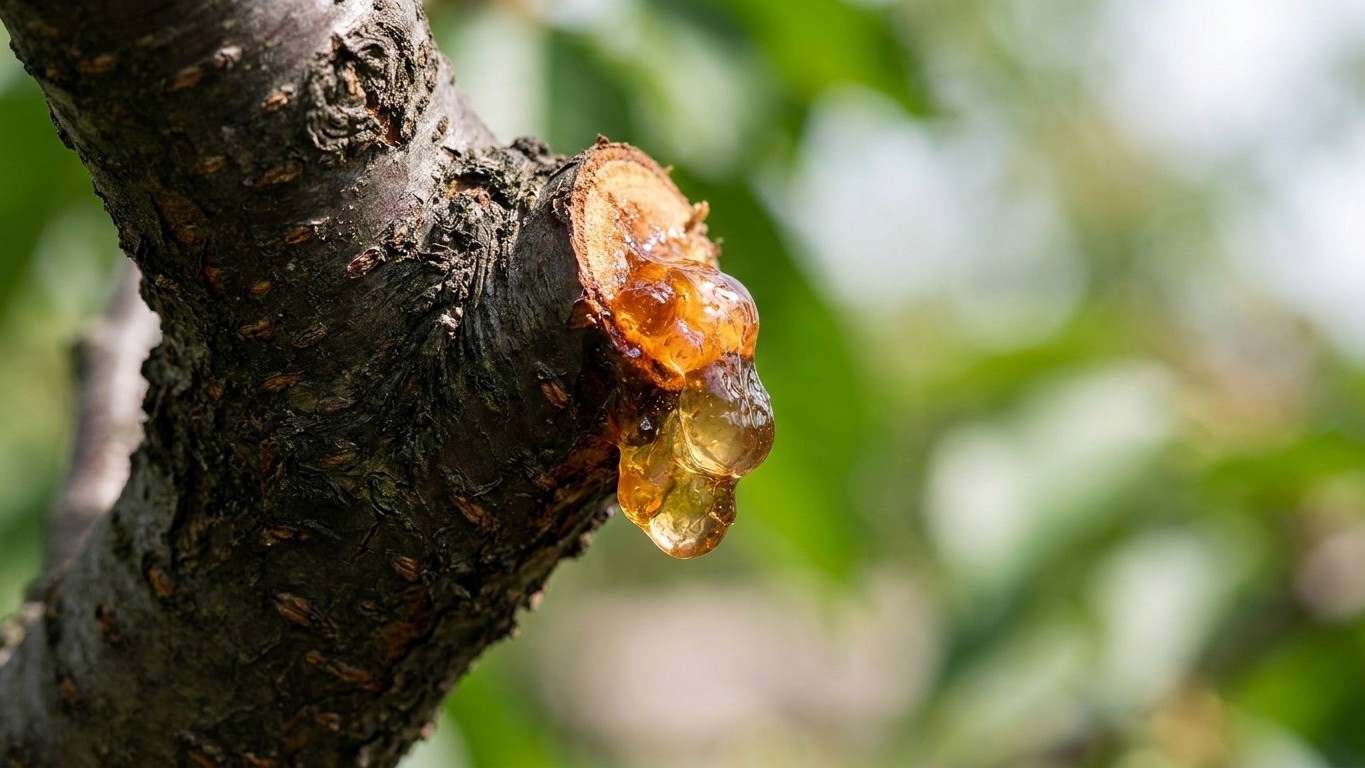
That sticky amber ooze wasn’t sap. It was a warning sign that arrived three months too late. If you pruned your cherry tree in January or February the same way you handle your apples and pears, and then watched a gummy, jelly-like substance seep from those cuts once the weather warmed, you likely triggered one of the two diseases that make Prunus trees notoriously unforgiving: bacterial canker or silver leaf disease.
Here’s what most home gardeners don’t realize: the rule that works for nearly every other fruit tree in the orchard does not apply to cherries. Prune cherry trees in mid to late summer, ideally July to August, and never in winter, since cold, damp cuts invite silver leaf disease and bacterial canker. Apples and pears tolerate, even prefer, a dormant winter cut. Cherries punish it.
Key takeaways
- A common gardening rule works for almost every tree except cherries—and the consequences arrive in spring
- That mysterious amber gum weeping from branches tells a story that started months earlier with a winter cut
- One specific two-month window each year is the only safe time to touch your cherry tree with pruning shears
Why the classic winter-pruning rule backfires on cherries
The logic behind pruning most trees in winter is sound: the plant is dormant, sap isn’t flowing, and the tree suffers less shock. But cherries, plums, and their Prunus relatives play by different biological rules. Winter pruning creates open wounds during peak disease season and significantly increases the risk of silver leaf disease and bacterial canker. The timing mismatch is the whole problem, not a minor detail.
Silver leaf disease, caused by the fungus Chondrostereum purpureum, is the first culprit. The fungus produces airborne spores from autumn through spring. These spores land on fresh wounds, pruning cuts, broken branches, damage from ties or stakes, and germinate if conditions are right. A cut made in January sits open and vulnerable for weeks during exactly the window when spore pressure is highest. Pruning cuts are most susceptible within 1 week of wounding, and after infection, fungus growth is systemic. By the time silvery, discolored foliage shows up on a branch, the fungus has already been quietly colonizing the wood for months.
Bacterial canker works on a similarly cruel schedule. Cankers develop when the bacterial cells gain entry through wounds or leaf scars at the time of leaf fall, then remain more or less dormant through summer and during autumn and winter when temperatures are low. In spring, the infections spread rapidly, killing the bark. So the infection didn’t start in spring when you noticed the ooze. It started the moment you made that winter cut, and simply waited for warmer, wetter conditions to explode.
What that amber gum was actually telling you
Gum oozing from bark isn’t automatically catastrophic. Gum production, or gummosis, from the bark of Prunus species is actually quite common. But when it appears at pruning sites in a sudden, heavy flow, especially amber-colored and jelly-like, it’s rarely just cosmetic. Symptoms of the disease include branch dieback, rough, irregularly shaped cankers and amber-colored gum.
The tree gives other clues too, usually before the gum shows up. Infected flowers often open but then collapse. Infected leaves become spotted and yellowed, and the centers of leaf spots often shothole. If spotting is severe, leaves may fall off. Miss those early signals in April, and by the time the trunk is weeping visibly, the bacteria have often already colonized well beyond the original wound. The infected trees ooze gummy fluid, leaves droop, and entire limbs may be girdled by the cankers. Left unchecked, the outcome is bleak. If you let things go too far, the bacterial canker and gummosis will take over the tree. When there is gummosis all over the tree, in its trunk, branches and even roots, you will have to cut the tree down.
How to actually prune a cherry tree, starting next season
The fix isn’t complicated, but it does require unlearning a habit. Put the loppers away in winter and wait. Summer, specifically July through August, is best for sweet cherries to prevent silver leaf disease, ideally right after you’ve harvested the fruit. That timing isn’t arbitrary: warm, dry conditions in mid-summer are precisely when the fungal spores are least active and when the tree’s own defenses are strongest.
A few practical habits make the difference between a healthy tree and a repeat disaster:
- Prune only in dry weather, never right before or after rain, since wet cuts are an open invitation for bacteria.
- Disinfect blades with rubbing alcohol or a diluted bleach solution between cuts, especially if disease is already present.
- If you spot a canker, cut well below it into clean wood rather than trimming right at the visible damage.
That last point matters more than people expect. Be sure to cut at least two inches before the canker appears on the branch as the pathogen may also be hidden inside the branch, and once you remove the diseased wood, dispose of it in a sealed bag. Composting infected prunings simply relocates the problem to next year’s mulch pile. Do not put it in the compost, where bacterial canker can continue to spread.
If your tree has already lost a branch or two to canker, don’t panic and don’t necessarily reach for the chainsaw. Trees can often outgrow a limited, early infection once the diseased wood is properly removed and the rest of the pruning schedule is corrected. What won’t help is applying the same winter routine again next January out of habit. Some cherry cultivars carry a genuine advantage here. The cherries ‘Merton Glory’, ‘Merton Premier’, ‘Merla’ and ‘Merpet’ have some resistance to bacterial canker, something worth asking about the next time you’re choosing a replacement tree for the yard.
Sources : gardeningknowhow.com | orchardpeople.com