
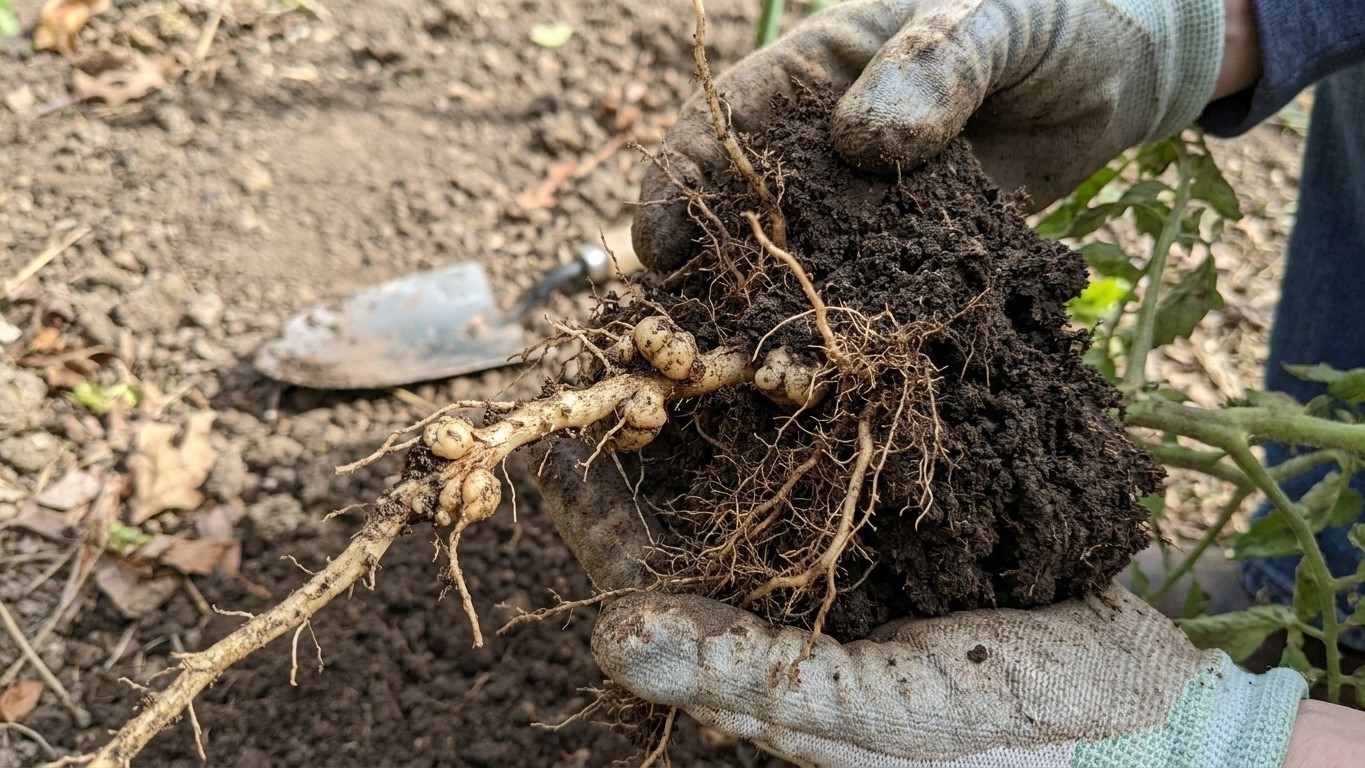
By the time you spot the wilting, curled leaves and the fruit that refuses to ripen, the damage is already done underground. Pulling a struggling tomato plant to check its roots is often the only way to understand why a season went wrong, and for a lot of home gardeners, what they find is not rot or dry soil, but knots. Dozens of them, swollen and bulging along roots that should be thin and white. That’s the telltale sign of root-knot nematodes, and once they’ve settled in, there’s no quick fix.
Key takeaways
- A microscopic soil pest is silently destroying tomato roots while the plant shows symptoms you’ve probably blamed on watering or disease
- The damage you find when you finally dig up a struggling plant has already spread to surrounding soil, creating a slow-motion garden disaster
- There’s no magic cure once they arrive, but three proven strategies can break the cycle—if you know them before next season
The microscopic culprit hiding beneath every failed harvest
Root-knot nematodes are not insects or fungi. They’re tiny ‘eelworms’ that live in soil and become plant parasites when they use tomato roots as their nurseries, often entering through small injuries. Once inside, the damage compounds fast. As their numbers multiply, small feeder roots are destroyed, and irregular galls take their place. Those galls aren’t a symptom you can treat topically. They’re literal tissue deformities, the root’s structure hijacked to feed something else.
The plant above ground pays the price in ways that mimic almost every other tomato problem, which is exactly why so many gardeners misdiagnose it for months. Infected plants are stunted, appear yellow or pale green in color, and wilt easily, even when soil moisture is adequate. That last detail trips people up constantly. You water diligently, the soil feels right, and the plant still droops by afternoon. It feels like betrayal. In reality, the roots simply can’t move water anymore because the plumbing has been rerouted into swollen dead ends. These galls interfere with the flow of water and nutrients to the plant; infected plants are less vigorous than healthy plants, may be yellowed, are prone to wilt in hot weather, and respond poorly to fertilizer.
Here’s the frustrating part: by the time you pull the plant to inspect the roots, the infestation is usually already established in the surrounding soil, not just in that one plant. Because root knot nematodes don’t move far in the soil without human help, neighboring plants may be infected while those at the end of the row remain healthy. So checking one struggling plant can reveal a much bigger, slower-moving problem across the whole bed.
Why tomatoes are practically an open invitation
Tomatoes didn’t get unlucky by accident. Tomatoes and peppers are moderately susceptible to root knot nematodes, in part because they thrive in the same hot summer conditions that please nematodes. Warm soil speeds up the nematode life cycle, so a hot July, exactly the kind of stretch that pushes tomato plants toward their peak, also happens to be prime real estate for the pest that’s quietly girdling their roots. Soil texture matters too. Damage areas usually appear as irregular patches and are frequently associated with sandy or coarse-textured soils. Loose, sandy ground lets the microscopic worms move more freely between root systems than dense clay would.
The scale of the problem is bigger than a single backyard bed. Root-knot nematodes are widely distributed and highly destructive plant parasitic nematodes, causing an estimated 78 billion USD in crop losses annually. That’s not a niche gardening annoyance, it’s a global agricultural headache that happens to show up in raised beds and containers too, just at a smaller scale.
What you can actually do once you’ve found the galls
Confirmation comes down to a visual check, ideally under decent light. A root-knot nematode problem can be confirmed only by physically examining the roots for knots or by a laboratory test. If you see smooth, undamaged roots, the wilting is coming from somewhere else, watering habits, a nutrient gap, maybe a fungal issue. But swollen, bumpy roots that don’t feel like normal fibrous tissue mean you’re dealing with nematodes, and the plant you just pulled isn’t coming back either way.
For soil that’s already infested, cleanup matters more than any single treatment. Pull up badly infected tomato plants, lop off the roots, and dispose of the roots in the trash, then compost the rest. Leaving infected roots in place, or worse, tilling them further into the bed, just spreads the population around for next season. Rotation helps too, though it demands patience most home gardeners don’t love. Starving nematodes works through two-year crop rotations with resistant crops, or with clean, weed-free fallow. That’s a long wait when all you want is next year’s tomatoes, but it’s the difference between managing the problem and fighting it forever.
Resistant varieties are the most practical long-term move for anyone who’s dealt with this once and doesn’t want a repeat. Most processing and a few fresh market tomato varieties are resistant to nematodes and should be used whenever the garden’s history suggests a risk. Container growing offers another workaround entirely, since using minimum 20-gallon containers with fresh, high-quality potting soil lets you place the container right on top of old nematode-infested soil, with the new soil creating a barrier. It’s not glamorous advice, but it works, and it turns a ruined season into a lesson instead of a recurring disappointment.
One detail worth remembering before next spring: soil amended with chitin-rich materials, think crushed eggshells or seafood meal, feeds the very microorganisms that prey on nematode eggs, turning your compost pile into a quiet first line of defense long before the tomatoes ever go in the ground.
Sources : frontiersin.org | growtomatoeseasily.com