
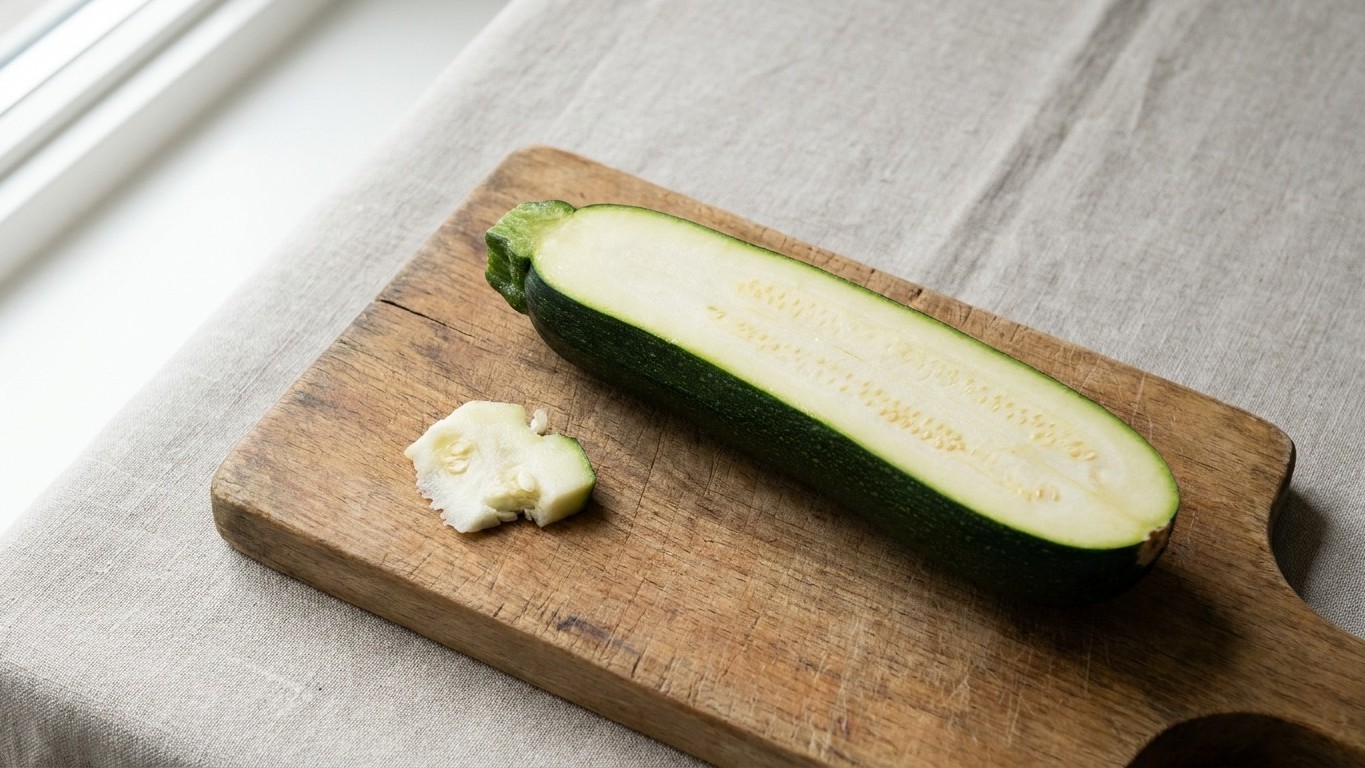
One bite. That’s all it took to know something had gone wrong in my garden. The zucchini looked perfect, glossy, dark green, the same size I’d been harvesting all summer. Then the bitterness hit, sharp and chemical, nothing like the mild vegetable I’d grown for years from my own saved seeds. I spat it out immediately, and it turns out that instinct probably saved me a very unpleasant week.
What I’d stumbled onto has a name: toxic squash syndrome. It’s rare, but real, and it starts with a group of compounds called cucurbitacins that occur naturally throughout the gourd family. Cucurbitacins are toxins naturally found in plants belonging to the Cucurbit family, the plant family that includes squash, pumpkins, zucchini, cucumbers, melons and gourds, and it is thought that these toxins serve as a natural defense mechanism for the plant against insects and herbivores. Wild squash relatives are loaded with the stuff. Domestic zucchini, the kind we actually want to eat, has had it bred out over generations.
That’s precisely why my bitter fruit was such a red flag. Over the years that humans have been developing cucurbit varieties, cucumbers, melons, squash and pumpkins lines have been selected to be free of high levels of these extremely bitter compounds, so modern-day varieties of zucchini and other cucurbits should generally be free of cucurbitacin in fruit. When one plant breaks that pattern while its neighbors, grown from the exact same seed packet, stay perfectly sweet, something genetic happened along the way. And that something almost always has a name: cross-pollination.
Key takeaways
- A gardener’s homegrown zucchini suddenly tasted horrifyingly bitter, triggering an investigation into a rare but real threat
- Bees don’t respect garden boundaries—they can carry pollen from ornamental gourds miles away, reactivating toxic genes in your vegetables
- Cooking won’t help: cucurbitacins survive heat, and even small amounts can cause severe poisoning, hair loss, and organ-damaging effects
How a bee turns your zucchini into a stranger
Zucchini doesn’t pollinate itself quietly. Squash, pumpkins, gourds, cucumbers, and melons are insect-pollinated, and they have separate male and female flowers, which increases the chances that the female flower may be fertilized with pollen from a different variety of the same type or species. Bees don’t care about my carefully labeled rows. They fly from flower to flower, mixing pollen from whatever happens to be blooming nearby, whether that’s a neighbor’s ornamental gourd or a scraggly wild patch growing behind the shed.
The tricky part is the timing. Cross-pollination doesn’t ruin the fruit you’re eating that season. When crosses occur between members of the same species, we do not see the effect of the cross in the first year, because the genome of the plant determines the qualities of the fruit, but the seeds inside that fruit are determined by the results of pollination, so if cross-pollination occurs, half of the seed’s DNA comes from one variety and half from another, and if the seeds are saved and planted, the plants will produce fruit that will be different from either of the parents. last year’s zucchini tasted fine. It was the seeds hiding inside it that carried a genetic surprise, waiting for spring.
And zucchini has a wide circle of potential suspects. Zucchini, yellow crookneck, acorn squash, spaghetti squash, patty pan, delicata, pumpkins and gourds can all cross with each other, though cucumbers, watermelon, and loofah gourds only cross with themselves. If a neighbor down the block grows decorative gourds for their fall porch display, or if a volunteer plant sprouts from last year’s compost pile, that’s enough exposure for a bee to do the damage. Cross-pollination with wild or ornamental varieties from the Cucurbitaceae family is a key factor, and many ornamental pumpkins, while very attractive, are not edible and contain extremely high levels of cucurbitacins.
Why “just a little bitter” is not a risk worth taking
I’ll admit part of me wondered, standing at the sink, whether I could just cut around the worst part and cook the rest. Bad idea, and not a small one. Cooking does not destroy cucurbitacins, so if you detect any bitterness in squash, zucchini, cucumber, or other gourd family vegetables, it’s best to discard the entire vegetable. Heat, seasoning, sauce, none of it neutralizes the compound.
The health consequences aren’t theoretical, either. A couple of grams of extremely bitter squash can cause diarrhea and stomach cramps that can last for up to three days. In 2018, doctors documented something even stranger: the first two reported cases linking the consumption of bitter-tasting gourds with hair loss. The mechanism isn’t fully understood, but toxicologists have noted the compound can affect the body in ways similar to certain chemotherapy drugs when consumed in high enough doses.
There’s a useful distinction here between the ordinary mild bitterness caused by a hot, dry week in July and the alarming kind. Mild bitterness in zucchinis or cucumbers is not uncommon and can be caused by environmental stress like high temperatures, drought, or uneven watering, and with a mild bitterness due to environmental conditions you would expect all plants in the garden to show the same problem to some extent since they all faced the same environmental stresses. My situation was different. Only one plant, out of a dozen sharing the same bed, the same water, the same sun, turned bitter. That’s the genetic signature, not the weather.
Researchers in Nebraska documented an almost identical scenario. Of twelve zucchini grown in a Nebraska garden only one plant produced very bitter fruit, and since all plants originated from one seed packet, were planted in the same location and received the same amount of water, simple environmental stresses could not be the culprit. The explanation, as with mine, traced back to a single dominant gene reactivated by a stray cross with a wild or ornamental relative.
What I’m doing differently this year
The advice from every extension office I checked was blunt and consistent: do not save seed from plants that produced extremely bitter fruits. I pulled that plant immediately, seeds and all, and I won’t be planting anything from that batch again.
Going forward, isolation is the whole game. Susan Ashworth’s book “Seed to Seed” recommends that any cucurbits grown for seed should be a half mile from any other in the same species. That’s not realistic for most backyard gardens, mine included, but shorter distances combined with some vigilance go a long way. To prevent cross-pollination between compatible types or varieties, they need to be separated by a distance of one-half to one mile, though the presence of barriers such as large buildings, a thick stand of trees, or a hill can inhibit pollinator movement and allow for shorter isolation distances.
I’ve also started doing what plant breeders call a taste test before saving any seed at all, snapping off a tiny sliver of raw flesh and tasting it before committing a fruit’s seeds to next year’s envelope. It costs nothing and takes ten seconds. Given that symptoms of cucurbitacin poisoning typically appear within 5-30 minutes after consumption and include severe vomiting, diarrhea, and intense abdominal cramps, that ten-second habit feels like the cheapest insurance policy in the whole garden.
What surprised me most wasn’t the danger, which is genuinely rare, but how invisible it was until the exact moment it mattered. A perfect-looking zucchini, indistinguishable from the ones I’d eaten all summer, was carrying a gene traced back to a wild ancestor from generations before it ever reached my garden bed. Somewhere out there, a decorative gourd on someone’s porch may have started the whole thing with a single visit from a bee neither of us ever saw.
Sources : permies.com | extension.sdstate.edu