
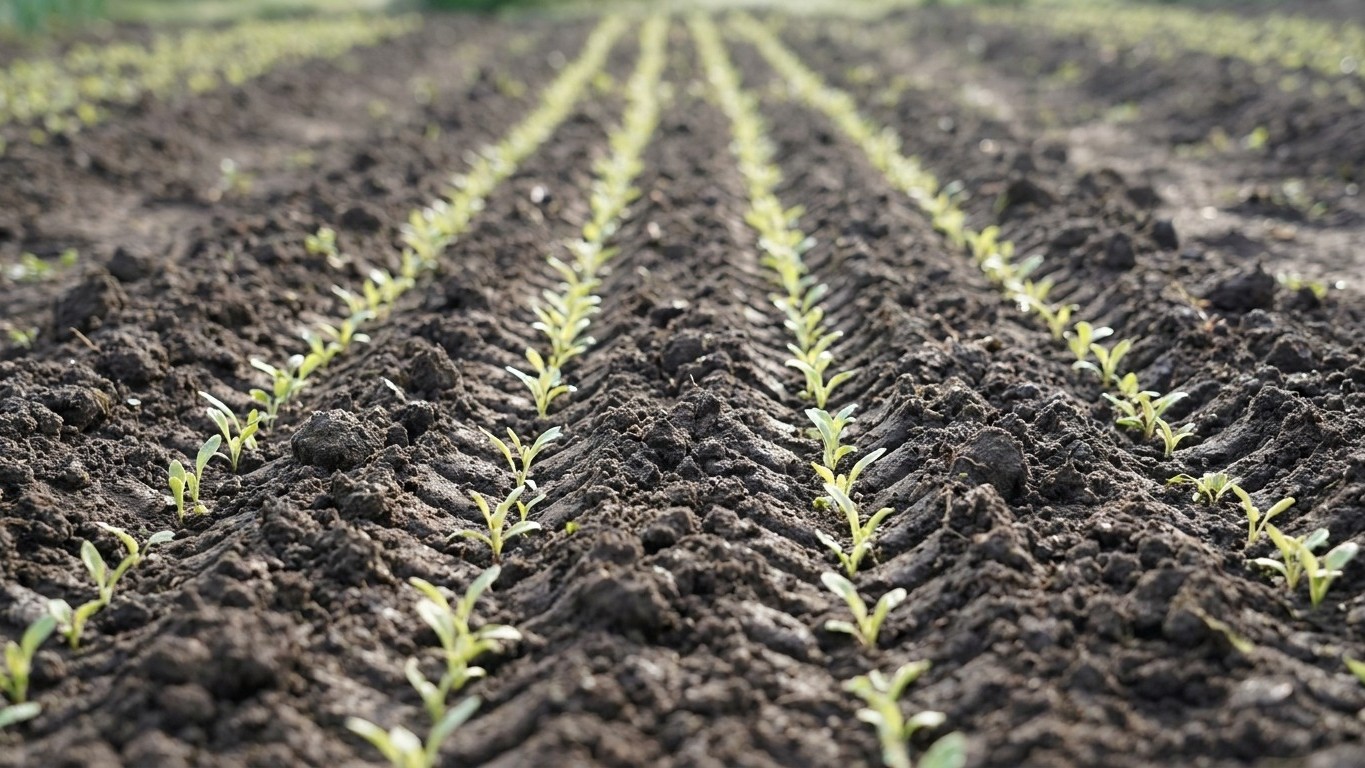
That’s not a mystery. It’s biology. Every time a garden fork bites into the soil and turns it, it drags dormant seeds up from the dark and into the light, and light is often the exact signal those seeds have been waiting years to receive. The vast number of dormant seeds stored in the soil, known as the soil seed bank, can hold thousands of weed seeds per square foot, and most of these seeds are naturally buried deep within the soil profile, requiring specific environmental cues to break their dormancy and germinate. Autumn forking supplies exactly those cues. Then winter passes, spring warms the beds, and up they come, in perfect rows, because that’s where the fork went.
Key takeaways
- Forking the soil brings dormant weed seeds to the surface where light, warmth, and nutrients trigger mass germination
- Weeds line up in exact rows because firmer, disturbed soil creates ideal germination conditions along the fork lines
- No-dig beds with compost mulch produce comparable or better yields while dramatically reducing seasonal weed problems
The soil remembers everything you never planted
Think of garden soil as an archive rather than an empty container. Birds drop seeds, wind carries them in, old weeds set seed years before you ever bought the property, and all of it settles into layers, waiting. Tilling dramatically alters the soil profile, bringing dormant seeds from lower layers up to the surface where they find the exact conditions needed for mass germination. That’s not a coincidence tied to bad luck with a particular autumn. It’s the predictable outcome of disturbing ground that has been quietly banking seeds for decades.
Certain species respond to this exposure almost eagerly. Species like common ragweed, pigweed, and lambsquarter are highly responsive to this surface exposure, resulting in a large flush of new seedlings shortly after the soil is disturbed, and this process explains why a freshly tilled area is often quickly overrun by new weeds. The mechanical action of forking, does part of the sowing for these plants without anyone intending it. Depth matters too. The depth and timing of the tillage directly influence which species are activated, with shallow cultivation generally stimulating the germination of small-seeded weeds, while larger-seeded species have sufficient energy reserves to push through a greater depth of soil. That’s why the row where the tines went deepest often looks different from the row barely scratched.
Light isn’t the only trigger at work. Many weed seeds also respond to temperature and moisture fluctuations, increased aeration, and increased release of nitrate and other soluble nutrients that occur in tilled soil. A freshly turned bed is, essentially, a five-star hotel for dormant seeds: more oxygen, more warmth swings, more nutrients suddenly available near the surface. Many weed seeds, especially smaller-seeded annual broadleaf species, germinate in response to stimuli that indicate that the soil surface has been disturbed and cleared of competing vegetation. The fork isn’t just moving dirt. It’s ringing a dinner bell.
Why the weeds line up exactly where the fork went
Gardeners often notice that the mystery seedlings track the forked lines with uncanny precision, and that pattern has a mechanical explanation rather than a mystical one. Firmer, disturbed soil actually improves conditions for germination in a way loose ground doesn’t. Adequate soil moisture is critical for germination, and good seed-soil contact is also important in facilitating the moisture uptake that is required to initiate the process, so more weeds may emerge from a firmed soil surface than from a loose, crumbly, or fluffy soil surface. Field studies back this up with real numbers. Densities of common chickweed and common purslane in seeder tracks, in the crop rows, were roughly double those over the rest of the field, according to research by Caldwell and Mohler. Swap “seeder tracks” for “fork lines” and the pattern in a home vegetable bed makes complete sense.
There’s a seasonal wrinkle too, one that explains why autumn forking specifically sets up a spring problem rather than a winter one. Tillage warms up the soil and brings some buried weed seeds to the surface where they are exposed to more light and heat, and small-seeded annual weeds such as lambsquarter, pigweed, and common ragweed are very responsive to this. The seeds sit through winter cold, primed, and the moment spring soil temperatures climb, they fire. An autumn dig essentially schedules a weed germination event for several months later, timed almost perfectly with when the gardener is busy planting everything else.
What actually breaks the cycle
The instinct to fork every autumn usually comes from a good place: loosen compacted soil, aerate it, get it ready. But the tradeoff is real, and a growing body of comparative gardening research suggests the opposite approach works better for weed pressure specifically. When you dig and till soil beds, the chances of weeds being brought to the surface are significantly increased. Long-running trials comparing dug and undug beds, most famously the ones run by market gardener and author Charles Dowding at his UK smallholding, have tracked this over years rather than a single season. In terms of yield, the RHS found that no-dig yielded comparable or better results for brassicas and legumes, while Dowding’s study suggested leafy greens and tomatoes eventually produced as much as 15% higher yields after a few years of being established, though root vegetables initially lagged before catching up within two to three years.
The mechanism behind fewer weeds in undisturbed beds isn’t just about seeds staying buried, though that’s the biggest part of it. Undisturbed soil does not need to grow weeds to recover, because weeds grow partly to heal damage done by cultivation. A bed that’s mulched with compost rather than turned every fall skips that repair cycle entirely, since there’s no wound to heal in the first place. Keeping seeds buried while smothering existing weeds with layers of organic matter reduces maintenance time and eliminates the need for herbicides. For anyone tired of the mystery seedling parade every spring, swapping the annual fork-over for a thick topping of compost, applied without digging it in, tends to be the single biggest change that stops the pattern.
None of this means every dig is wasted effort. Severely compacted clay or a bed being reclaimed from turf sometimes genuinely needs one hard pass to break through a crust. But for beds already in rotation, a light hand and a heavy mulch layer will do more to keep rows clean than another season of turning soil that’s already holding its shape just fine.
Sources : sciencedirect.com | growiwm.org