
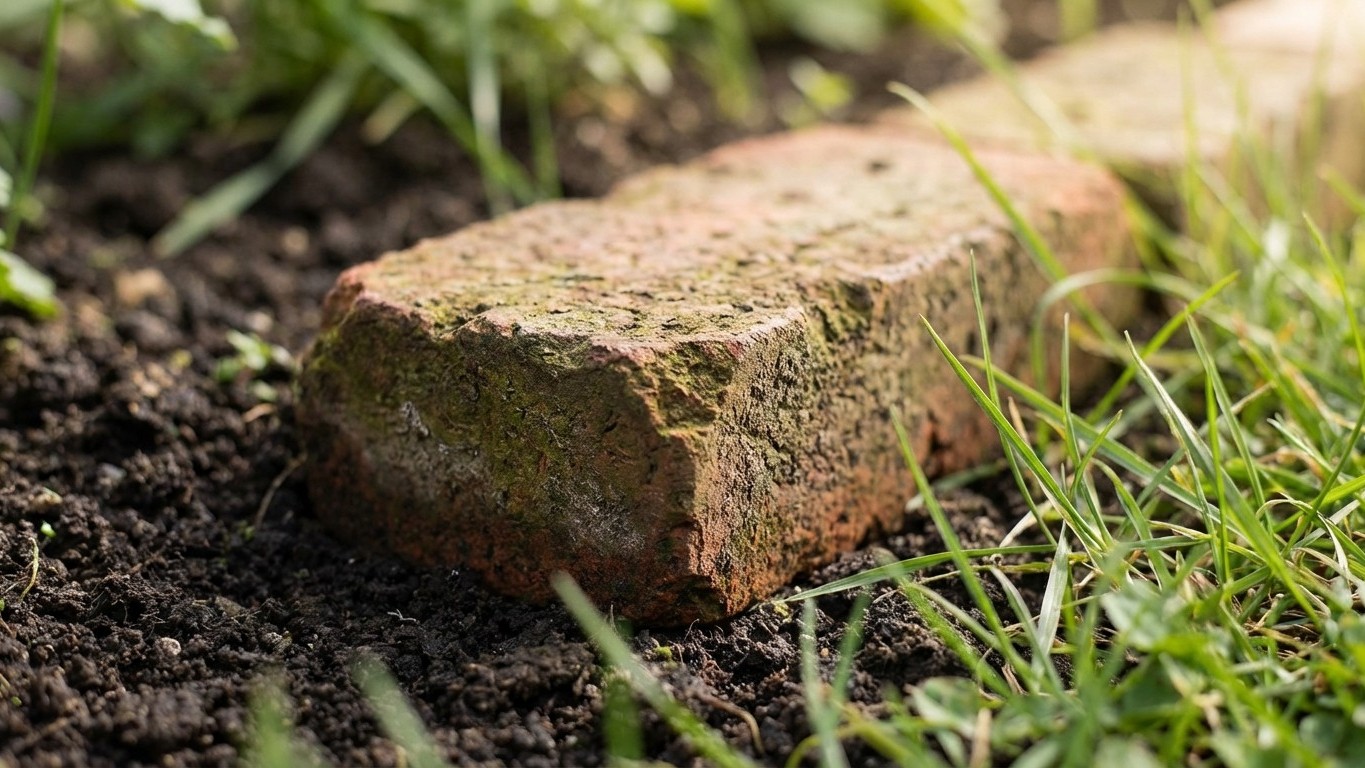
Behind a tangle of overgrown weeds and a forgotten bag of potting mix, they were just sitting there. Thirty-two old clay bricks, slightly uneven, their edges worn soft by decades of weather. That afternoon changed how I think about garden edging entirely, because what I’d been spending money on at the hardware store was, at best, a pale imitation of what I already had for free.
Garden edging is one of those small things that quietly makes or breaks a yard. A clean border between lawn and bed signals intention. It tells anyone who looks that the garden is cared for, not just maintained. And yet the plastic strips sold for this purpose, the ones that crack after two winters and fade from black to a sad grayish-brown — do the job poorly while looking worse over time. Old bricks do neither of those things.
Key takeaways
- What one gardener found behind their shed costs nothing but creates edging that lasts decades
- Why Victorian gardens still look impeccable while modern plastic borders fade and crack within years
- The simple installation technique that takes less than an hour but requires one crucial step most people skip
Why Bricks Work Better Than You’d Expect
There’s a reason Victorian-era gardens still look structured in archival photographs: they used salvaged brick and stone to define their beds. The material doesn’t flex, doesn’t degrade in UV light, and develops a patina over time that Actually improves its appearance. New plastic edging ages into ugliness. Old brick ages into character.
The weight alone is worth talking about. A single standard clay brick weighs around 4.5 pounds. That mass keeps it in place through freeze-thaw cycles that would pop a plastic strip right out of the ground. Grass roots, which apply surprising lateral pressure over a season, can work their way under lightweight edging and lift it. They don’t move brick.
Drainage, too, works in brick’s favor. Solid plastic edging creates a minor dam effect, sometimes redirecting water in ways that waterlog plant roots. Bricks placed with small gaps between them, deliberately or just from slight misalignment, let moisture pass through without pooling. Your garden ends up better hydrated, with none of the extra management required.
How to Actually Lay Them Properly
The technique matters here, and there are a few approaches depending on the look you want. The simplest is to lay bricks flat along the border, half-buried in the soil. This creates a low, clean edge that’s easy to mow over, the lawn mower wheel can ride along it without catching. It’s subtle and, honestly, very elegant in the right setting.
The more dramatic option is to set bricks on end at a 45-degree angle, creating a sawtooth pattern. This style shows up constantly in restored cottage gardens and heritage properties, and with good reason: it maximizes height with minimal material, creates strong visual rhythm, and is surprisingly easy to install once you get the rhythm of it. Dig a shallow trench, set each brick at the same angle, backfill, done.
Whatever method you choose, start with a taut string line. This sounds obvious, but it’s the step most people skip, and it’s the reason most DIY edging ends up looking more like a river than a border. Ten Minutes spent running a guide string saves an hour of second-guessing later. Compact the base of your trench lightly before you begin, a stable, level foundation is what separates a lasting edge from one that starts tilting by fall.
For curved sections, reduce the gap between bricks slightly and lean each one a degree or two inward on the curve. Brick is rigid, but the gaps between units give you enough flexibility to follow gentle arcs. Tight curves require cutting bricks, which means a cold chisel or a diamond blade, manageable, but worth planning ahead so you’re not improvising mid-project.
Where to Find Old Bricks (If You Don’t Have Any)
Not everyone has a lucky pile behind their shed. But old bricks are, in my experience, one of the easiest free or near-free materials in the home improvement ecosystem. Demolition sites often have pallets of them available for the hauling, a contractor I know says he posts them on local neighborhood apps within hours of a teardown because he’d rather someone takes them than pay to dump them.
Facebook Marketplace and Craigslist are the obvious digital routes, and searches for “old bricks free” in most metropolitan areas return results within days if not hours. Estate sales, especially in older neighborhoods, frequently include accumulated building materials. A single suburban house renovation can yield two hundred bricks or more, all of them pre-weathered, pre-beautiful, ready to be repurposed.
Reclaimed brick dealers exist in most cities too, particularly in areas with older housing stock. Prices vary, but you’re typically looking at twenty to forty cents per brick for common reclaimed clay, a fraction of what you’d spend on even mid-range commercial edging products for the same linear footage. And unlike that plastic roll, the bricks will outlive you.
The Aesthetic Argument Nobody Makes Loudly Enough
Garden design conversations tend to focus on plants, which perennials to pair, where to put the shade lovers, how to sequence bloom times through the season. Hardscaping elements like edging get treated as afterthoughts, background details. That’s a mistake, and old brick exposes it immediately.
A bed edged in weathered clay brick looks like it belongs to someone who knows something. There’s a specificity to it, a sense that choices were made deliberately rather than grabbed off a hardware store shelf. Visitors notice it Without knowing why, the brain reads permanence and interprets it as craft. Your garden looks older, more considered, more interesting, all from material that was sitting in a pile doing nothing.
There’s also something worth sitting with here: in an era when everything disposable is marketed as convenient, reaching for the durable thing requires almost no extra effort and costs almost nothing. The bricks will still be there when the garden changes, when plants are moved, when the layout evolves. They’re patient in a way that most garden products simply aren’t. And patience, in a garden, turns out to matter quite a lot.