
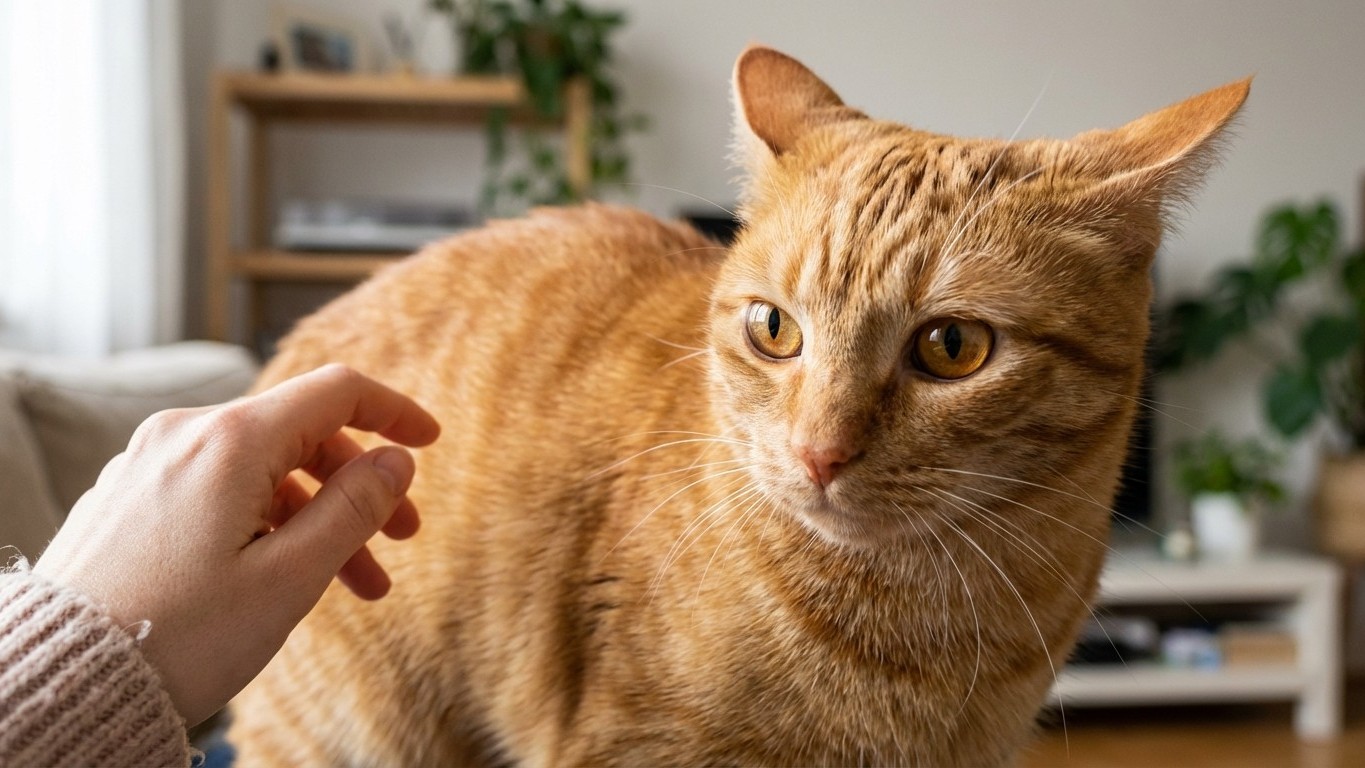
If you’ve ever experienced the jarring moment when your purring cat suddenly bites your hand mid-petting session, you’re not alone. This is called petting induced or overstimulation aggression, and it commonly occurs when a seemingly peaceful cat bites or scratches while being pet. What might seem like betrayal from your feline friend is actually a well-documented Behavioral response that animal behaviorists are finally beginning to understand in greater detail.
For reasons that remain unknown, some cats may suddenly become aggressive when being petted. Possible explanations include overstimulation and an attempt by the cat to control when the petting ends. Recent research has shed new light on this phenomenon, revealing that it’s far more complex than simple moodiness or dominance behavior.
The Neurological Basis of Petting Aggression
The science behind your cat’s sudden aggression lies in their highly sensitive nervous system. This type of aggression isn’t well understood, but behaviorists think that physical contact, like stroking, can quickly become unpleasant if it’s repeated over and over. Repetitive contact can cause arousal, excitement, pain and even static electricity in a cat’s fur. Think of it like someone rubbing the same spot on your back repeatedly—what starts as pleasant quickly becomes irritating.
Overstimulation (sometimes shortened to “overstim”) is when cats experience sensory overload from too much petting, caused by a painful nerve reaction, stress or built-up frustration. This neurological response is particularly pronounced in cats because their skin contains an intricate network of nerve endings that can become overwhelmed.
Recent studies have explored the connection between petting aggression and Hyperesthesia syndrome (HS), a common yet poorly understood condition in cats, with hypothesized neurological and behavioral causes that involves episodic skin hypersensitivity. While not all cats with petting aggression have this syndrome, the research provides valuable insights into how feline nervous systems can become overstimulated through touch.
Reading Your Cat’s Warning Signs
Contrary to popular belief, cats don’t attack without warning. Cats almost always give clear warning signals before biting or scratching. It can be difficult to pick up on those signs at first because cats can be subtle in their body language. Learning to recognize these signals can prevent aggressive incidents and strengthen your bond with your cat.
Common signals to look for include: tail swishing or flicking, skin twitching over the back, flattening of the ears, freezing, tenseness or staring, quick head turn to watch your hand as you pet, pupillary dilation, low growl, or walking away and lying down. When your cat is in your lap, notice whether he pulls his ears back, tenses his body, or begins to flick his tail as you pet him.
The key is understanding that these aren’t signs of aggression but rather Your Cat‘s polite way of saying “I’ve had enough.” If your cat becomes aggressive in response to petting, know that he’s not trying to be mean or behave this way out of spite. He’s simply reacting to an unpleasant or even painful sensation in the only way he knows how.
Individual Variation and Risk Factors
Cats vary enormously as to the extent to which they like petting or handling and for how long they tolerate these without finding it aversive. Some cats may enjoy extended petting sessions, while others reach their threshold within seconds. Understanding your individual cat’s preferences is crucial for maintaining a positive relationship.
This type of aggression is more common in males than females. Additionally, certain factors can influence a cat’s tolerance for petting. Your adopted cat may have historically had their comfort level with touch pushed, with someone ignoring their cues to stop touch. Poor socialization, lack of touch as a kitten or young cat can also cause this behavior concerns.
Medical conditions can also play a significant role. Pain can trigger an aggressive response to being touched and should be considered if bites mainly occur when you pet your cat in a specific area of his body. If your cat experiences pain in a joint, limb, neck, or back, even a slight shift in your cat’s position, as often happens during pets, can trigger a bite.
Prevention and Management Strategies
The good news is that petting-induced aggression is entirely manageable with the right approach. If your cat becomes overstimulated after four minutes, stop petting after two minutes. This proactive approach prevents your cat from reaching their threshold and maintains positive associations with human touch.
Only pet your cat in the areas they truly enjoy. Most cats like to rub their faces or bodies on an offered hand, but do not appreciate long strokes over their bodies. Focus on areas like the head, chin, and cheeks rather than the back or tail area, which tend to be more sensitive.
Stop petting at the first sign of any early warning signals. You can do this by just keeping your hands still by your sides. This simple technique allows your cat to decompress without feeling the need to escalate to biting or scratching.
Environmental factors also matter. Sometimes this overstimulation is due to frustration from boredom. Make sure that your cat gets a good play session with you daily. The best way to help cats with overstimulation is by providing daily enrichment, scheduled play/hunt sessions, and even trying to clicker train your cat.
Remember that punishment is never the answer. Do not punish your cat for this behavior problem. Never yell at or hit your cats as this will not help and will only make your cat fear you or become even more aggressive. Instead, focus on understanding and respecting your cat’s communication.
Understanding why cats become aggressive during petting isn’t just about avoiding bites—it’s about building a deeper, more respectful relationship with your feline companion. By recognizing the neurological basis of overstimulation and learning to read your cat’s subtle communication signals, you can create positive interactions that both you and your cat will enjoy. Remember, what looks like sudden aggression is actually your cat’s way of communicating their needs. The key lies in listening.