
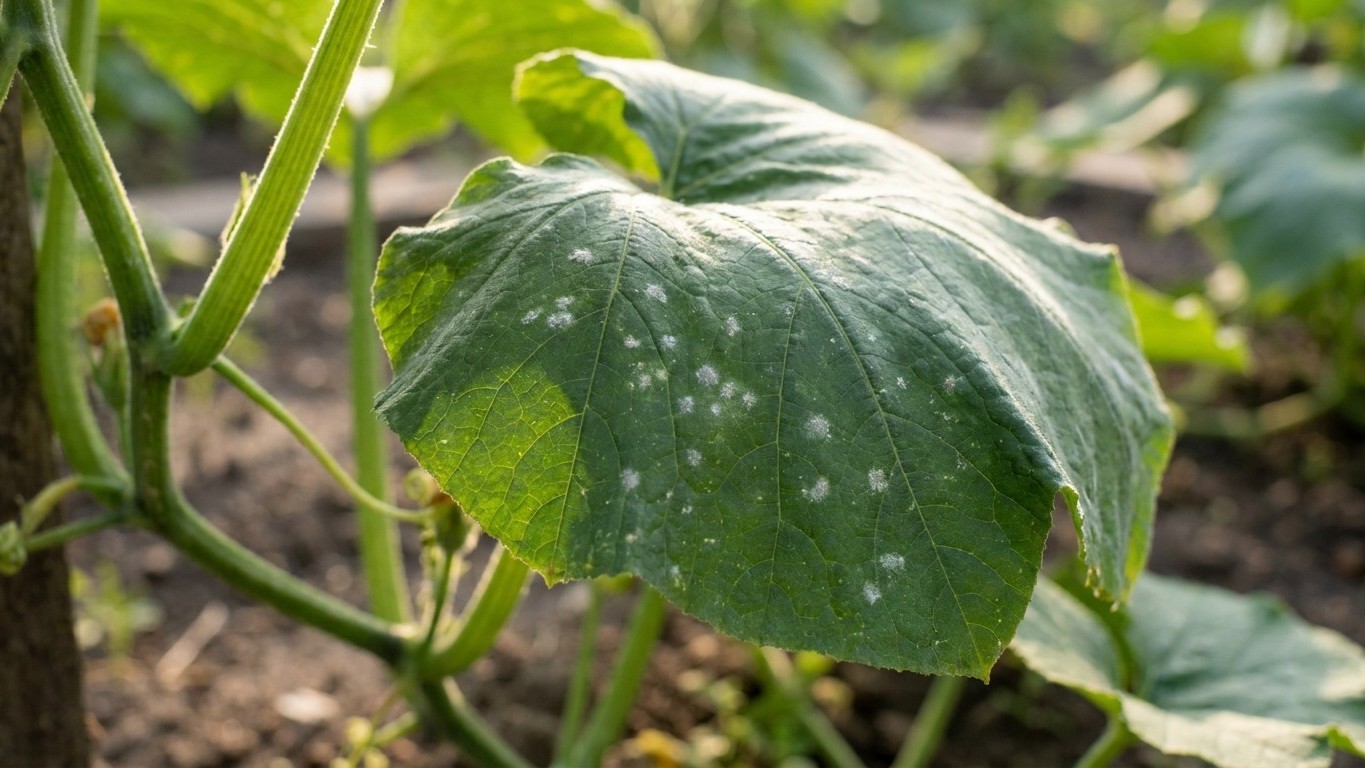
Cooling off the leaves felt like a kindness. Every evening, hose in hand, the water arced over the vines and settled on the leaves like a light summer rain, a small ritual meant to help the plants survive the heat. By mid-August, though, the vines had barely moved, the flowers were dropping, and the fruit that should have been swelling into orange globes had simply stalled. The evening shower, it turns out, was the problem all along.
Key takeaways
- A common fungal disease was hiding under the leaves the entire time—and evening watering was the culprit
- The white coating on pumpkin foliage blocks photosynthesis, literally starving the fruit of the energy it needs to grow
- One counterintuitive fix changes everything: water at the base, early in the morning, and let the sun do the drying
The Nightly Watering Habit That Backfired
The instinct made sense on paper. Hot days, wilted foliage, a cool splash at dusk seemed like relief. But pumpkin leaves don’t need cooling the way a person does after a run. What they need is to dry out completely before nightfall, and that’s exactly what evening watering prevents. When water is applied at night, it can sit on the leaves until the next morning, and on a warm night this creates the perfect conditions for powdery mildew.
The fungus behind the problem isn’t picky about climate, either. Regardless of whether you live in a dry or humid region, pumpkin leaves stay vulnerable, since the fungi favor hot, dry days paired with cool, damp nights. That combination, so common in late summer, is basically a welcome mat. Daytime temperatures of 68 to 81°F are ideal for infection, though once temperatures climb above 100°F the fungus stops being active. Mid-August in much of the country sits right in that sweet spot for the disease, not for the fruit.
What Was Actually Happening Under the Leaves
The white dusting that showed up on the foliage wasn’t dust, dew residue, or a mineral stain from tap water. Powdery mildew is a common fungal disease that affects many plants, including pumpkins, which are highly susceptible, and it spreads rapidly through airborne spores. It starts small: a few pale specks that look almost decorative before they spread into something that coats an entire leaf.
Here’s the part that explains the stalled pumpkins directly. Powdery mildew can stunt growth and affect photosynthesis, though it is avoidable and treatable when it does strike. A leaf blanketed in fungal growth can’t do its job of converting sunlight into the sugars that feed a growing fruit. Because the coating hinders photosynthesis, the plant’s health and productivity take a hit over time. No amount of watering, morning or evening, fixes fruit growth if the leaves feeding that fruit have effectively gone on strike.
Dense, overcrowded vines make Everything worse. Dense foliage on the vines increases a plant’s susceptibility to this disease, since the lack of airflow lets infection spread rapidly. A pumpkin patch left to sprawl without any thinning becomes its own greenhouse, trapping the exact humid, stagnant air the fungus wants. And once it takes hold in August, the timeline for reversing it is short. Powdery mildew is best controlled early in the season; by late summer, control attempts often become ineffective.
Watering the Right Way, Starting Tomorrow Morning
The fix isn’t complicated, but it does mean breaking a habit. The better approach is to water at the base of the plants early in the day, allowing the leaves to dry before evening. Morning watering gives the sun hours to do the work that used to be assigned to the evening breeze, evaporating any stray moisture off the foliage before dusk brings the temperature down again.
Quantity matters as much as timing. Pumpkins need about 1 inch of water per week, up to 2 inches during summer heat. That water should go straight to the roots, not the canopy. A slow 20 to 30 minute trickle at the base of the plant delivers far more usable moisture than five minutes of heavy spray from overhead. A soaker hose or drip line snaked along the base of each vine solves the problem almost automatically, since it never touches a leaf in the first place.
Spacing deserves attention too, and it’s the part most home gardeners skip when they’re short on room. Pumpkins sprawl and spread and suffocate anything in their path, and crowded vines compete for sunlight, nutrients, and airflow, leading to weaker plants and smaller fruits, so giving each plant six to eight feet of space lets them stretch out properly. Combine generous spacing with base-level morning watering, and the humid microclimate that mildew depends on mostly disappears.
If the white film has already shown up on a few leaves, don’t wait for it to spread before acting. Removing infected leaves as they’re encountered, clearing away old plant debris and volunteers, and providing adequate plant spacing are the practical management steps that actually help. Left unchecked, the fungus doesn’t just cost you size on the fruit. Severe cases can cause leaves to drop, exposing the fruit to sunburn if the disease isn’t contained. A pumpkin that survives mildew but gets scorched by direct sun once its leaf cover is gone is its own kind of disappointing ending, one that a simple change in watering time could have prevented from the very first week of the season.
Sources : gardeningisgreat.com | autumnprairiepumpkins.com