
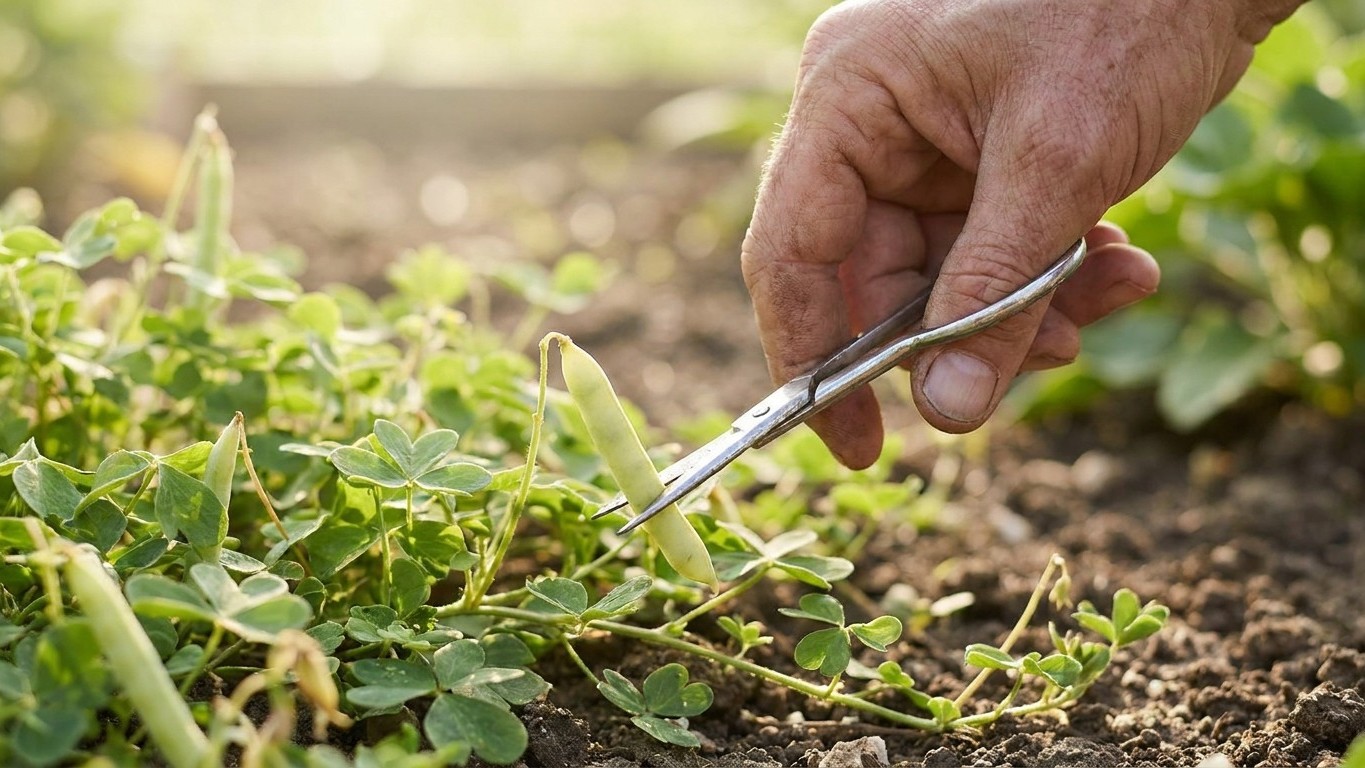
Forget the hoe. If creeping wood sorrel has taken over your flower beds, container pots, or the cracks between your patio pavers, gardening experts say the real fix isn’t tilling the soil, it’s snipping off the seed capsules before they turn from green to brown. That single move, done at the right moment, stops the plant’s most devastating trick: launching thousands of seeds several feet in every direction the instant something touches a ripe pod.
Creeping wood sorrel, known botanically as Oxalis corniculata, looks harmless enough. Clover-shaped leaves, cheerful little yellow flowers, low to the ground. But underestimate it and you’ll be fighting it for years. Its fruit is a narrow, cylindrical capsule about half an inch to an inch long, noteworthy for its explosive discharge of the contained seeds. Extension researchers in Oregon confirmed the mechanism plainly: the plant produces slightly pubescent, green cylindrical capsules containing many small, egg shaped, brown seeds, and when seeds mature, capsules explode, ejecting seed into the surrounding environment.
Key takeaways
- A common gardening instinct is actually making the problem worse—here’s why
- The plant has a hidden trigger moment when it’s about to multiply by thousands
- One five-minute habit repeated weekly outperforms hours of traditional weeding
Why the hoe makes things worse
Grabbing a hoe feels productive. It isn’t, at least not against this weed. The plant doesn’t rely on one strategy to spread, it uses two at once. Oxalis reproduces primarily by seed but may spread by slender underground rhizomes. Chop through the soil with a hoe and you’re just as likely to slice those rhizomes into fresh fragments, each one capable of rooting and starting a brand new colony. Add to that the fact that the seeds are angled and slightly rough, allowing them to adhere onto shoes, pots and equipment, which enables them to be easily transported around growing areas, and you start to see the problem. Every pass with a hoe risks stirring up ripe capsules, brushing against them, and sending seeds flying, then carrying more seeds on the blade itself to the next bed over.
A French gardening resource sums up the mechanical trap well: cultivating tools multiply the roots and scatter the little bulbils through the soil, guaranteeing the plant’s proliferation. Mechanical disturbance, is exactly the wrong medicine for a weed built around fragmentation and explosive dispersal. It’s a bit like trying to put out a grease fire with water, the instinct feels right, the physics say otherwise.
The one move that actually works: snip before the color changes
Here’s the technique gaining traction among gardeners who’ve given up on hoeing. Instead of attacking the whole plant, they watch the seed capsules. While immature, those pods stay green and firm. As they ripen, they swell, then shift toward tan or brown just before splitting open. That color change is the warning sign, and it’s the cue to act before, not after.
One practical guide puts it directly: snip seed capsules once they swell but before they split, since by the time a capsule has already fired, the damage is done. That’s the whole strategy in a sentence. You’re not trying to eliminate every leaf or root in one afternoon, you’re intercepting the plant at the single moment when it’s about to multiply itself by the thousands. A pair of small scissors or garden snips, a few minutes walking the bed, and you’ve neutralized the threat before it becomes airborne.
Timing Matters More Than most people realize. Sanitation is critical in controlling woodsorrel, and the golden rule is simple: do not let plants go to seed. Once flowers fade, capsules start forming almost immediately, so the window between flowering and capsule ripening is short. Check plants every few days during the growing season rather than waiting for a weekend cleanup session. A French garden site echoes the same urgency, advising gardeners to avoid letting seeds form and mature, acting at the latest when the flowers begin to fade.
What happens after the snip
Cutting capsules is damage control, not eradication. The plant will keep producing new flowers and new pods through the season, so this becomes a recurring habit rather than a one-time task. Pair it with mulch, and you close off the plant’s other pathway to survival. Mulching bare soil nearby matters because wood sorrel seeds need light to germinate, so a 2 to 3 inch mulch layer denies new seedlings the light they need. Any seeds you missed, or that blew in from a neighbor’s yard, stay buried and dormant instead of sprouting.
For plants that have already gotten out of hand, hand-pulling still has a place, just do it with intention. Hand-pull while the soil is moist, since Clemson Cooperative Extension notes the rhizomes come out more cleanly that way. Wet soil releases the taproot and rhizome network instead of snapping it, leaving fragments behind to regenerate. Combine that with mulching and capsule snipping, and you’ve built a three-part system that actually chips away at the population instead of just rearranging it.
Don’t expect victory in one season. One application probably won’t completely kill the weed, and repeated efforts over several years are typically needed. That’s not a failure on your part, it’s just biology. A single overlooked capsule can reset months of progress, since the fruit explodes at maturity and violently projects seeds more than two meters away. The gardeners who eventually gain the upper hand aren’t the ones who declared war with a hoe one afternoon. They’re the ones who made capsule-checking a five-minute habit, week after week, until the plant simply ran out of chances to reseed itself.
Sources : plants.ces.ncsu.edu | ask.extension.org