
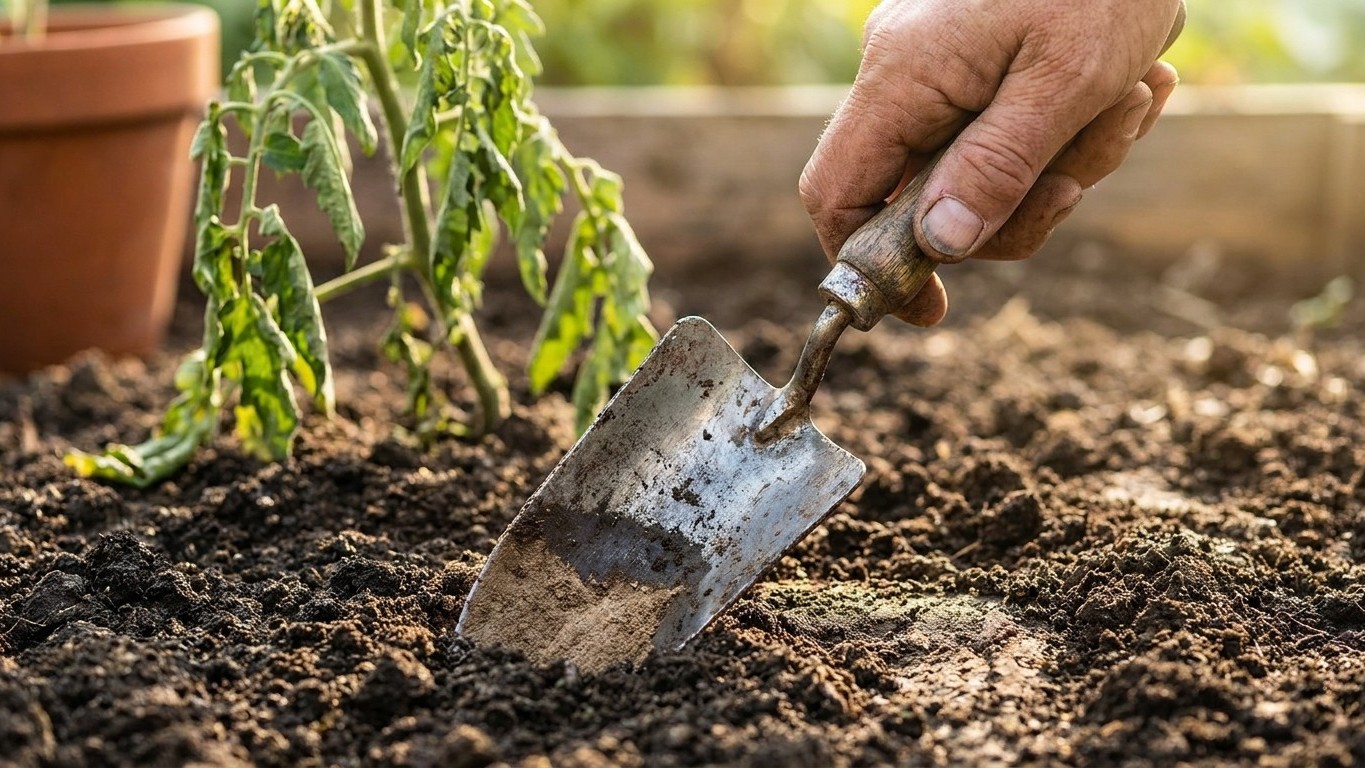
Ten a.m. to four p.m. That’s the exact window most horticultural extension services flag as the worst possible time to reach for a hose, and it’s precisely when a well-meaning gardener might spend an entire August pouring water onto a vegetable patch. Watering during midday when the sun is hottest means much of the moisture will evaporate from the surface and never make it to the plants’ roots. The surface looks dark and damp, the leaves perk up for an hour, and the illusion of a job well done sets in. Then you push a trowel 20 centimeters down and find bone-dry soil where the roots actually live.
That gap between what the surface shows and what the root zone experiences is the whole story of a wasted August. Vegetables don’t sip from the top inch of soil. Vegetables do not “drink” from the surface. They feed from a developing root zone that responds to moisture depth, not frequency. A tomato plant in full fruit, a squash vine sprawling across the bed, a row of peppers baking in 95-degree heat: all of them are pulling moisture from six, twelve, sometimes eighteen inches down. Water that never gets past the crust is water spent on nothing.
Key takeaways
- A entire summer of daily watering can leave roots completely parched while the surface looks soaked
- The soil beneath a ‘dark and damp’ surface can be bone-dry just 20 centimeters down where roots feed
- One deep watering every few days transforms plant resilience—but timing and method are everything
Why noon watering fails before it even starts
The physics are unglamorous but unforgiving. Hot soil surface plus hot air plus any breeze equals a race the water almost always loses. Morning-watered soil also loses less water to evaporation. When water is applied to cool morning soil and then covered with mulch, it penetrates deeply before the sun’s heat drives surface evaporation. Do the same thing at noon and you’re fighting the sun directly, watt for watt, drop for drop.
There’s also a myth worth killing outright: the idea that noon watering scorches leaves because droplets act as tiny magnifying glasses. There is a persistent myth that watering plants in midday sun scorches their leaves. This is not true. Water droplets on leaves do not act as magnifying glasses in any practical sense that causes leaf burn. The real damage isn’t burned foliage. It’s simpler and less dramatic: the water just doesn’t get where it needs to go before it turns to vapor.
Layer onto that a second, quieter mistake: watering a little bit every single day because the plants look thirsty at 2 p.m. One of the biggest mistakes gardeners make is watering lightly every day. Frequent shallow watering encourages roots to remain near the soil surface. Surface roots dry quickly and are vulnerable to heat stress. Wilting leaves at noon aren’t even a reliable signal in the first place. Wilting during midday heat does not always mean plants are thirsty. Plants curl their leaves to reduce sun exposure and often bounce back by evening on their own, no hose required.
Twenty centimeters down: what “too late” actually looks like
Twenty centimeters, roughly eight inches, sits right in the zone experts use to judge whether a garden has actually been watered or merely dampened. Water each plant at its base for long enough that moisture penetrates at least 15 to 20 centimetres (6 to 8 inches) into the soil. Anything shallower than that counts as a surface rinse, not irrigation. Shallow watering, a quick pass over the garden, encourages shallow root development, making plants more vulnerable to heat and drought. I have seen gardeners water their tomato plants for 30 seconds and consider the job done. That is not watering, that is dampening the surface. Deep, thorough watering is what builds resilient plants.
The fix isn’t complicated, but it does require abandoning the daily-splash habit. Watering deeply generally means watering a plant so that the water soaks down to at least 6 – 8 inches below the soil surface. The saying goes that one deep watering is much better than several light waterings for established plants. Encourage healthy root growth by doing a deep soak every other day. Let the roots work a little to seek the water that’s deeper in the soil! One long soak, two or three times a week, will do more for a pepper plant than fourteen quick noon splashes ever could. A simple check confirms it: push a long screwdriver into the soil. If it slides in about 6 inches with little resistance, the water has reached the root zone.
Rebuilding the routine that actually saves the harvest
Mornings between 5 a.m. and 9 a.m. are best because the temperatures are cooler, there’s less wind, and the water has time to reach the roots before it evaporates. Watering during this time prepares plants for the hot day ahead. If dragging yourself out before sunrise isn’t realistic, there’s a legitimate second option. Late afternoon or early evening are acceptable alternatives. By late afternoon, the heat of the day is passed, but there is still enough sun left to dry foliage before nightfall. If plants have wet leaves when night comes, this encourages fungus problems like powdery mildew and sooty mold, which harm vegetables. Watering in the late afternoon or early evening cuts down on water loss from evaporation.
Delivery method matters almost as much as timing. Standing there with a hose aimed at leaves for thirty seconds a day is the least efficient approach available. Drip irrigation and soaker hoses are among the most efficient methods because they deliver water directly to plant roots with minimal waste. Pair that with a layer of mulch and evaporation loss drops sharply. Mulch helps soil retain moisture, keeps roots cooler, and reduces evaporation from the soil surface. It’s the single cheapest upgrade available to anyone who spent a summer watering a bed that only ever got wet on top.
None of this means abandoning the noon check-in altogether. It’s still worth walking the rows at midday, not with a hose, but with a trowel. Dig down eight inches once a week, feel the soil in your hand, and let that tell you whether the roots below are actually drinking or simply waiting out another dry August.
Sources : vegogarden.com | aol.com