
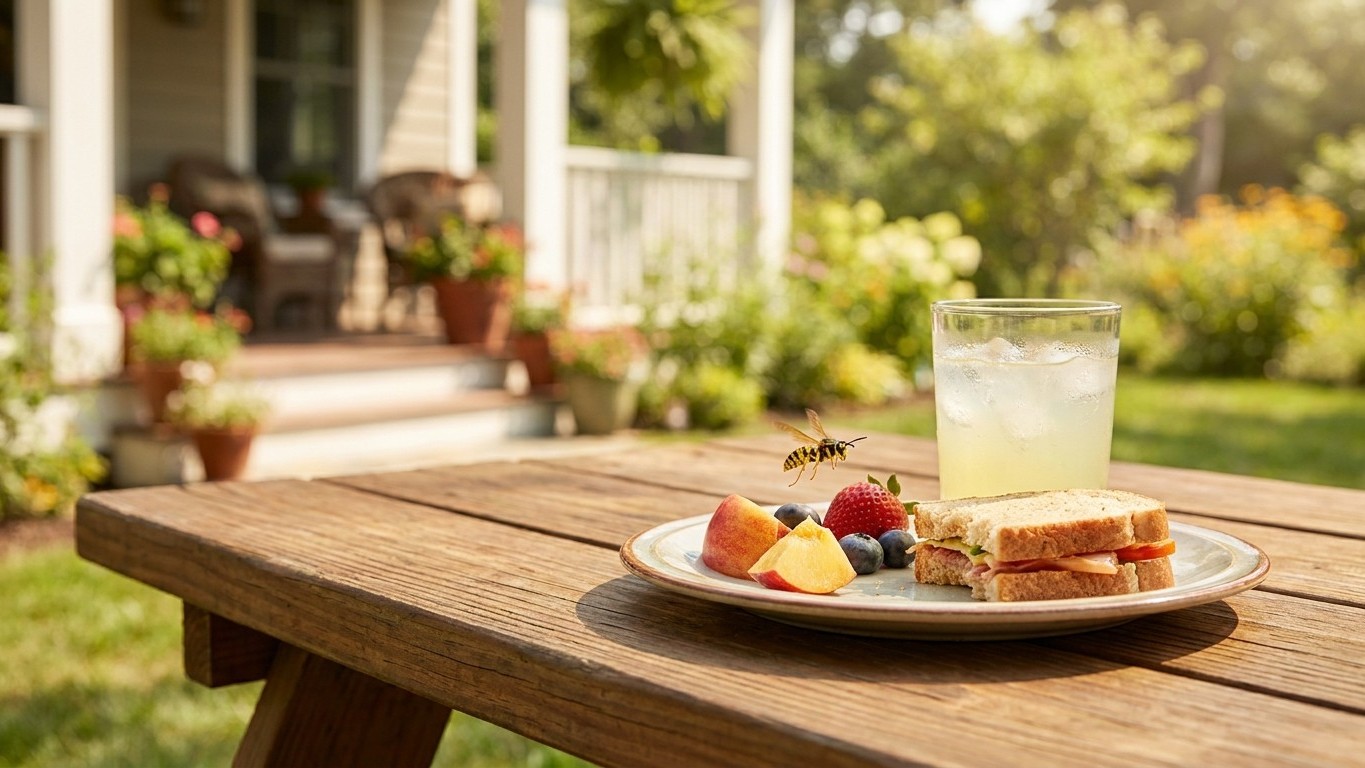
Every August 15th, like clockwork, my Grandfather would fold up the picnic table umbrella, gather the plates, and announce that lunch was moving to the kitchen. For years, my cousins and I rolled our eyes. Summer wasn’t over. The sun was still blazing, the pool was still open, why abandon the porch for the stuffy indoors? We teased him mercilessly, calling him paranoid, old-fashioned, a man fighting a war against a season that hadn’t even ended. Turns out he wasn’t fighting the season. He was fighting biology, and biology was winning.
Key takeaways
- A simple family tradition holds a hidden scientific explanation that nobody suspected for years
- Two completely separate biological events conspire against outdoor dining during the exact same time window each year
- Nature’s timing is so precise it feels almost deliberately engineered to ruin summer lunches
The Wasp Uprising Nobody Warns You About
There’s a reason backyard lunches turn into a battle royale with stinging insects right around mid-August, and it has nothing to do with bad luck. Yellow jackets become more aggressive from August through October because their colonies are at their largest, natural food sources are declining, and workers are gathering sugar to help the colony survive. Translation: by the time August rolls around, that quiet little nest nobody noticed in June has exploded into a small city.
The mechanics behind this are almost poetic in their cruelty. All season long, worker wasps have been feeding larvae, and in exchange, worker wasps hunt protein, caterpillars, flies, and other insects, to feed the developing larvae. The larvae, in turn, produce a sugary secretion that the adult wasps consume for energy. Then, almost overnight, the supply chain collapses. In late summer, the queen stops laying eggs. There are no more larvae. The adult wasps lose their sugar source, and begin desperately seeking sugar from any available source: your soda, your ice cream, your barbecue sauce, fallen fruit under trees. Your lunch plate, becomes the last diner standing.
Add to that a population problem. By late August or early September, what started as a nest with only a handful of workers may now contain hundreds, or even thousands, of yellow jackets. More workers means more foragers scouting every patio table in the neighborhood, and more defenders ready to swarm if someone gets too close to the nest without knowing it. There’s even a slightly absurd twist to the whole thing: fallen fruit like apples, pears, and plums ferments on the ground, and wasps feeding on it become intoxicated, their coordination degrades, their aggression increases, and they are more likely to sting defensively. My grandfather never used the phrase “angry drunk wasp,” but I suspect he would have appreciated it.
The Invisible Culprit Floating in the Air
Wasps are the visible menace. The one you can’t see is worse. Mid-August is also when a scraggly roadside weed most people have never bothered to identify starts quietly ruining millions of lunches across the country. Considered the most allergenic of all pollens, ragweed pops up throughout the East and Midwest starting in mid-August. It doesn’t announce itself with flowers you’d notice. It just releases pollen into the wind, and the wind does the rest.
The scale of it is genuinely wild. One plant alone can produce up to one billion pollen grains, and each grain can travel more than 100 miles. That means the sneezing fit you get during your sandwich might have nothing to do with anything growing in your own yard. According to the Allergy & Asthma Network, ragweed season begins in early August and peaks in mid-September and October before declining in November. And the numbers of people affected aren’t small either. Ragweed pollen allergy is a leading cause of seasonal allergic rhinitis, which affects more than 23 million people in the United States.
Timing matters more than most people realize. Pollen counts are higher in the morning, between dawn and 10:00 AM, so shifting outdoor walks and workouts to later in the day can help reduce exposure. A noon lunch on the patio, sits right in the danger zone. My grandfather, who never had a diagnosed allergy in his life, still ended every mid-August meal outside with watery eyes and a scratchy throat. He didn’t need a lab test to connect the dots. He just moved the table.
Why the Timing Lines Up So Precisely
What makes this whole thing feel almost engineered is that both threats peak on the exact same calendar. Wasp colonies hit maximum size and maximum desperation right as ragweed starts flooding the air with pollen, and both trends intensify through September before easing off with the first frost. The worst pollen counts usually occur in September, which is why so many people suddenly feel like their allergies are out of control this month. Meanwhile the insects aren’t backing down either; pest control companies describe August–September as the highest-risk period for stings. Two separate biological clocks, somehow perfectly synchronized against the outdoor lunch.
None of this means summer dining has to end the moment the calendar flips to August 15th. But there’s a reasonable case for treating mid-August as a hinge point rather than just another sunny week. Keep food covered, skip the sugary drinks in open cups outside, and if you notice increased wasp traffic near a fence line or woodpile, that’s often a sign a nest is close by rather than random bad luck. For allergy sufferers, checking a local pollen count before deciding where to eat lunch takes about ten seconds and can save an afternoon of misery.
My grandfather never explained any of this in scientific terms. He just noticed, decade after decade, that mid-August lunches outside always seemed to end badly, and he adjusted without needing a peer-reviewed reason. Turns out the reason was there all along, buzzing around the table and drifting invisibly on the breeze.
Sources : sergiospestcontrol.com | reifenvironmental.com