
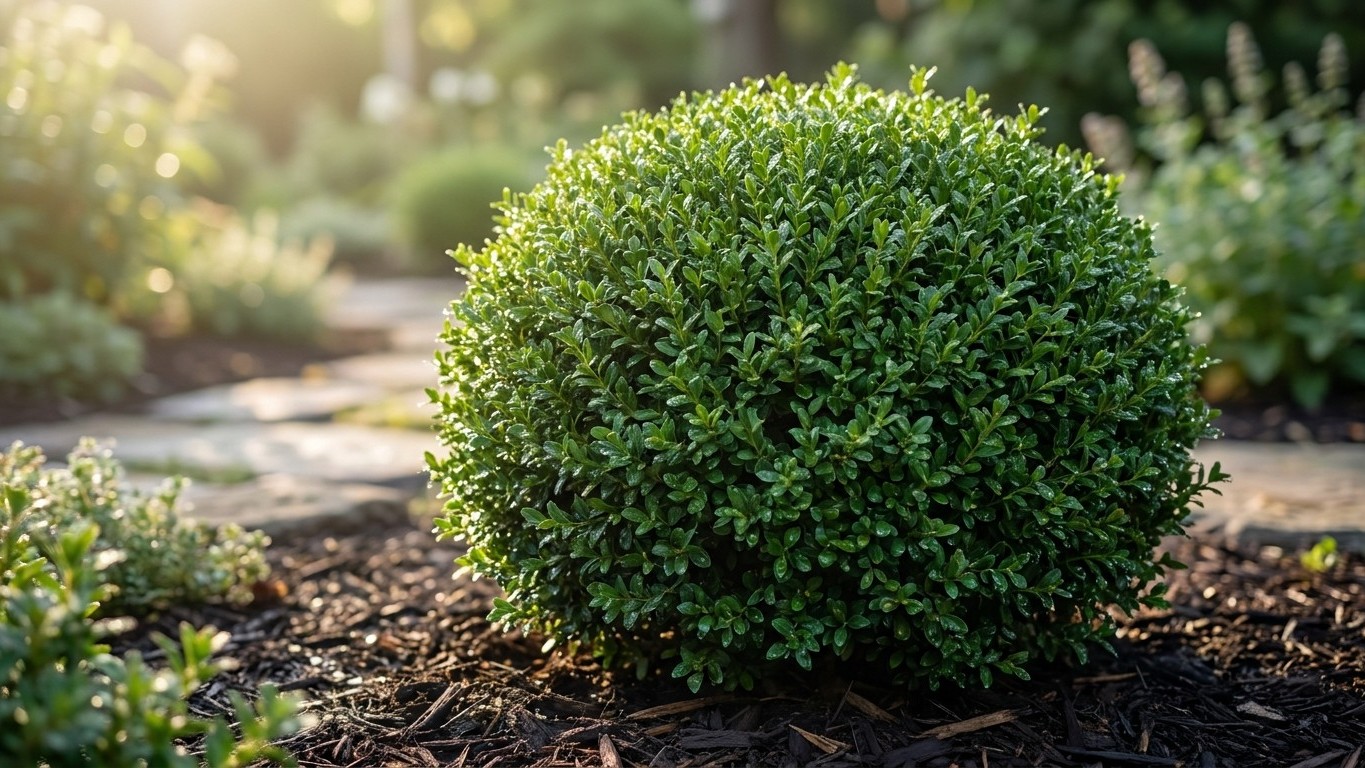
Bronze, rust-colored boxwood in May is one of those sights that stops gardeners cold. You did Everything right through winter. You mulched, you protected, you waited. Then spring arrives, temperatures climb, and your carefully shaped hedges turn the color of old pennies, a phenomenon so common it has its own name among horticulturists: bronze scorch. Most people blame cold damage or disease. The real culprit is usually a ten-minute window in the morning, and an old-timer taught me exactly how to close it.
Key takeaways
- The bronzing isn’t frost damage—it’s caused by a specific ten-minute window when water droplets on leaves act like magnifying glasses
- An 83-year-old gardener’s simple rule has prevented bronze scorch for decades, and horticultural research now proves why it works
- May is the danger month because day length and UV intensity peak before soil temperatures catch up to air temperatures
What’s Actually Happening to Your Boxwood
Buxus sempervirens, common boxwood, is remarkably cold-hardy. The bronzing that appears in spring isn’t frost damage from January. It’s a physiological response to what plant scientists call “desiccation stress,” triggered by intense sunlight hitting foliage that still can’t move water efficiently from still-cold roots. The leaves lose moisture faster than the root system can replace it. The result: that characteristic copper-bronze discoloration that spreads across south and west-facing sides of the plant first.
The timing matters more than most people realize. Research on Buxus physiology has shown that leaf temperatures can spike dramatically in late morning when direct sunlight combines with low ambient humidity, a combination that’s especially brutal in May, when days are lengthening fast but soil temperatures are still catching up to air temperatures. The plant is, in a sense, running on empty during that window. Watering the roots helps, but it doesn’t solve the immediate surface problem.
The Rule and the Man Behind It
My neighbor Henri, eighty-three years old, former market gardener, still grows the most perfect boxwood spheres I’ve ever seen — gave me this rule four summers ago with zero drama: never spray, mist, or water the foliage of your boxwood after the church bells ring eleven. In our village that means 11 a.m. By that point, he explained, the sun angle is high enough and the surface temperature of the leaves warm enough that any water sitting on the foliage acts like a magnifying lens. Tiny droplets focus light onto a pinpoint of leaf tissue, burning cells before they can dry.
This mechanism is actually documented in horticultural literature, though gardeners have known it empirically for generations. A study published in the journal New Phytologist confirmed that water droplets on leaf surfaces can intensify solar radiation by a factor of up to 22 times at the focal point, enough to cause visible scorch on thin-leaved plants within minutes. Boxwood, with its small, dense, glossy leaves, is particularly vulnerable. Henri didn’t know the science. He knew the outcome, and decades of observation had given him the same answer the researchers reached.
His full routine, which I’ve now followed for three seasons without a single bronze leaf: water deeply at the root zone before 9 a.m., never overhead. If you must mist, for heat stress in a dry spell, do it in the last thirty minutes before sunset, when the sun angle is low enough to remove the lens effect risk, and the plant has overnight hours to dry before the next day’s heat builds. Never midday, never late morning.
Why May Is the Danger Month
April gets all the worry, late frosts, cold snaps, the drama. But May is quietly the most damaging month for boxwood in most of the United States, for a specific reason. Day length increases by roughly two minutes per day through May, which means UV intensity at the leaf surface is climbing steeply week over week. Meanwhile, soil temperatures in many regions don’t consistently cross the 50°F threshold, the point where root water uptake becomes efficient, until late in the month. That gap between what the sun demands from the leaves and what the roots can supply is at its widest in May.
Gardeners who add a granular fertilizer in early May are sometimes making things worse. A nitrogen push stimulates new, tender growth with thinner cell walls and higher water content, exactly the tissue most susceptible to scorch. Henri’s advice on this front was equally blunt: wait until you can comfortably leave your hand pressed against the soil for thirty seconds without it feeling cold. That’s your signal that roots are active enough to support what you’re putting into the soil.
Practical Fixes Beyond the Clock
Timing your watering is the fastest intervention, but the context around the plant matters too. Boxwood planted against a south-facing white wall faces a double exposure: direct sun plus reflected heat from the masonry. Those specimens need either a shade cloth in May, a simple 30% shade cloth draped loosely for the worst weeks does the job — or they need to be on your early-morning watering priority list without exception.
Mulching is the other piece of the puzzle. A 2-to-3-inch layer of organic mulch applied now keeps soil temperatures more stable, slows moisture loss from the root zone, and, this part surprises people, actually moderates how quickly the soil warms up in the morning, giving the root-to-leaf water pipeline a more consistent operating temperature throughout the day. Composted wood chips or shredded bark both work; avoid fresh wood chips, which rob nitrogen from the soil as they break down.
One more thing worth knowing: if your boxwood does bronze this May despite your best efforts, the damage is cosmetic in most cases. New growth will come in green, and by July the shrub will have largely recovered its color. The real risk of repeated annual bronzing is cumulative stress that weakens the plant’s resistance to boxwood blight, a fungal disease that has been spreading steadily across the eastern United States since it arrived from Europe. Keeping your Buxus vigorous through better spring management is also your front-line defense against something far more serious than a bad color season.