Six holes in the wall. Spackle crusted on your hands, the drill whining, dust gathering in the corners—and when you finally step back to admire your floating shelf, it sags. Or worse, tumbles. Hear that clatter? That’s frustration Echoing off drywall. Those “easy-install” wall anchors promised to change the DIY game, but for many, they’re just another headache. Professional carpenters have moved on. Their secret? A mounting method that—yes—skips both the drill and those fickle hollow-wall anchors, delivering shelves so solid you’ll forget they’re not screwed into studs.
Key takeaways
- Why traditional wall anchors often fail and frustrate DIYers.
- How industrial adhesives deliver rock-solid shelf support without Drilling.
- The simple steps pros use to mount shelves that last years on drywall.
The Unseen Hero: Adhesive Technology Remastered
Picture this: a softly lit kitchen in Copenhagen, shelves lined with antique mugs, not a single screw in sight. How do they do it? Industrial adhesives—once the domain of aerospace or autobody shops—have quietly slipped into the world of home decor. The new breed of mounting tapes and structural glues isn’t garden-variety craft glue. Think of an adhesive so strong that some versions can suspend the weight of an adult human (temporarily, at least). For a shelf holding cookbooks or your growing air-plant collection? Overkill—and perfect.
These mounting technologies use pressure-sensitive, double-sided tapes or chemical-cure adhesives to bond shelf brackets directly to finished walls. For renters, this solves a persistent dilemma: how to stage your space without losing your deposit to Swiss-cheese walls. For homeowners dodging plumbing or electrical in walls—peace of mind, with no drill in sight.
The Method—And Why It Works So Well
Staggering, really, how an idea as simple as “stick it” can outperform so many tools and hardware categories. But professional carpenters—especially those specializing in high-end renovations or restorations—have drawn from trade Secrets-to-visually-expand-any-room-without-renovation”>Secrets. The best careers are built on creative shortcuts, after all.
Here’s the process, simplified:
- Prep: Clean the wall—no dust, oils, or residue. Alcohol wipes are the go-to.
- Apply: Affix heavy-duty, double-sided mounting tape (the kind rated for outdoor projects—ignore the “easy-peel” stuff lining back-to-school aisles) on the contact points of the bracket or shelf base.
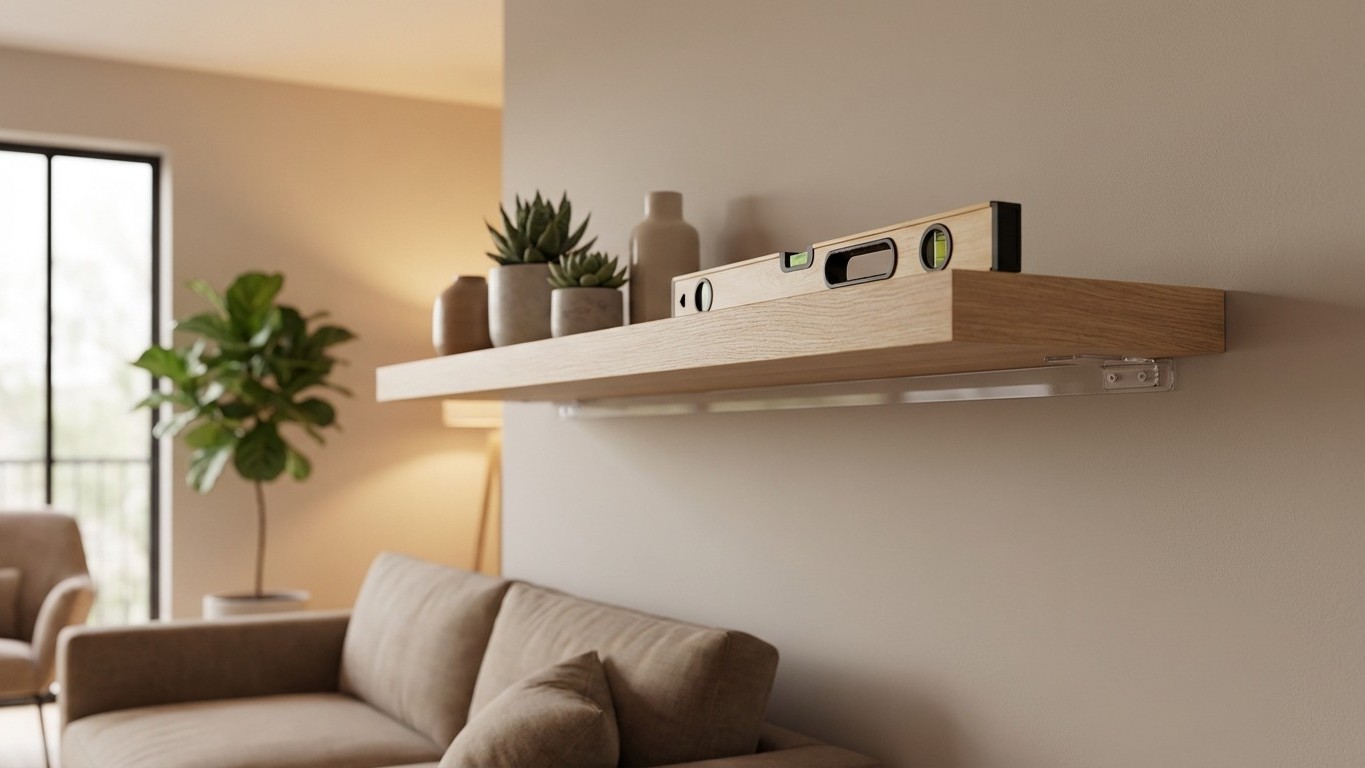
- Position: Hold the shelf against the wall, pressing firmly to create maximum adhesion. Sometimes a carpenter’s level is balanced on top, ensuring perfect alignment—because meticulous is better than hasty.
- Wait: Adhesives cure over time. The strongest bonds form after 24-72 hours, a fact ignored by most impatient DIYers.
The science? These adhesives distribute weight across a much larger surface area than a tiny screw or anchor. No concentration of strain, so walls (even drywall) don’t crumble. Restaurants have used similar tactics to mount heavy mirrors in dining rooms—no anchors, no dust, no cracking plaster months later.
No Drill, Big Results: Real-World Proof
Not convinced? A carpenter in Brooklyn tells a story—giant Bookshelf, old brownstone, walls riddled with 1920s electrical. Stud finders blaring, the job halted until, out of sheer necessity, they reached for industrial adhesive. Two years later, the shelf remains rock-solid, surviving not only an earthquake tremor but also three moves of rearranged contents.
It’s not just anecdotes. Manufacturers now stamp “holds up to 30 pounds per strip” on their pro-level adhesives. Put that in perspective: a loaded shelf of hardcover books usually weighs less per foot. One test—published in a well-known consumer science magazine—showed some specialty tapes held up a 50-pound load for over six months. Compare that to Classic toggle anchors, which frequently loosen over a single season in homes prone to vibrations or shifting temperatures.
The big caveat? Surface contact is king. Shiny or crumbly paints, Textured walls, or dampness can undermine adhesion. But on smooth plasterboard or painted drywall, the professional adhesive method isn’t just a hack—it’s the practical evolution of hanging decor in a world impatient with patch-and-repair cycles.
Why the Trade Secret Matters for Home Design
Shelf displays are statements. They say “here’s what I value”—cookbooks, framed photos, vintage tools. Nothing shatters the effect like a visible bracket, over-built hardware, or even that hairline crack zig-zagging from your anchor hole. No-drill systems free people to be bold, inventive—hang a gallery of shelves above a velvet sofa, turn a windowless wall into a vertical garden, all without the “what if I move?” hesitation lurking behind every hammer swing.
For apartment dwellers, it’s empowerment—the chance to craft a home that reflects their personality, undeterred by a landlord’s warnings. For serial redecorators, adhesives let you experiment often, without the guilt. Ever Changed your mind about shelf placement six times in two months? Of course you have. So has everyone else who loves reimagining space.
And yet—there’s something more subtle at play. Homeowners interviewing carpenters today are just as interested in damage limitation as finish quality. The best reputation in the business? The pro who leaves after the job, with no cleanup needed, and no evidence in the walls except a shelf exactly where it belongs.
So next time you’re standing, drill in hand, second-guessing yourself—remember that the best-kept secret in the renovation trade is as simple as peel, press, and wait. Who knows? Your walls might thank you, years down the line, when new trends sweep through, and your only cleanup is a gentle tug and a fresh coat of paint.
What possibilities open up when you stop fearing the aftermath of a drill? Imagine homes where rearranging—or refreshing—the view is as easy as a night’s inspiration. The future of walls: adaptable, reversible, fearless. Isn’t that a vision worth sticking with?