Every seamstress and crafter knows the frustration of dull scissors turning precise cuts into jagged, frayed disasters. For years, I found myself making frequent trips to the craft store, replacing scissors that had lost their edge after just months of use. The cycle seemed endless until I stumbled upon a simple aluminum foil Trick That completely Transformed how I maintain my cutting tools.
The revelation came during a particularly busy quilting project when my favorite pair of fabric scissors began tearing rather than cutting through delicate cotton. Instead of reaching for my car keys to head to the store, I remembered something my grandmother had mentioned years ago about aluminum foil and sharp edges. What happened next Changed my entire approach to tool maintenance.
The Science Behind the Aluminum Foil Method
When scissors become dull, it’s because the metal edges have developed microscopic nicks and rounded surfaces that prevent clean cutting. These imperfections cause the blades to push and tear fabric rather than slice through it cleanly. Aluminum foil, with its unique properties, acts as a gentle abrasive that can restore those sharp edges without the need for expensive professional sharpening services.
The foil’s metal composition creates just enough friction to smooth out minor imperfections while being soft enough not to damage the scissors’ tempering. This process, known as stropping, has been used by barbers and knife enthusiasts for centuries, though few crafters realize how easily it can be adapted for their sewing tools.
The technique works because aluminum foil has a crystalline structure that, when compressed and cut, creates multiple contact points with the blade edge. Each cut through the foil removes tiny metal particles and polishes the cutting surface, gradually restoring the scissors’ original sharpness. The process is remarkably gentle yet effective, making it perfect for expensive fabric scissors that you’d hesitate to take to a commercial sharpener.
Mastering the Aluminum Foil Sharpening Technique
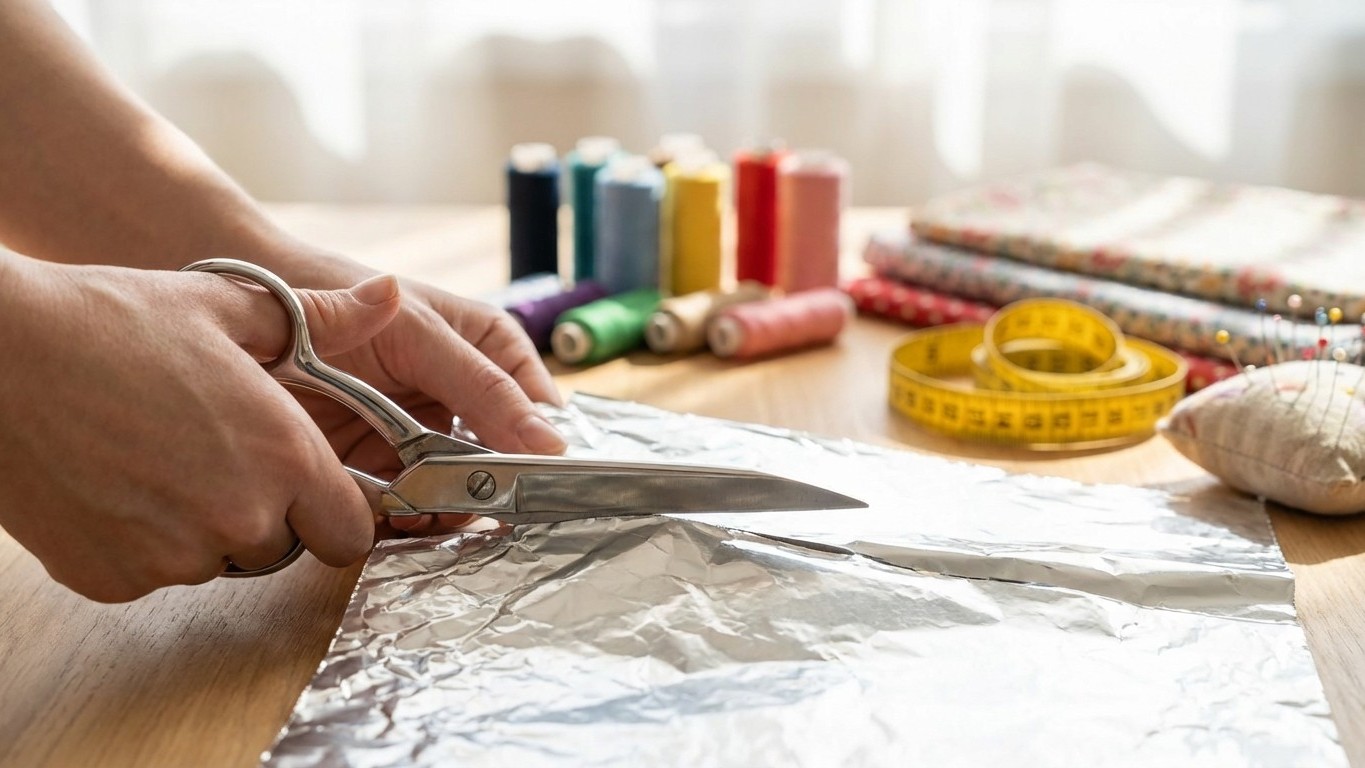
The beauty of this method lies in its simplicity, though proper technique ensures the best results. Start by tearing off a piece of aluminum foil approximately twelve inches long. Fold it in half twice, creating a thick, multilayered strip that will provide adequate resistance for the sharpening process.
Hold your scissors at their normal cutting angle and make long, deliberate cuts through the folded foil. The key is to use the entire length of the blade with each cut, from the pivot point near the handles all the way to the tips. This ensures even sharpening across the entire cutting edge rather than creating uneven spots that could affect performance.
Continue cutting through the foil for ten to fifteen strokes, paying attention to how the scissors feel with each cut. You should notice the resistance changing as the blades become sharper and the cuts become cleaner. The foil will develop a characteristic shredded appearance, and you may notice small metal particles on the foil surface – this is normal and indicates the process is working.
After completing the foil treatment, test your scissors on a scrap of fabric similar to what you typically cut. The difference is often immediately apparent, with clean cuts replacing the previous tearing and snagging. For scissors that were severely dull, you may need to repeat the process once or twice, but most tools respond dramatically to a single session.
Extending Your Scissors’ Lifespan
Regular maintenance using the aluminum foil method can extend your scissors’ useful life significantly, but combining this technique with proper storage and handling practices maximizes the benefits. Store your scissors in protective sheaths or cases to prevent the blades from knocking against other tools, which can cause premature dulling.
Consider dedicating specific scissors to particular tasks – fabric-only scissors for sewing projects, paper scissors for patterns, and craft scissors for mixed materials. This specialization prevents contamination from adhesives and other substances that can build up on blades and affect their performance.
The frequency of foil sharpening depends on usage, but most sewers find that monthly treatments keep their scissors performing optimally. Heavy users might need weekly touch-ups, while occasional crafters can often go several months between sessions. The beauty of this method is that it’s so quick and inexpensive that you can perform maintenance whenever you notice the slightest decline in cutting performance.
Environmental considerations also make this approach appealing. Instead of discarding scissors and contributing to landfill waste, you’re extending their useful life while using a recyclable material for the sharpening process. The used aluminum foil can go directly into your recycling bin, making this a truly sustainable solution.
Beyond Basic Maintenance
While aluminum foil works wonderfully for regular maintenance, understanding its limitations helps set appropriate expectations. This method excels at addressing minor dulling and maintaining already-sharp scissors, but it won’t repair scissors with chips, bent tips, or severe damage. For such cases, professional sharpening or replacement remains necessary.
The technique also works best on standard steel scissors. Specialized coatings or exotic metals may require different approaches, so always test on a small, inconspicuous area first. Most fabric scissors, craft scissors, and general-purpose cutting tools respond excellently to foil treatment.
Since Discovering This technique, my scissors collection has remained consistently sharp, and my crafting budget has benefited significantly. The confidence that comes from knowing your tools will perform when inspiration strikes is invaluable. No more interrupted projects or emergency shopping trips – just reliable, sharp scissors ready for whatever creative challenge awaits.