
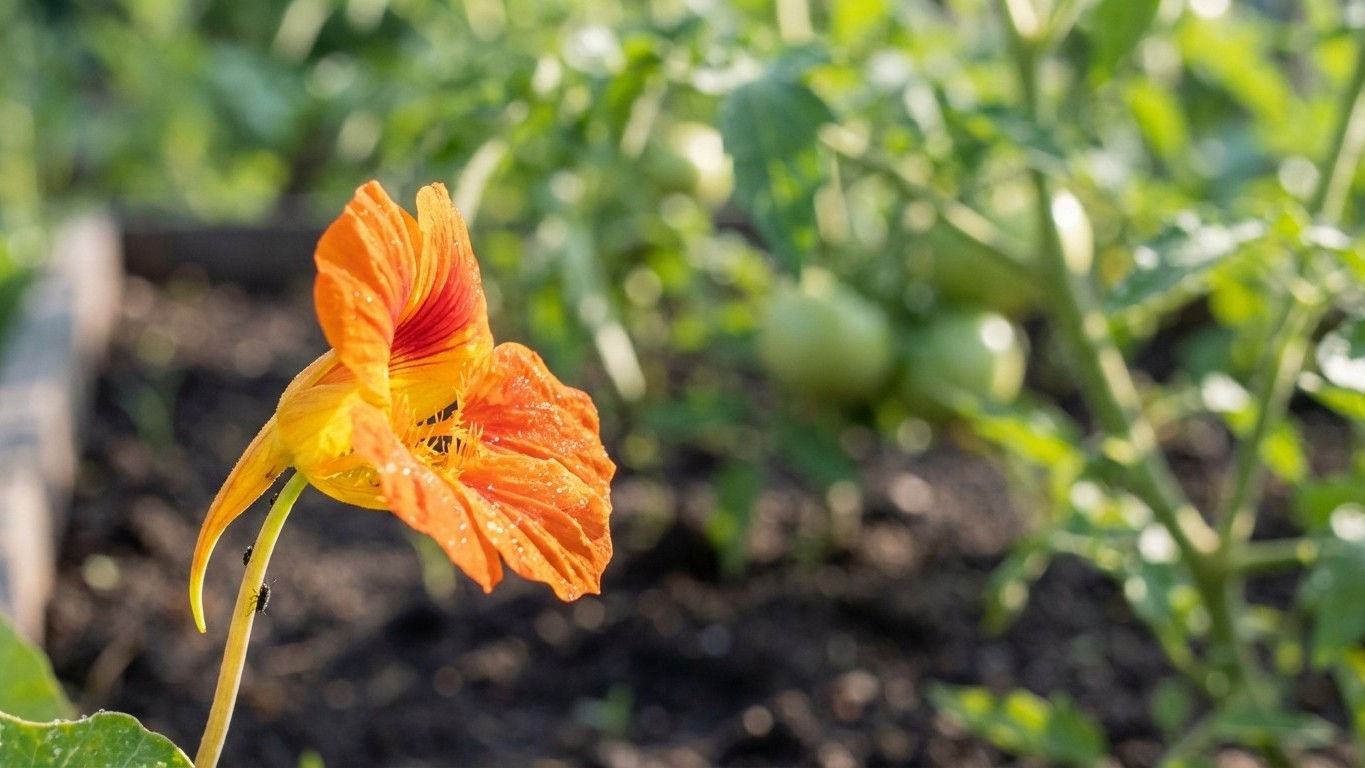
Aphids are, Without question, one of the most frustrating problems in any vegetable garden. They colonize quietly, multiply fast (a single aphid can produce up to 80 offspring in a week under warm conditions), and by the time you notice the curled leaves and sticky residue, your plants are already stressed. Most gardeners reach for a spray bottle. The smarter move is to reach for a trowel and a packet of nasturtium seeds.
Key takeaways
- One flower species is so irresistible to aphids that it redirects entire colonies away from your food crops
- The timing window is narrow—plant in April and watch predatory insects follow the aphids to their new home
- Your trap crop becomes edible too, with peppery leaves and pickled seeds that double as protection and dinner
The Trap Crop Strategy That Actually Works
Nasturtiums (Tropaeolum majus) are often celebrated for their cheerful orange and yellow blooms and their edibility. What gets less attention is their role as a sacrificial plant, or in agricultural terms, a trap crop. The idea is straightforward: nasturtiums are almost irresistible to aphids, particularly the black bean aphid and the melon aphid, both of which would otherwise devastate your tomatoes, beans, and squash. Plant nasturtiums along the border of your vegetable beds, and the aphids migrate toward them instead, leaving your edibles largely alone.
This isn’t folk wisdom from a gardening grandmother, though those grandmothers were onto something. Research on companion planting and pest management consistently identifies nasturtiums as one of the most effective decoy plants available to home gardeners. The University of California Cooperative Extension has documented their use in integrated pest management systems for exactly this purpose. The plant’s volatile compounds and lush, soft foliage make it a preferred host, essentially a five-star hotel for aphids compared to the tougher tissue of a tomato stem.
Why April Is the Window You Can’t Miss
Timing is everything here. Aphid populations typically begin building up in spring, as soon as temperatures consistently stay above 55°F. If nasturtiums aren’t already established and leafy when that first wave of aphids emerges, the decoy effect fails, the aphids simply move to whatever is available, which will be your vegetables. Planting along the edge in April gives nasturtiums the three to four weeks they need to establish a substantial, leafy presence before peak aphid season hits.
The good news is that nasturtiums are genuinely easy to grow. Direct sow the seeds about half an inch deep after your last frost date, or even a couple of weeks before if you’re in a mild climate, nasturtiums tolerate a light frost better than many annuals. They prefer poor to moderately fertile soil, which is counterintuitive but true. Rich soil pushes them toward vigorous leaf growth at the expense of flowers, and you actually want both here: leaves to attract aphids and flowers to attract the beneficial predatory insects that will help manage the aphid population once it concentrates on your trap crop.
Space them 10 to 12 inches apart along the perimeter of your beds, not tucked inside the garden. The border placement is deliberate, it intercepts aphids before they reach your vegetables rather than luring them through the garden first.
The Secondary Benefit Nobody Talks About Enough
Here’s where the strategy gets more interesting. Nasturtiums don’t just attract aphids, they attract the predators that feed on aphids. Ladybugs, hoverflies, and parasitic wasps are all drawn to the same flowers that aphids colonize. A nasturtium border in full bloom can become a kind of ecological trap-and-process system: aphids arrive, the predators follow, and the aphid colony gets naturally suppressed without any intervention from you. The garden essentially manages itself, at least in this one narrow but meaningful way.
Hoverfly larvae, in particular, are voracious aphid predators, a single larva can consume hundreds of aphids during its development. Adult hoverflies are attracted to nasturtium nectar, which means planting them serves a double purpose. You’re feeding the next generation of pest controllers while simultaneously giving aphids a target that isn’t your zucchini.
There’s a management step most guides skip: don’t let the aphid population on your nasturtiums grow completely unchecked. If the colony becomes enormous, it can produce winged aphids that will disperse into your vegetable beds regardless of the trap. A quick blast with a hose every few days, or simply removing heavily infested nasturtium stems, keeps the population concentrated but not explosive. Think of it less as “set and forget” and more as light supervision.
Pairing Nasturtiums With the Rest of Your Garden Plan
Nasturtiums work particularly well alongside beans, cucumbers, squash, tomatoes, and brassicas, all of which are prime aphid targets. If you grow kale or broccoli, consider planting nasturtiums at both the north and south ends of your rows, since whiteflies (another brassica pest) also show some preference for nasturtiums over their intended hosts.
One pairing that surprises people: nasturtiums and roses. If you grow roses near your vegetable garden, the nasturtium border can help protect both. Black aphids that would otherwise coat rose stems get diverted, and the blooms benefit without a drop of pesticide.
As a bonus you didn’t ask for, nasturtium leaves and flowers are peppery and edible, excellent in salads or as a garnish. Even the seeds can be pickled as a caper substitute. A plant that protects your garden, feeds beneficial insects, and ends up on your dinner plate is about as efficient as gardening gets.
The deeper question this raises, though, is why so many gardeners still default to chemical solutions when ecological ones have been sitting in plain sight. Nasturtiums cost about three dollars for a seed packet. They require no expertise. They bloom for months. If a synthetic pesticide offered the same results, it would be on the cover of every gardening magazine. Sometimes the oldest solutions are undervalued precisely because they’re so simple, and simplicity, in a world of optimized everything, feels almost suspicious.