
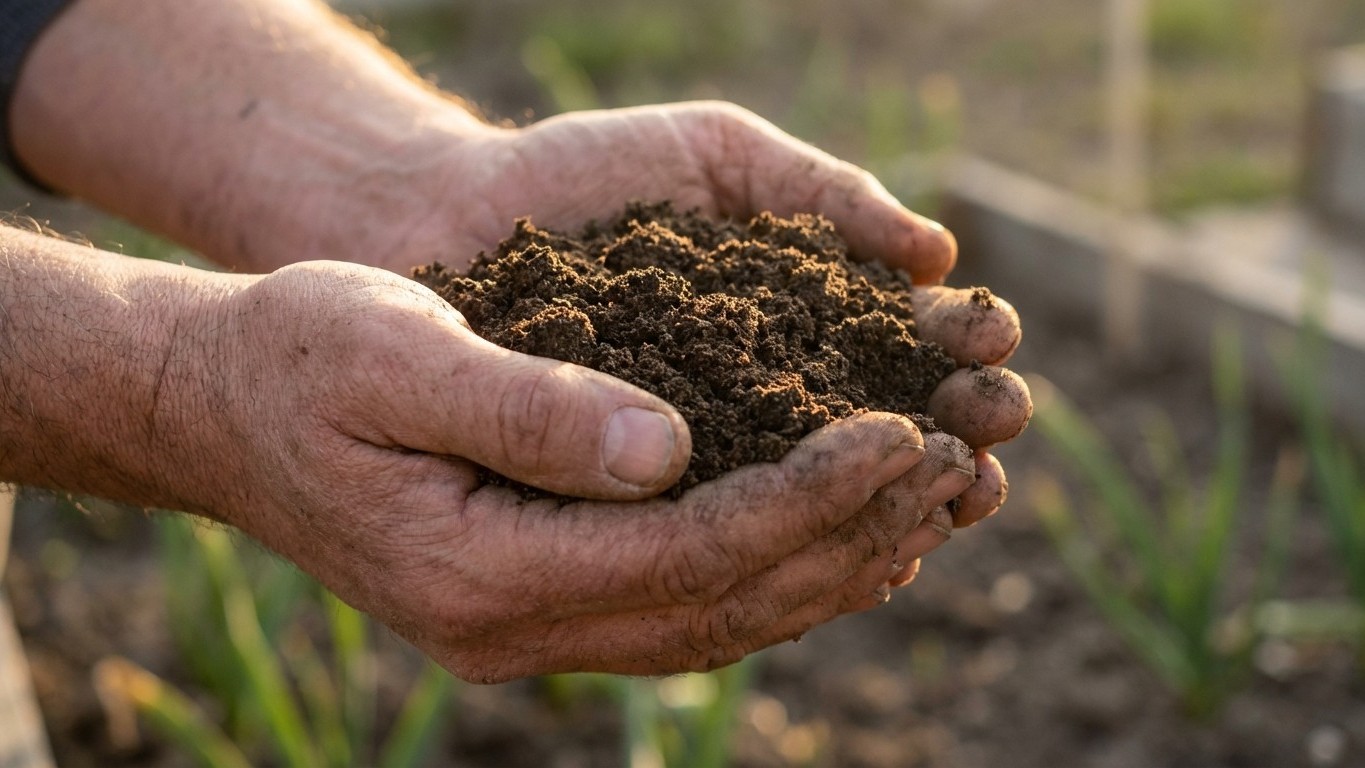
March is when the garden starts whispering again. The soil is thawing, the days are lengthening, and every gardener worth their trowel knows that what happens underground right now will determine everything above ground by June. Old-timers didn’t wait for weeds to appear. They made sure weeds never got the chance.
The technique they relied on isn’t a secret, exactly. It’s more of a Forgotten rhythm, a sequence of soil preparation steps performed in the right order, at the right moment, that essentially outwits the weed seed bank lying dormant in your garden beds. Call it old knowledge that modern gardening, with its bagged mixes and raised-bed shortcuts, quietly left behind.
Key takeaways
- A 2-3 week window in March exists where you can outsmart dormant weed seeds before they wake up
- The stale seedbed technique involves preparing soil, watering it, waiting for weeds to sprout, then destroying them—all before you sow anything
- Soil temperature, timing, and patience matter more than any modern product or tool
The Stale Seedbed: The Core of the Old Method
The heart of the traditional March soil strategy is something horticulturalists now call the “stale seedbed technique,” though old gardeners would have just called it common sense. The idea is simple and almost devious in its elegance: you prepare the soil early, water it, and then wait. Weed seeds, which outnumber your vegetable seeds by a ratio that would make any gardener lose sleep — germinate first. Then you destroy them, shallowly, just before you sow your actual crops.
Here’s what this looks like in practice. In early to mid-March, you turn and loosen the top 2 to 3 inches of soil (no deeper, going deeper just brings up a fresh wave of buried weed seeds). You rake it smooth, water it if the Weather is dry, and cover the bed with a clear or black plastic sheet to warm it. Within two to three weeks, a fuzz of weed seedlings covers the surface. At that point, you drag a hoe just barely across the surface, never more than an inch deep, and knock every one of them flat. Wait a few days, then sow your seeds directly into that “clean” bed.
The trick only works if you resist the urge to dig again after that final hoeing. Every time you turn the soil, you’re essentially reloading the gun. Old gardeners knew this intuitively. They moved through prepared beds on boards to avoid compressing the soil, and they sowed with minimal disturbance.
What Goes Into the Soil Before Any of That
Before the stale seedbed process even begins, there’s the matter of amendment. Traditional kitchen gardeners across Europe and North America would have spent late February pulling back whatever mulch or cover they’d laid down in autumn, checking the soil’s structure, and making corrections. Not with synthetic inputs, but with what they had.
Well-rotted compost, incorporated gently into the top few inches, was the standard move. Not fresh manure in March, that’s too nitrogen-hot and can burn young roots, but material that had been composting for at least a year, dark and crumbly and smelling faintly of earth. This added organic matter does two things relevant to weed suppression: it improves soil drainage (weeds thrive in compacted, wet soil) and it supports the kind of microbial activity that makes nutrients available to your crops, giving them a competitive edge over any weeds that do eventually appear.
Wood ash was another traditional amendment, scattered thinly over beds in March. It raises soil pH slightly and adds potassium, useful in vegetable beds, and not a welcoming environment for many common weeds that prefer acidic conditions. A thin layer, maybe a half-cup per square yard, raked in. Nothing more dramatic than that.
Timing the Sun and Frost: The Calendar They Followed
Old gardeners were obsessive about the moon calendar and the last frost date in ways that modern gardening has only partially rehabilitated. But strip away the folklore, and the underlying logic holds. The real point was this: they prepared soil when it was workable but not too wet. Squeezing a handful of March soil and having it crumble apart, rather than clump into a sticky ball, was the green light. Working wet soil destroys its structure, compacts it, and, crucially, creates exactly the kind of dense, airtight surface where weed seeds love to germinate.
They also timed their soil prep to happen before the main flush of weed germination in their region, which in most of the continental United States and temperate Europe tends to happen once soil temperatures consistently hit around 50°F (about 10°C). A soil thermometer, a tool that costs almost nothing, tells you exactly where you stand. At 45°F, you’re ahead of most weeds. At 55°F, you’re already behind.
There’s a window in March, sometimes only 10 to 14 days wide depending on your zone, where the soil is warm enough to work and cold enough that most annual weeds haven’t yet mobilized. That window is everything. Traditional gardeners treated it like a deadline, not a suggestion.
The One Extra Step That Made the Difference
After the stale seedbed hoeing and just before sowing, experienced gardeners would apply a thin layer of finely sifted compost directly on top of the prepared surface, maybe a quarter-inch. This serves as a mulch-like barrier over the weed seed zone, suppressing the next flush of germination while still being fine enough to allow seeds sown on top to push through.
Some would have used leaf mold for this, or even spent mushroom compost. The material mattered less than the concept: create a thin physical barrier between the disrupted soil surface and open air, reducing light penetration to any remaining weed seeds just below the surface. It’s low-tech. It works.
What’s striking about this entire approach is how much of it depends on patience rather than products. No herbicide, no weed-suppressant fabric, no elaborate raised bed system. Just a gardener paying attention to timing, working with the soil’s own biology, and thinking two weeks ahead of the weeds. The question worth sitting with: how many modern gardening problems would dissolve if we simply moved a little slower, a little earlier, in March?