
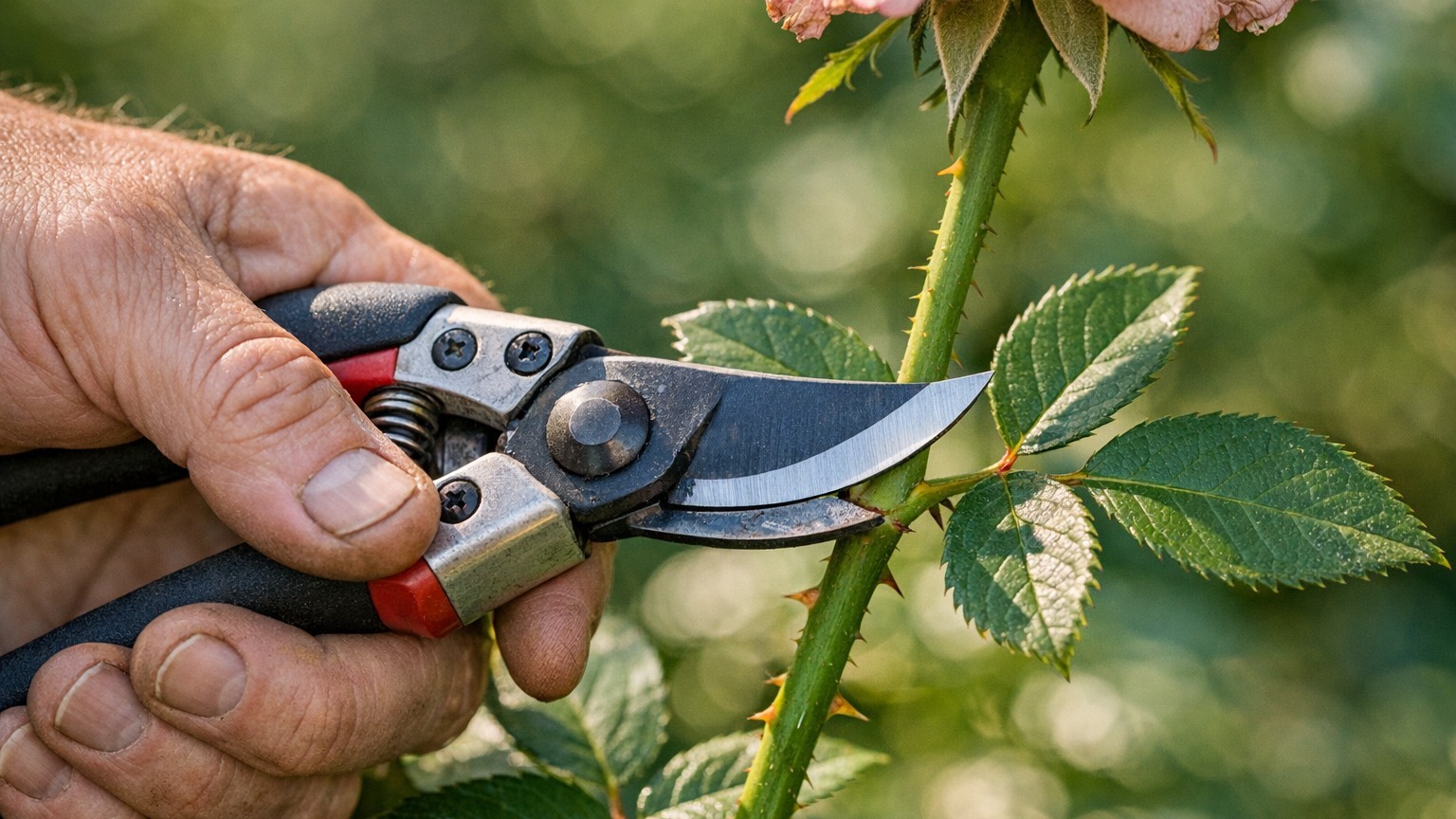
Deadheading roses the wrong way for years is more common than most gardeners will admit. The cut just below the spent bloom, the one that feels logical, that feels tidy, is actually one of the most reliable ways to slow a rose bush down and leave it confused, exhausted, and reluctant to rebloom. A single afternoon watching an experienced rosarian work changed everything”>Everything I thought I knew about this seemingly simple task.
Key takeaways
- What most gardeners do when deadheading is scientifically backwards
- A single leaf structure change reveals why your roses stopped blooming
- Why heritage rosarians sharpen their pruners multiple times during a single session
The Cut That Looks Right But Isn’t
The instinct makes sense on the surface. A flower dies, you remove it. You snip close to the base of the old bloom, keep things neat, move on. The problem is that roses don’t operate on human logic. They respond to pruning based on where the new growth can actually emerge, and that depends entirely on the leaf structure below the cut.
Rose stems produce leaves in two distinct configurations: sets of three leaflets and sets of five leaflets. The five-leaflet set is the one that matters. It signals to the plant that this junction point has the hormonal capacity to generate a new flowering shoot. Cut just above a three-leaflet set and you’ll get weak, spindly growth with no bloom at the end. The plant technically responds, but it’s going through the motions. Three months of waiting for a flower that never comes.
The gardener who corrected my technique, a woman who had been growing heritage roses in Connecticut for over thirty years — barely needed to explain it. She just pointed. “You’re cutting here,” she said, gesturing at the base of the dead flower. “You need to cut here,” moving her finger down six, sometimes eight inches to the first five-leaflet junction. The difference looked almost aggressive. It felt like I was taking too much. She smiled at that. “Roses respect decisive cuts. Hesitant ones confuse them.”
Why the Angle and the Tool Matter as Much as the Location
Once you know where to cut, two other variables become immediately relevant: the angle of the cut and the sharpness of your blade. A flat cut above the leaf node leaves a small platform where water can pool, which is an open invitation for fungal disease. The standard recommendation from most horticultural societies, including the Royal Horticultural Society, is a 45-degree cut angled away from the bud, allowing water to run off naturally and reducing the surface area exposed to pathogens.
Blunt pruners do more damage than most people realize. A dull blade doesn’t cut, it crushes. That crushed tissue heals slowly and unevenly, stressing the stem and creating entry points for disease. Sharp bypass pruners (not anvil-style, which press the stem against a flat surface) make clean cuts that the plant can seal within days. Professional rosarians often sharpen their pruners multiple times during a single pruning session. That level of attention to the tool itself is what separates a thriving rose bed from a struggling one.
There’s also a timing dimension that rarely gets discussed. Deadheading in the morning, after dew has dried but before afternoon heat peaks, gives the fresh cut a few hours to begin sealing before temperature stress kicks in. A small detail, but roses are sensitive plants that accumulate small advantages.
How Different Rose Types Change the Formula
Modern hybrid teas and grandifloras are bred for repeat blooming, so proper deadheading is what unlocks that cycle. But not all roses work the same way, and applying the five-leaflet rule universally can actually backfire with certain varieties.
Once-blooming roses, many old garden varieties, certain climbers, and most species roses — flower on the previous year’s canes. Deadheading them aggressively removes the wood that would produce next year’s display. For these types, the best approach after the single annual bloom is light grooming only: remove the spent flower head, leave the stem structure intact, and let the plant redirect energy into root development and cane production. The hips that form after flowering on species roses like Rosa canina are also worth preserving, they provide winter food for birds and add visual interest well into December.
Shrub roses and many landscape varieties are somewhere in between. They benefit from deadheading during the peak season to encourage reblooming, but breeders have done enough work on these plants that aggressive pruning is less critical than it is for hybrid teas. The Knock Out series, which accounts for a substantial portion of residential rose sales in the United States, was specifically engineered to self-clean and rebloom without any deadheading at all, though even these respond visibly better with occasional attention to the spent clusters.
What Happens Inside the Plant When You Get It Right
The mechanism behind all of this is auxin, a plant hormone that controls growth direction and timing. When a rose produces a flower and that flower begins to die, the seed-developing process inside the hip triggers a hormonal signal that tells the plant: reproduction attempt underway, hold new growth. By removing the spent bloom before the hip begins to form, you interrupt that signal. The plant reads the situation as an incomplete reproductive cycle and redirects energy toward producing another flowering shoot.
Cut at the right node and you’ve also positioned that new shoot at a point on the stem with maximum vascular access, meaning better water and nutrient flow to the developing bud. Cut too high, and the stub above the node becomes dead tissue that the plant has to seal off, wasting resources in the process. That stub is also a frequent starting point for dieback, where decay travels slowly down the cane over weeks.
Roses pruned correctly at a strong five-leaflet node in mid-summer typically produce a new flowering shoot within 28 to 45 days depending on variety and conditions. That turnaround is what makes the difference between a rose bed that pulses with color all season and one that gives a spectacular June show and then sulks until October. The cut is less than a second of work. The research behind knowing exactly where to make it took centuries of observation to accumulate.