
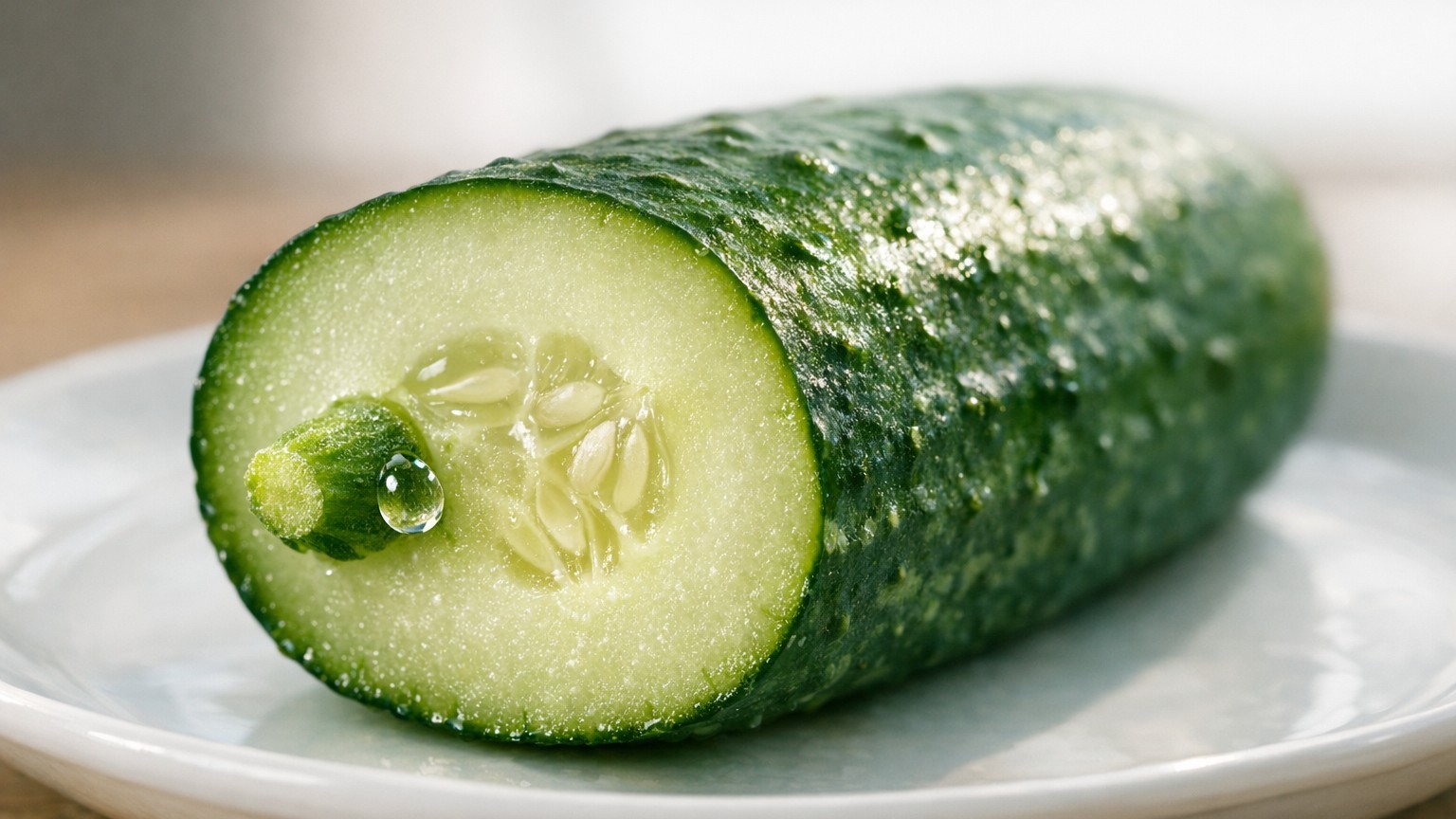
Bitter cucumbers have ruined more summer salads than bad dressing ever could. The culprit isn’t the variety you planted, the soil you amended, or even the heat wave that rolled through in July. Nine times out of ten, it’s irregular watering, and the bitterness concentrates right near the stem end, exactly where you first take a bite.
The science behind this is surprisingly elegant. Cucumbers naturally produce compounds called cucurbitacins, a class of intensely bitter biochemicals found in all members of the cucurbit family (squash, melons, pumpkins included). Under normal growing conditions, cucurbitacins remain at low, barely perceptible levels. Under stress, drought, heat, erratic moisture, the plant ramps up production as a defense mechanism. It’s essentially the cucumber’s way of telling hungry insects and animals: “I’m not worth eating right now.”
Key takeaways
- A single summer of irregular watering can transform sweet cucumbers into disappointing bitter ones through stress-triggered biochemistry
- The bitterness compounds concentrate at the stem end where they enter from the vine—making it the first taste of trouble
- Modern gardening techniques like drip irrigation and heavy mulching can reduce the problem by 70%, but consistency matters more than any fancy method
Why the Stem End Gets It Worst
Cucurbitacins don’t distribute evenly throughout the fruit. They enter through the stem, traveling from the vine into the cucumber, which means the blossom end (the tip opposite the stem) tends to stay milder. The stem end absorbs the highest concentration. This is why tasting a sliver near the stem before committing to a full slice is actually a useful habit, it’s the canary in the coal mine for bitterness levels across the whole fruit.
An old kitchen trick accounts for this directly: cut off an inch from the stem end and rub the cut surfaces together with a circular motion. A white, foamy residue appears, that’s cucurbitacin literally being drawn out through friction. Food scientists have confirmed the method has some validity, though it won’t rescue a severely bitter cucumber. Think of it as damage control, not a cure.
What “Irregular Watering” Actually Does to a Cucumber Plant
Cucumbers are roughly 96% water. That figure isn’t a fun trivia detail, it’s a direct indicator of how catastrophically the fruit responds to moisture swings. When a plant goes dry for several days and then receives a sudden deluge (a thunderstorm, an enthusiastic catch-up session with the hose), the stress hormones already triggered during the dry spell don’t simply vanish. The cucurbitacin production that started under drought conditions continues even as moisture returns.
There’s a secondary consequence that gets less attention: irregular watering also leads to hollow centers and a spongy texture. The cells that should be turgid and crisp simply never filled properly. So the bitterness and the disappointing crunch often arrive together, two symptoms of the same underlying neglect.
Agronomists generally recommend that cucumbers receive consistent moisture equivalent to about one inch of water per week, delivered steadily rather than in sporadic bursts. Drip irrigation, even a basic soaker hose on a simple timer, outperforms hand-watering from a convenience standpoint but also from a plant-physiology standpoint. Roots absorb moisture more efficiently when the soil stays evenly damp rather than cycling through wet and dry extremes.
Heat, Stress, and the Compounding Effect
Temperature plays a supporting role that most home gardeners underestimate. When air temperatures push past 90°F for extended stretches, cucumber plants enter a kind of metabolic emergency. They transpire faster, the soil dries out faster, and the combination of heat stress plus water stress triggers cucurbitacin production more aggressively than either factor alone would. A cucumber grown through a mild, rainy summer almost never develops bitterness problems. The same variety planted in the same garden during a dry, scorching summer becomes reliably bitter without attentive irrigation.
Mulching heavily around the base of the plants, straw, wood chips, shredded leaves, creates a buffer against both problems simultaneously. A good three-inch layer of mulch can reduce soil moisture evaporation by up to 70%, which translates directly into more stable growing conditions during heat spikes. It’s the kind of low-effort intervention that pays disproportionate dividends by mid-August, when the real stress begins.
Variety selection matters too, though perhaps less than most seed catalogs suggest. Modern breeding has produced cucurbitacin-free or low-cucurbitacin varieties, the “burpless” types marketed for digestive ease are essentially the same thing. These varieties have had the bitterness gene largely removed through selective breeding. They’re genuinely more forgiving of inconsistent watering, though they still produce better fruit under stable moisture conditions.
Salvaging a Bitter Harvest
Once bitterness is locked in, the options are limited but not zero. Peeling helps significantly, since cucurbitacins concentrate in the skin as well as the stem end. Slicing and salting cucumbers for 20-30 minutes before eating draws out some of the bitter compounds along with excess water, the same principle as salting eggplant. Mixing heavily bitter slices with acidic dressings (vinegar-based, citrus-forward) doesn’t eliminate the bitterness but masks it effectively enough for most palates.
The real lesson, predictably, runs in the other direction. Gardens reward consistency more than enthusiasm. A slow, steady inch of water per week across the growing season does more for flavor than any fertilizer application or variety upgrade. Cucumbers respond to reliability the way most living things do, with something close to gratitude, expressed as crunch and sweetness rather than the chemical bitterness of a plant that spent three months wondering whether the water would ever come back.
One final note that surprises most people: cucurbitacins are being actively studied for potential anti-tumor properties by researchers at the National Cancer Institute. The same compounds that make your cucumber taste like disappointment may turn out to have genuine pharmaceutical value. The bitter cucumber, it seems, had more going on than anyone gave it credit for.