
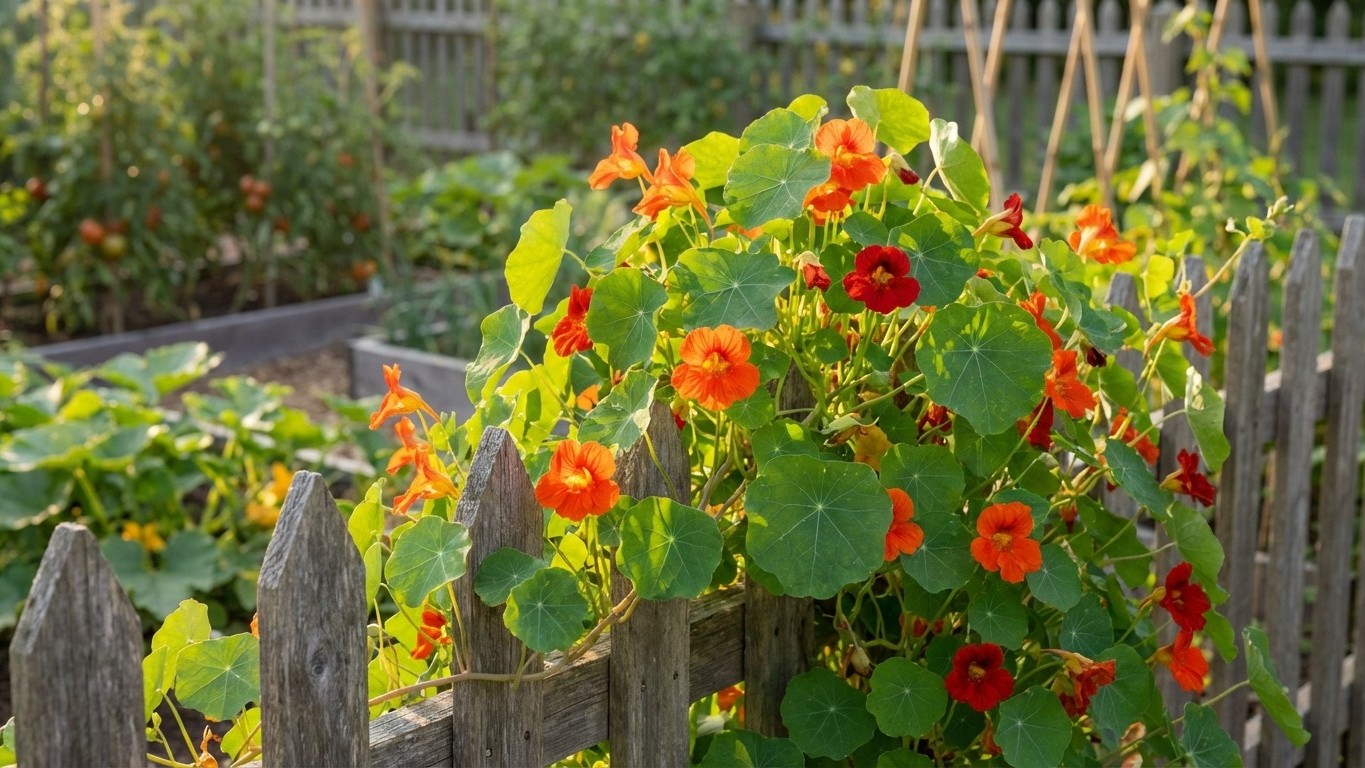
Most gardeners, when they see a vine creeping along the fence near their tomatoes and squash, reach for the pruning shears. Old-timers knew better. They left it alone, watched it sprawl, and quietly harvested some of the cleanest vegetables on the block. That vine is nasturtium, Tropaeolum majus, and what it does to the pest population around a vegetable garden is backed by decades of observation and, increasingly, by science.
Key takeaways
- A humble flowering vine that old gardeners planted near vegetables for reasons modern science is finally explaining
- Three simultaneous mechanisms that make nasturtium a complete pest-control system without chemicals
- Why some gardeners actually want to see their nasturtiums covered in aphids
The Plant That Works While You Sleep
Nasturtiums are colorful plants that brighten the environment with very little human attention. These cheery annuals thrive with an absolute minimum of care and often seem to prefer neglect. And many gardeners plant nasturtiums specifically as pest control. That contrast, beauty paired with utility, is what made the plant a fixture in cottage gardens long before anyone coined the phrase “companion planting.”
The mechanism is threefold, and each layer builds on the last. When you grow nasturtiums for pest control, you benefit in three ways: they repel certain pests, act as a trap crop for others, and attract beneficial insects, which can control pest populations for you. Think of it as a full pest-management system growing quietly at the edge of your beds, asking nothing but a little water.
Nasturtiums produce chemical compounds that many insects find absolutely irresistible, often causing them to bypass nearby vegetables entirely. That’s the repellent side. But the trap-crop side is where things get genuinely clever.
The Decoy Strategy Old Gardeners Relied On
A trap crop consists of sacrificial plants that draw the harmful bugs away from the plants you want to keep bug-free. They act as a decoy, so you won’t be tempted to use chemical pesticides. Nasturtium happens to be one of the best decoys in the plant kingdom.
Nasturtium exerts a powerful attraction on aphids. It might seem surprising to see nasturtiums covered in aphids, but that means all the aphids gather in the same place. Your rose trees, vegetables and other plants are spared from the aphid onslaught. The vine essentially volunteers itself as an all-you-can-eat buffet, drawing pests away from your peppers, your beans, your prized heirloom tomatoes. Brutal for the nasturtium. Brilliant for the gardener.
Cucumber beetles, squash bugs, and flea beetles also show strong preferences for nasturtiums over many vegetable crops. The peppery compounds in nasturtium foliage trigger feeding responses in these pests, making the plants more attractive. Nasturtiums are a favorite trap for flea beetles, too, a pest that can riddle brassica leaves with holes before you even notice them.
There’s also something happening at the chemical level that confuses certain pests entirely. The Colorado Potato Beetle seems to be confused by nasturtiums. The spicy fragrance throws off their sense of smell, taking away their ability to effectively find the plants they want to feed on, so they simply fly away. A pest that can’t find its dinner tends not to stick around.
How to Position Nasturtium for Maximum Effect
Placement matters more than most people realize. To be the most effective, you should put your trap crops within four or five feet, but not much closer, to the plants you’re trying to protect. Aphids tend to hop to nearby plants, but they won’t travel too far. Plant them too close, and you’re essentially rolling out a welcome mat directly onto your vegetables.
Location matters enormously with trap plants. Position them upwind or around the edges of your garden to intercept pests before they reach valuable crops. Plant them early enough so they’re established and attractive when pest populations start building in your area. A nasturtium that’s still a seedling when the aphids arrive is a nasturtium that’s too late to help.
Varieties called climbing nasturtiums can be trained to cover a fence or tumble down a wall, while standard selections grow into teeming mounds. The climbing types are particularly useful along trellises shared with cucumbers or pole beans. Interplanting compact nasturtium varieties at the base of pole beans, or trailing varieties to grow up and in between bean vines, may help repel Mexican bean beetle pests.
One practical tip worth noting: don’t bother fertilizing nasturtiums, as this is one plant that prefers poor soil. Fertilizer will create lush, green plants at the expense of flowers. Fewer flowers means fewer of the volatile compounds that make the plant so effective. Neglect, here, is a feature.
The Bonus: Beneficial Insects Move In
Trap plants often attract beneficial insects right along with the pests. Predatory insects follow their prey, so your nasturtium patch becomes a feeding station for the natural enemies that provide ongoing pest control. The nasturtium, in effect, rings the dinner bell for the good guys.
Nasturtiums attract and serve as an important attractant for insects you want in your garden, like ladybugs, hoverflies, and lacewings. They all effectively manage populations of aphids and other pests you don’t want hanging around. Hoverfly larvae, in particular, are voracious aphid predators. Syrphid fly larvae consume substantial numbers of aphids, and adults are attracted to a wide variety of flowers, so by simply including plenty of flowers in your garden, you can attract the adults, which will lay their eggs nearby.
You’ll use far fewer Pesticides with nasturtium trap plants. When pests concentrate on trap plants, you can treat just those areas if needed or pull the plants completely, leaving beneficial insects undisturbed throughout the rest of your garden. That last part is the real win: a garden where the beneficial ecosystem stays intact, season after season.
One nuance worth keeping in mind: nasturtiums are particularly effective when planted near squash, cucumbers, cabbages, and beans, but they should be avoided near broccoli and cauliflower due to allelopathy. Allelopathy, the chemical suppression of neighboring plants, is rare with nasturtiums but real. Know your neighbors before you plant. Also worth knowing: nasturtium leaves have a spicy, watercress-like flavor, and they make interesting greenery for lining serving plates, or you can chop small amounts into summer salads. Some people dry the leaves and use them to add color and peppery flavor to homemade seasoning salts. The vine that guards your vegetables is also the one you can toss into your lunch. That’s a level of efficiency most garden tools can’t match.
Sources : homesandgardens.com | gardeningknowhow.com