
Forty square feet of garden space producing the same harvest as 120. That’s not a marketing claim, it’s What Happens When You Stop thinking about your garden as a flat surface and start treating it as a volume. The Japanese vertical mulching technique, quietly practiced in kitchen gardens across the Kanto plain for generations, has been gaining serious traction among American urban growers who are tired of watching their ambitions collide with the reality of a postage-stamp backyard.
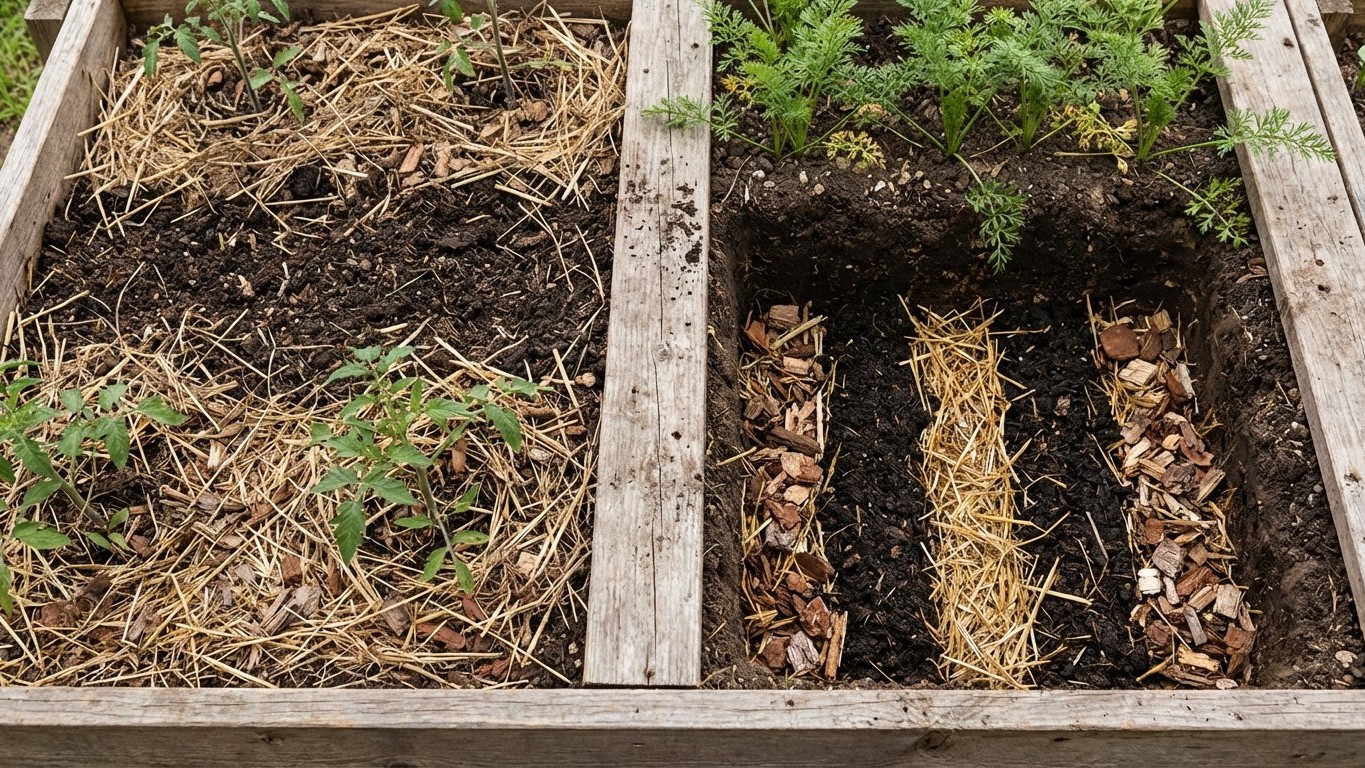
The premise is disarmingly simple: instead of spreading mulch horizontally across your beds, you sink organic material deep into the soil in vertical channels, essentially creating underground pathways that draw roots downward while dramatically improving drainage, aeration, and microbial activity. The surface footprint stays exactly the same. What changes is how far your garden extends into the earth, and by extension, how productively every square inch performs.
Key takeaways
- A decades-old Japanese farming method is allowing gardeners to harvest three times more vegetables from the same plot size
- The technique involves creating deep underground channels filled with organic material that fundamentally changes how plant roots access nutrients and water
- No specialized equipment needed—just a shovel and the willingness to rethink what ‘garden space’ actually means
What the Technique Actually Involves
Picture a standard raised bed or in-ground plot. Most gardeners mulch the top, maybe dig compost into the first six inches, and call it a day. Vertical mulching takes a different approach entirely. You drill or dig narrow shafts, typically four to six inches wide and eighteen to twenty-four inches deep, spaced about eighteen inches apart across the bed. These shafts get packed with a layered mix of straw, wood chips, finished compost, and sometimes shredded leaves. Then you plant normally around them.
The Japanese agricultural tradition behind this method draws from centuries of intensive small-plot farming, where wasting a single inch of space was genuinely not an option. The idea mirrors what happens naturally in forest floors, where decomposing roots and organic tunnels create a three-dimensional web of nutrients that surface-level cultivation simply can’t replicate. You’re not adding square footage. You’re adding cubic footage, and that’s a fundamentally different kind of abundance.
Over weeks, the packed organic material breaks down, releasing nutrients directly at root depth while simultaneously pulling in earthworms that further aerate the surrounding soil. The channels also act as water reservoirs during dry spells and drainage pipes during heavy rain, two problems that plague most home vegetable gardens simultaneously, often in the same growing season.
Why Vegetables Respond So Dramatically
Tomatoes are a useful case study here. Given the opportunity, a tomato plant will send roots down three to four feet when conditions allow. Most garden soil, even amended soil, becomes compacted and nutrient-poor somewhere between eight and fourteen inches down, which is exactly where root growth stalls. Vertical mulching channels essentially punch through that barrier, giving roots a pre-made highway to resources they’d otherwise never reach.
Carrots, parsnips, and beets respond even more visibly because their edible portions are the roots themselves. Growers who have adopted this technique consistently report root vegetables that are longer, straighter, and less prone to forking, that awkward splitting that happens when a carrot hits a dense soil layer and decides to grow around it rather than through it. Squash, peppers, and cucumbers benefit too, though in a less immediately obvious way: their above-ground productivity increases because their below-ground infrastructure is more robust.
There’s a counterintuitive element worth sitting with: you’re actually reducing the plantable surface area slightly by creating these shafts. And yet overall yield goes up. The explanation lies in plant health rather than plant count. A smaller number of genuinely thriving plants outproduces a larger number of struggling ones, every time.
Setting This Up Without Specialized Equipment
A standard post-hole digger or a long spade does the job perfectly well. Some gardeners use a bulb auger attached to a power drill for cleaner, faster shafts. The organic fill material is even more flexible, almost anything carbon-rich works, from straw and wood chips to dried grass clippings and shredded cardboard. The Japanese tradition favors a mix that includes bokashi-fermented kitchen scraps at the base of each shaft, which supercharges the microbial activity, but this is an enhancement, not a requirement.
Timing matters more than most guides acknowledge. Creating the channels in early spring, a few weeks before planting, allows the initial decomposition phase to begin and the soil around the shafts to settle. If you’re working with an established bed mid-season, you can still add shafts between existing plants, being careful not to sever major root systems. Fall installation is actually ideal for gardeners who plan ahead, winter rain and freeze-thaw cycles help integrate the organic material deeply before spring planting begins.
One practical note: label or map your shaft locations. After a season, they become invisible at the surface, and accidentally digging through a well-established channel when you’re planting garlic in October is more frustrating than it sounds.
Scaling the Mindset, Not Just the Method
What makes vertical mulching genuinely compelling for American home gardeners right now is the broader shift it requires in how you conceptualize garden space. Most of us were taught to think horizontally, more beds, more square footage, more plants. This technique asks you to think differently. Not bigger. Deeper.
That shift has implications beyond the kitchen garden. It’s the same logic that drives container gardening in deep, narrow planters, permaculture swales designed to capture water vertically through soil profiles, and the recent surge of interest in deep-rooted perennial vegetables like skirret and sea kale among American growers. The surface tells you one story. What’s happening underground tells you another, usually more interesting one.
A 400-square-foot garden optimized with vertical mulching channels, proper spacing, and root-depth nutrition isn’t just a more productive garden. It’s a different category of garden, one where the limiting factor is no longer space, but imagination. Which raises the obvious question for anyone staring at a modest backyard this spring: how deep are you actually willing to go?