
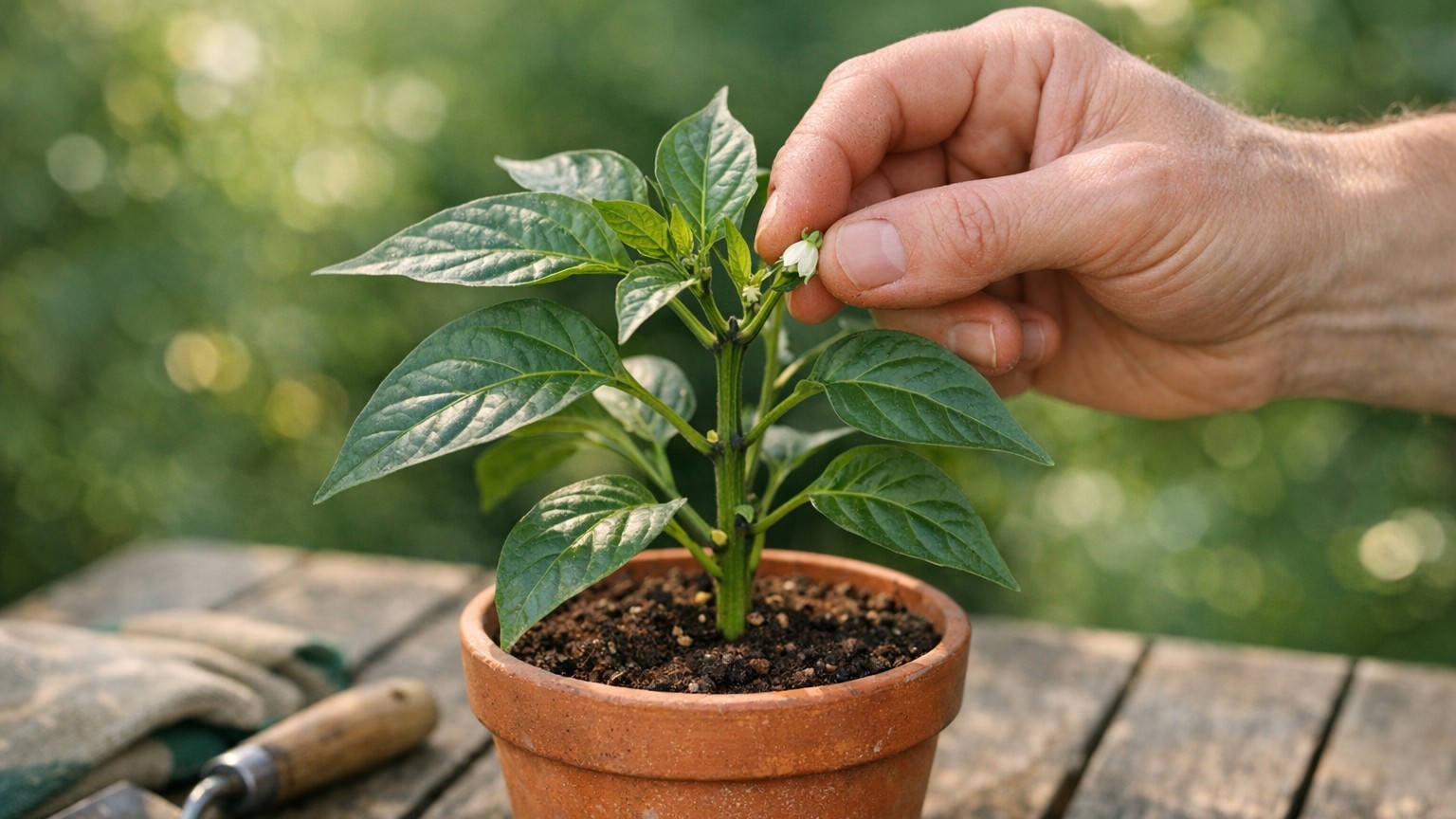
For years, the first flower on a pepper plant felt like a reward. Proof the season was going well, that the soil was right, that the timing had worked out. Pinching it off, deliberately removing that first hopeful bloom before it could set fruit — seemed almost cruel. Wasteful, even. Then one summer, out of mild frustration more than horticultural conviction, I tried it. The difference in harvest size was not subtle.
This technique, known as “flower pinching” or sometimes “first flower removal,” is one of those gardening practices that sounds counterintuitive right up until the moment you understand plant biology. Pepper plants are, at their core, trying to reproduce. The moment a plant sets its first fruit, it redirects an enormous share of its energy toward that single pod. Root development slows. Branching stalls. The plant is essentially putting all its metabolic effort into one task before it has built the infrastructure to support a full harvest.
Key takeaways
- One small decision made in early summer is silently capping your entire pepper harvest
- Plant hormones triggered by the first fruit redirect all energy away from growth
- Commercial growers in Spain and Mexico have practiced this for generations with dramatically different results
What actually happens when you leave that first flower
A pepper plant that sets fruit early has, in a sense, made a decision. The hormonal signals triggered by fertilization, particularly the rise in auxins and ethylene, tell the rest of the plant: stop growing, start ripening. This is not speculation; it’s well-documented plant physiology. The problem is that early in the season, most pepper plants have not yet developed the root mass or canopy density needed to sustain multiple fruits efficiently.
Think of it this way: letting a young pepper plant keep its first fruit is a bit like asking a first-year apprentice to manage a full project before they’ve finished training. The single fruit gets produced, sure. But the plant’s potential for the rest of the season is quietly capped. Root spread suffers most visibly in container-grown peppers, where the consequences are amplified, a pot limits resources anyway, and early fruiting compounds the constraint.
Nurseries and commercial pepper growers in Spain and Mexico, where pepper cultivation is both a cultural tradition and a serious agricultural industry, have practiced systematic first-flower removal for generations. Some commercial operations extend the logic further, removing the first two flowers on bell pepper varieties, arguing that the branching architecture a plant develops in those extra weeks translates directly to higher overall yield per plant.
How to do it without second-guessing yourself
The mechanics are straightforward. When your pepper plant produces its very first flower bud, usually appearing at the first “fork” in the main stem, called the Y-node — pinch or snip it off before it opens. Clean fingers work fine; scissors reduce any chance of accidentally damaging the stem. If a second bud appears at the same node shortly after, remove that one too.
Timing matters more than most guides admit. The ideal window is when the plant has four to six true leaves and is actively growing, but hasn’t yet become rootbound or stressed. A stressed plant (underwatered, overheated, recently transplanted) does not benefit the same way, it’s already in survival mode, and removing its reproductive attempt can demoralize the whole process further. Wait until the plant looks genuinely healthy and vigorous before you start pinching.
One practical detail worth knowing: this works best for sweet peppers and bell peppers, which have long seasons and significant potential for branching. Hot pepper varieties, particularly compact or bushy types like Thai chilis, tend to set many flowers naturally in a short window. The impact of removing the first flower is real but less dramatic with these types. For large-fruited varieties like poblanos or Cubanelles, plants that can take 80 to 90 days from transplant to mature fruit — early flower removal can meaningfully shift how the plant allocates its long growing season.
The ripple effect on the rest of the season
What surprised me most wasn’t the final count of peppers. It was how the plant looked differently by mid-July. Wider. Denser. The branching had multiplied in a way that a plant allowed to fruit early simply doesn’t achieve. More branches mean more nodes. More nodes mean more flowering sites. A pepper plant that has been allowed to build structure for even two extra weeks before committing to fruit can produce significantly more total flowering sites, some growers report 20 to 40 percent more fruit per plant across a full season, though results vary considerably by variety, climate, and soil conditions.
There’s also a quality argument. Peppers produced later in the season on a well-established plant tend to be larger and more consistent in size. Early fruits, produced on an underdeveloped plant, are often smaller, sometimes misshapen, and occasionally drop before maturing, a phenomenon gardeners sometimes mistake for disease or pest damage when the real cause is simple resource scarcity.
Container gardeners stand to gain the most from this practice. A 5-gallon pot contains a finite amount of nutrients and oxygen, and the ratio of root mass to soil volume is always a negotiation. Giving the roots an extra two or three weeks of uninterrupted development before fruiting begins is one of the highest-leverage adjustments available without changing soil mix or pot size. It costs nothing. The only thing it asks is the willingness to remove something that looks, in the moment, like success.
One last thing worth knowing: pepper plants are Perennials in their native tropical environments. In frost-free climates, a well-managed plant can fruit across multiple years. Growers who overwinter peppers indoors and then move them outside the following spring often skip flower removal entirely on mature plants, the established root system has already solved the problem that makes pinching so valuable in a plant’s first productive season.