
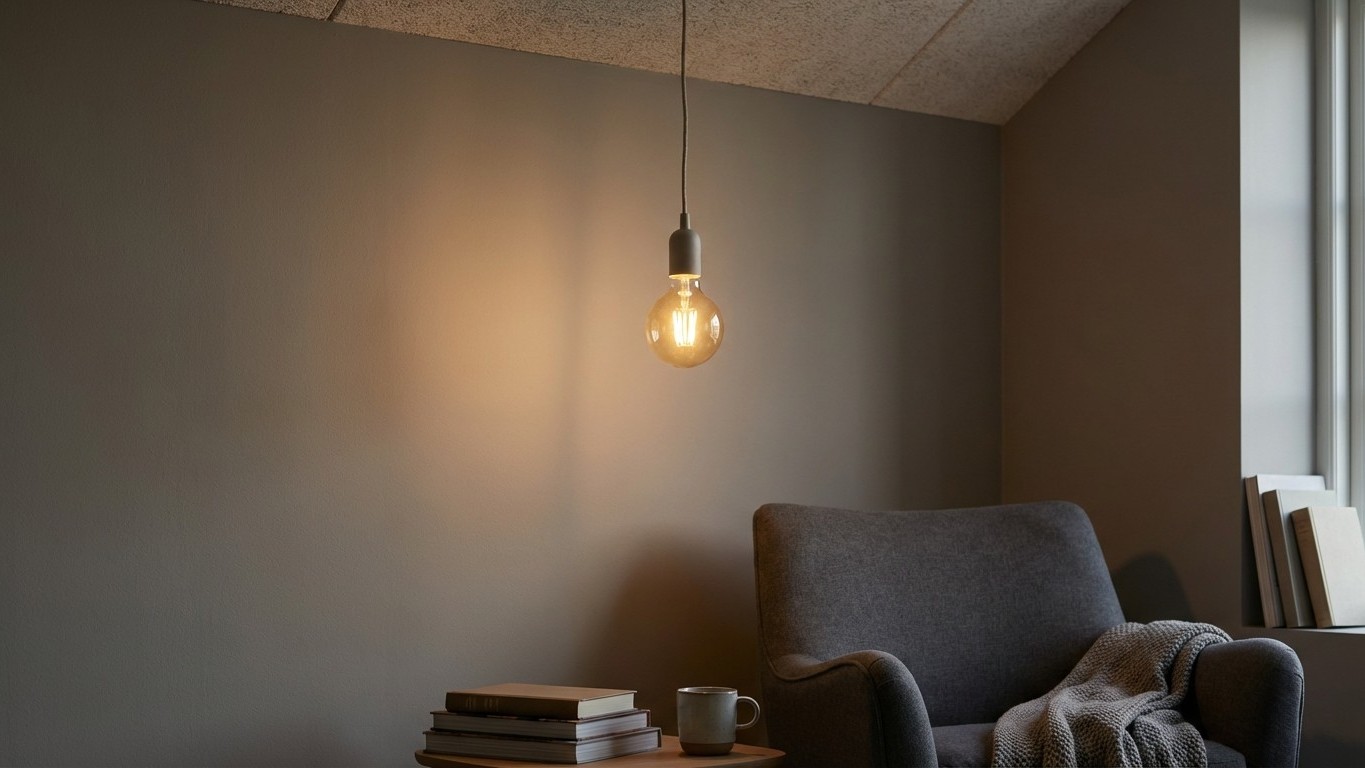
The color felt wrong. For months, I stared at my living room wall, sure the fresh paint, a soft gray meant to bring calm, was fighting me. Every morning, the wall leaned blue, casting a chill. By night, it turned dingy, practically bruised. I swore I’d botched the shade, blaming myself for yet another failed DIY upgrade.
Repainting was on my mind. An expensive, exhausting prospect. But then a neighbor, part-time photographer, full-time lighting snob, dropped in for coffee and spotted the culprit instantly. She didn’t even glance at my paint can. Her eyes shot straight to the ceiling. “Your bulbs,” she whispered, unimpressed. “They’re killing your color.”
Key takeaways
- A soft gray paint can look blue or dingy depending on your light bulbs.
- Different light bulbs have varying color temperatures that warp wall colors.
- Changing one bulb can Transform-your-space-instantly-the-designers-secret-to-colorful-ceilings”>Transform a room’s entire mood Without repainting.
How Bulbs Change Everything
Turns out, the shade isn’t just in the can. The light that pours over your space, warm, cool, or pure white, can warp any carefully chosen hue. You might pick a “stone gray” and end up with “submarine blue” by sundown. The key variable? Something called “color temperature,” measured in kelvins, stamped in tiny numbers on the bulb’s box.
Most homes still rely on default settings. Soft white bulbs (around 2700K) cast a cozy, slightly yellow glow, flattering for faces but treacherous for colors. Bump that up to daylight bulbs (5000K or more), and suddenly every wall turns clinical, shadows sharpen, and the palette shifts cold. The same tub of paint, two utterly different moods, like wearing sunglasses inside versus out.
Retailers know this. Fancy paint stores install special lighting just to help customers see truer samples, otherwise every sample wall would become a chameleon. But at home, we forget. How many times have you bought a pillow or rug, only to regret the hue once dusk falls? The secret drama behind that regret often plays out at the bulb socket, not the pigment jar.
The LED Revolution (And Its Unintended Side Effects)
Five years ago, lighting seemed simple. Screw in a bulb, turn it on, call it a day. LEDs changed that. Now, aisles brim with choices: soft white, warm white, daylight, “full spectrum,” and packaging full of technical promises. One in three American households upgraded their bulbs to LED by 2025, chasing efficiency, but many of us missed the fine print.
LEDs are energy misers, great for bills, tough for mood. Their sharp, blueish tone can play tricks with colors, especially in rooms painted with complex hues. Ever notice how a bold green accent suddenly seems sickly under cheap LED strips? That’s not your wall turning jealous; it’s the light shifting its undertones, robbing your paint of its intended spirit.
Even “smart” bulbs aren’t innocent. Yes, you can adjust the color with an app, sliding between sunrise and polar ice cap with a thumb swipe. But unless you understand what your paint color needs, warmth to enrich reds, cooler light to balance peach, those settings are just high-tech guesswork. The result: drab color at noon, garish neon at night, frustration when you only wanted peace.
Unlocking the Right Pairing: Paint Meets Light
So, what’s an ambitious decorator to do? Ignore the myth that paint lives alone. Any shade, no matter how beautiful in store, is only half the formula. The other half quietly buzzes above your head, dictating whether your Favorite blue feels beachy or brisk, or, worse, muddled and dull.
Here’s the trick: start with the mood. Want a reading nook that glows like late afternoon, soft and inviting? Aim for bulbs around 2700K–3000K. Dreaming of a crisp, gallery-style atmosphere for Your Kitchen or office? Go cooler : 4000K or even 5000K daylight bulbs. The difference is nearly theatrical: one feels like an old jazz record, the other like a morning run.
Paint companies sometimes publish their “recommended lighting” info for popular shades, but rare is the Homeowner who reads the fine print. A smart shortcut: bring a sample of both your new color and your favorite home lighting to the paint store. Hold the chip under the same bulb you plan to use at home. Wait a minute. Let your eyes adjust. The true color will reveal itself, not on the shelf, but under your own glow.
Of course, some rooms break the rules. Bathrooms crave bright, high-K bulbs to mimic daylight. Bedrooms often thrive with more golden, softer light. You don’t need to go full laboratory, just match your light to your paint’s undertones. Soft gray walls dance with warm LEDs; cool whites sing beneath crisp, chilly bulbs. Think of it as tuning a guitar: each string (or bulb) needs a different touch to sound just right.
Why So Few of Us Get This Right
Maybe it’s a symptom of modern life. We want fast results, cheap fixes, transformation overnight, so we pick a color, swipe it onto walls, and call it done. But rooms aren’t static. They come alive only when daylight shifts, lamps click on, shadows play along the baseboards. Ignoring light is like planting roses in the shade and blaming the soil when they refuse to bloom.
So what now? Don’t rush for another can of paint. Swap one bulb in your most frustrating room, just one, and watch the transformation. The change can feel startling, almost alchemical. Suddenly your teal becomes serene instead of stark, your blush pink warming up for the first time since you rolled it on. There’s delight in realizing your home can become new, not by spending a fortune, but by noticing the overlooked conversations between color and light.
One question lingers: if light can sculpt our walls in such dramatic ways, what other details are subtly reshaping the places we call home, hidden in plain sight, waiting for us to flip the switch?