
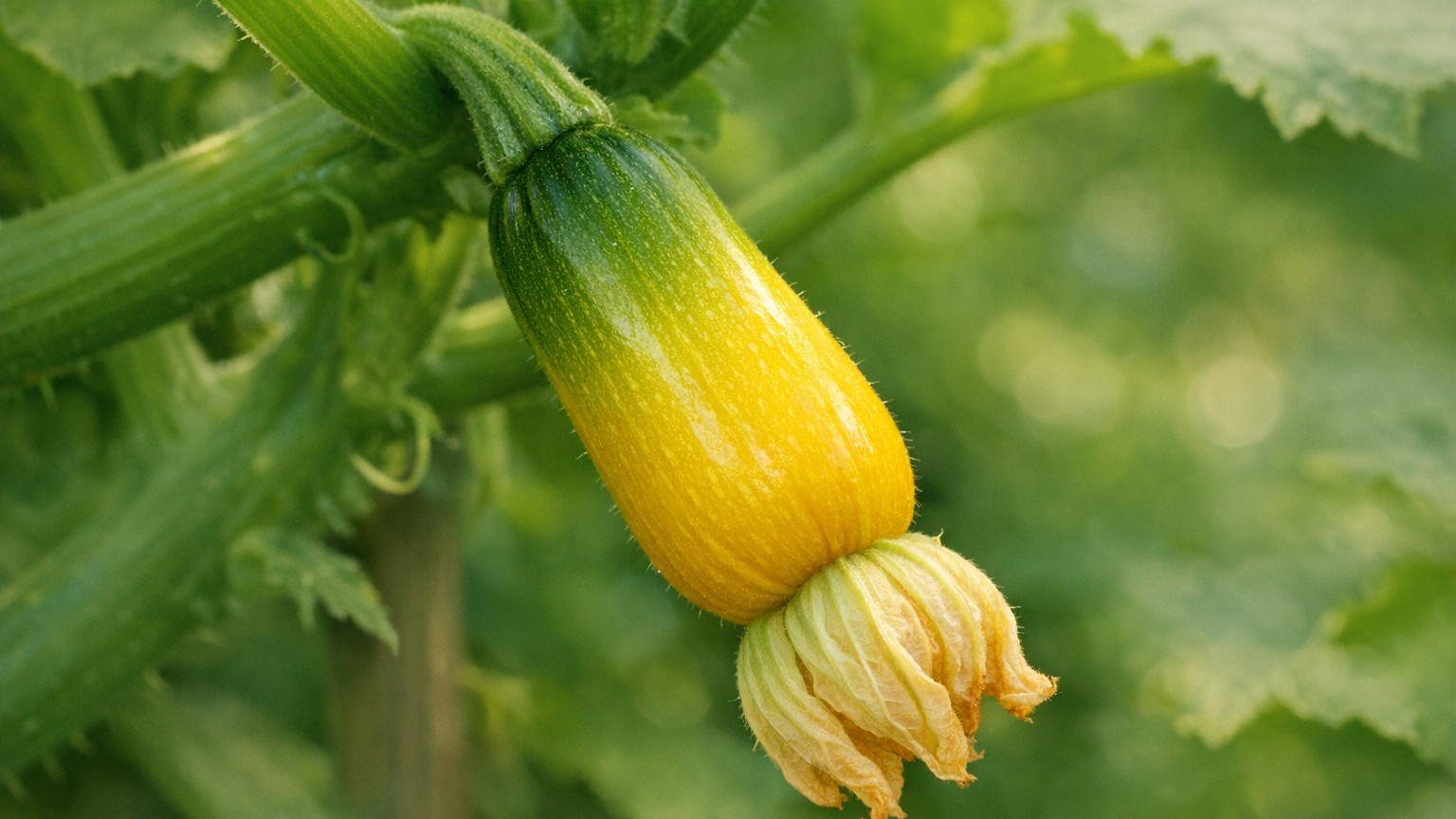
Yellow zucchini fruits dropping off the vine before they’re even finger-length, it looks alarming. Many gardeners, especially those growing squash for the first time, immediately suspect fungal disease, root rot, or some kind of pest infestation. The reality is far less dramatic, and understanding what’s actually happening can save an entire season’s harvest.
The phenomenon has a name: blossom-end abortion, or fruit drop due to poor pollination. When a young zucchini turns yellow and falls off at the stem within days of forming, the fruit was never fertilized. It’s not sick. It simply wasn’t viable from the start, the plant knows it, and it lets go.
Key takeaways
- Yellow zucchini isn’t always sick—it might never have been pollinated in the first place
- Heat waves and early-season bee behavior create ideal conditions for fruit drop in June
- One unexpected factor: inconsistent watering can trigger the plant to shed fruits as a survival response
The real culprit: a pollination problem hiding in plain sight
Zucchini plants produce two distinct types of flowers: male flowers, which appear first and in abundance, and female flowers, which carry the tiny proto-fruit at their base. For a zucchini to develop into something you can actually eat, pollen from a male flower must reach the stigma of a female flower, usually carried there by a bee or other pollinating insect. If that transfer doesn’t happen, the female flower closes, the small fruit behind it starts to yellow, and the plant abscises it within 48 to 72 hours. Clean, efficient, and completely natural.
June creates a specific set of conditions that make this more likely to happen. Early in the season, male flowers often outnumber female ones by a ratio of 10 to 1, the plant is essentially warming up its reproductive system. But the reverse problem is also common: when temperatures spike above 90°F during the day and stay above 70°F at night, bees dramatically reduce their foraging activity. A study from the University of California Cooperative Extension found that pollinator visits to cucurbit crops drop by more than 50% during heat events. No bees, no pollination, no zucchini.
Gardens surrounded by dense plantings, walls, or structures tend to see this more often, reduced airflow means pollinators have fewer approach corridors. A patch tucked against a south-facing fence in full shade by 2 p.m. is a quieter place for insects than an open raised bed.
How to tell fruit drop from actual disease
The distinction matters, because the response is completely different. Powdery mildew, bacterial wilt, and squash vine borer all produce yellowing, but they affect the leaves, stems, or spread progressively across the plant. Pollination failure is localized and consistent: only the very young fruits turn yellow, and only at the base of female flowers. The rest of the plant looks perfectly healthy. The leaves are green, the stems are firm, and new flowers keep appearing.
One quick check: look at the base of the dropped fruit. A properly fertilized young zucchini will be uniformly green and firm. One that wasn’t pollinated often has a slightly soft, almost translucent yellow starting at the blossom end. That gradation, healthy stem end, failing fruit tip, is the giveaway. Disease tends to produce brown lesions, water-soaked spots, or mushy tissue with an odor. Unpollinated drop is clean.
If you’re seeing yellowing on leaves as well, or if the wilting follows the vine structure rather than clustering on young fruits, that’s when to start investigating pests and pathogens more seriously. But in June, with a plant that otherwise looks vigorous? Pollination is the first answer to rule out.
What you can actually do about it
Hand pollination is the most reliable fix, and it takes about thirty seconds per flower. Pick a fully open male flower (no swollen base), peel back the petals, and gently brush the pollen-covered anther against the center of an open female flower. Do this in the morning, when flowers are fully open and pollen transfer is most effective. Some gardeners use a small, dry watercolor brush instead, same principle.
Planting flowers that attract pollinators nearby makes a measurable difference over the course of a season. Borage, in particular, has a well-documented relationship with cucurbits: its flowers attract bumblebees that are strong enough to work zucchini blooms efficiently. Nasturtiums and phacelia also bring in generalist pollinators without taking up much space in a kitchen garden.
Watering consistency turns out to be a less obvious factor. Irregular watering, soaking, then letting the soil dry out completely, creates stress that prompts the plant to drop fruits it might otherwise have kept. Deep, consistent moisture (roughly one inch per week, more in heat waves) keeps the plant in a state where it’s willing to invest energy in developing fruit rather than shedding it as a survival strategy.
Avoid heavy nitrogen fertilization once flowering begins. Too much nitrogen pushes the plant toward producing foliage and male flowers at the expense of female flower development. If you applied a balanced fertilizer at planting, you likely don’t need to add more until mid-summer.
The longer view on early-season losses
The first two to three weeks of June fruit drop are often unavoidable in most U.S. growing zones, and experienced gardeners tend to treat them as baseline noise rather than failure. A healthy zucchini plant in good soil will produce 6 to 10 pounds of fruit per week at peak season, losing a dozen unpollinated fruits early on doesn’t materially affect that yield.
What the early drop does tell you is that your plant is working. Female flowers are forming, the reproductive cycle has started, and the conditions are almost right. The gap between “almost right” and “fully functional” is usually just a few more warm mornings, a few more bees finding their way to the flowers, or one intervention with a small brush and a steady hand. One more detail worth knowing: zucchini plants that receive consistent pollination actually produce better-shaped, denser fruits later in the season, because the plant develops a stronger hormonal signal to prioritize fruit development over vegetative growth.