
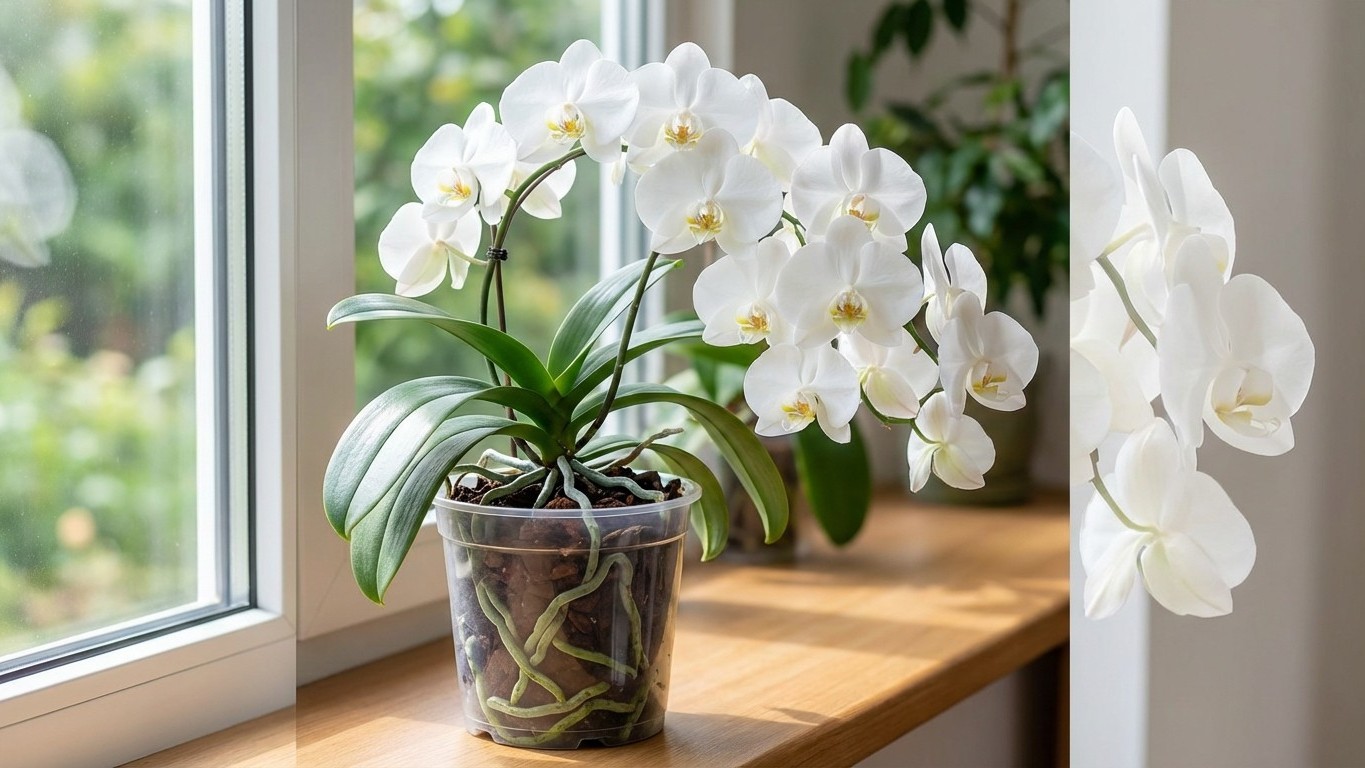
After Mistake-that-cost-me-two-years-of-blooms”>Two Years of lush green leaves but zero flowers, my once-magnificent Phalaenopsis orchid had become the beautiful disappointment sitting on my windowsill. I’d tried everything – switching fertilizers, adjusting light exposure, even talking to it more often. Nothing worked. Then I discovered I’d been making one fundamental mistake that nearly every orchid owner makes, and it was killing my plant’s ability to bloom.
The revelation came during a conversation with a professional orchid grower at my local nursery. As I described my faithful watering routine – a generous drink every Sunday morning, just like clockwork – I watched her expression change. That’s when she delivered the truth that would Transform-old-radiators-effortless-diy-to-make-ugly-heaters-chic-without-removal”>Transform my orchid care Forever: I was drowning my plant with kindness.
The Root of the Problem
Orchids are epiphytes in nature, meaning they grow on other plants rather than in soil. Their roots are designed to absorb moisture quickly from brief tropical downpours, then dry out completely. When we keep their roots consistently moist, we’re essentially suffocating them. Wet roots can’t absorb the oxygen they desperately need, and without proper root function, the plant redirects all its energy toward basic survival rather than the luxury of flowering.
The mistake I’d been making wasn’t just overwatering – it was watering on a schedule rather than responding to the plant’s actual needs. Those thick, silvery aerial roots that looked so healthy were actually showing signs of stress. Healthy orchid roots should be plump and green when moist, turning silvery-white when dry. Mine had lost that dynamic color change, staying a dull green that indicated chronic moisture stress.
This chronic overwatering creates a cascade of problems. The root system becomes inefficient at nutrient uptake, the plant’s metabolism slows, and it enters a survival mode where blooming becomes impossible. Even worse, consistently wet conditions invite fungal infections and root rot, which can eventually kill the plant entirely.
The Simple Fix Changed-everything”>That Changed Everything
The solution was elegantly simple: let the orchid tell me when it needed water. Instead of my rigid weekly schedule, I learned to read the plant’s signals. The orchid media should become almost completely dry between waterings, and the roots should show that telltale silver color that indicates They’re ready for moisture.
I started checking my orchid every few days, looking at the roots through the clear plastic pot and testing the bark medium with my finger. Only when the medium felt dry and the roots looked silvery would I give it a thorough watering. This usually meant watering every 10-14 days during winter and perhaps every 7-10 days during the warmer growing season.
The watering technique itself also mattered. Rather than pouring water over the top, I began placing the entire pot in a bowl of lukewarm water for about 15 minutes, allowing the roots to absorb moisture Naturally. Then I’d lift it out and let excess water drain completely – orchids despise sitting in standing water.
Within three months of changing my watering approach, I noticed the first signs of improvement. The roots became more vibrant, cycling properly between green and silver. The leaves took on a healthier sheen. Most importantly, a flower spike began emerging from the center of the plant – the first sign of blooming I’d seen in over two years.
Beyond Watering: Creating Optimal Conditions
Once I’d mastered the watering rhythm, other aspects of orchid care fell into place more naturally. Proper watering allowed the plant to efficiently use the bright, indirect light I was providing and absorb the monthly orchid fertilizer applications. The improved root health meant the plant could finally-stopped-killing-my-low-light-plants-and-helped-them-thrive”>Finally channel energy toward flowering rather than just surviving.
Understanding the natural drought-and-flood cycle also helped me recognize that orchids actually prefer slight stress. This controlled stress, achieved through proper drying periods, triggers the plant’s reproductive response – essentially convincing it that conditions are right for creating the next generation through flowering.
The transformation wasn’t instant, but it was remarkable. By the six-month mark, my orchid produced a spectacular display of five large, pristine white flowers that lasted for nearly three months. More importantly, I finally understood that loving an orchid means respecting its natural rhythms rather than imposing my own schedule.
The Patience Paradox
Perhaps the most valuable lesson was learning that sometimes the best care means doing less, not more. Our instinct as plant parents is to nurture actively – to water, fertilize, and fuss over our green companions. But orchids taught me that restraint can be the greatest form of care.
This principle extends beyond just watering frequency. It’s about observing rather than assuming, responding rather than scheduling, and trusting the plant’s wisdom accumulated over millions of years of evolution. When I stopped imposing my human timeline and started following the orchid’s natural rhythm, both the plant and I became more content.
Today, my orchid blooms reliably every year, sometimes twice. The Secret wasn’t a special fertilizer, perfect humidity, or expensive grow lights – it was simply learning to let it breathe between drinks. Sometimes the most profound solutions are also the simplest ones, hiding in plain sight while we search for complicated answers.