
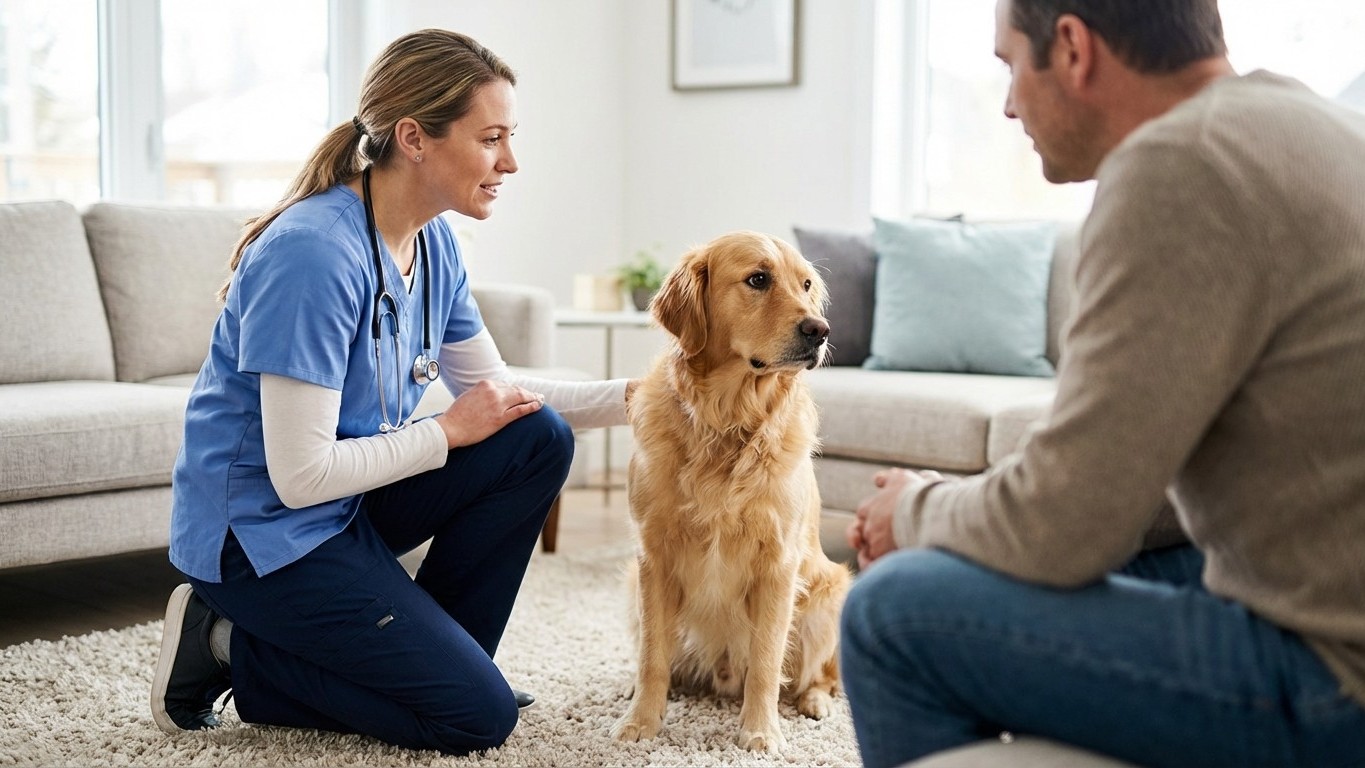
That moment when your typically friendly dog suddenly stiffens and growls at a particular visitor leaves you puzzled and embarrassed. You apologize profusely while wondering what just happened. The truth is, Your Dog isn’t being randomly aggressive—they’re responding to something very real that you can’t detect.
Dogs are sensitive to fear in humans and sense fear and anxiety via their noses. When we are stressed or scared, we secrete adrenaline, the fight-or-flight hormone, which dogs detect even though we cannot smell it. Behavioral veterinarians now understand that this selective growling behavior represents one of the most sophisticated forms of canine communication, revealing your dog’s remarkable ability to read the world around them.
The Science Behind Selective Detection
Dogs devote lots of brain power to interpreting smells. They have more than 100 million sensory receptor sites in the nasal cavity compared to 6 million in people, and the area of the canine brain devoted to analyzing odors is about 40 times larger than the comparable part of the human brain. In fact, it has been estimated that dogs can smell anywhere from 1,000 to 10,000 times better than people.
This extraordinary sensory ability extends far beyond simple odor detection. The chemical aromas communicate what a dog likes to eat and identify gender and mood. By simply smelling, a dog can determine if a new friend is male or female, happy or aggressive, healthy or ill. when your dog growls at someone, they’re often responding to chemical signals that person is unknowingly broadcasting.
Dogs have an extremely sensitive sense of smell. Dogs can average a 10,000-100,000 times stronger sense of smell than humans. Therefore, something in a person’s scent may trigger your dog to growl, and it will not even register with you. Dogs also make associations by how things smell. A smell that they associate with either a trauma or frightening situation could cause them to growl, just because the smell is familiar.
Recent research has provided compelling evidence for this phenomenon. Studies reported that dogs showed more stress-indicative behaviors and were less likely to approach strangers in conditions where “fear” sweat was presented. These results suggest that dogs can detect human psychological states, primarily from olfactory cues, as evidenced by their untrained behavioral responses.
What Dogs Actually Detect in Humans
When your amygdala—the brain’s fear center—senses a threat, it sends a signal to another part of your brain called the hypothalamus, which in turn prompts your adrenal glands to release the stress hormones adrenaline and cortisol. Your dog’s nose picks up these chemical changes instantly, often before you’re even aware of feeling anxious yourself.
Researchers took odor samples from people after measuring their cortisol, heart rate, heart-rate variability, and self-reported anxiety. They then selected odor samples from participants with the strongest cortisol responses and presented them to untrained dogs. Ultimately, the dogs exposed to a stressed person’s scent were more cautious than the dogs exposed to a relaxed person’s scent. This suggests that dogs may detect differences in cortisol, or other chemical changes associated with stress and fear, via scent—even without training.
The implications go beyond simple fear detection. A negative person who is emotionally unpredictable has a unique chemosignal that dogs can detect. If those scents predict explosive or dangerous behavior, a dog learns to anticipate unsafe surroundings. This explains why some dogs consistently react to certain individuals who may not appear threatening to human observers.
Behavioral veterinarians also recognize that while growling often means that a dog needs space or is uncomfortable, growling is a complex vocalization that also occurs in other situations. It’s important to understand why your dog is growling, how you can prevent them from escalating their behavior, and when to intervene.
Beyond Fear: The Complex Triggers
Fear isn’t the only factor that triggers selective growling. Growling when certain family members approach the owner often indicates resource guarding or protective behavior. The dog perceives the owner as a valued resource and may feel threatened by others’ proximity. This protective instinct can be highly selective, targeting specific individuals while remaining friendly toward others.
Dogs usually growl at strangers who come to the house because their protective instincts kick in for their family. They may also be protecting their territory from intruders. If the visitor’s appearance is something your dog is not used to, they may react fearfully, which can include growling.
The timing of these reactions often surprises owners. We often see this behavior emerge in dogs during adolescence, as they approach maturity. Most clients with these concerns have dogs who are from eight to 18 months of age. These are usually the dogs who were somewhat shy as a pup. Shy pups tend to shut down and suffer the attentions of the people who want to greet or comfort them. As they get a little older, they may respond with a growl instead of just shutting down.
The growling behavior is reinforced by success; the dog realizes that she can get people to leave her alone by growling at them, so she growls more when people approach. This creates a learned pattern that can become increasingly selective as dogs refine their ability to identify which people pose perceived threats.
When to Take Action
Understanding why your dog growls at certain people doesn’t mean accepting potentially dangerous behavior. If your dog continues to growl, refuses to take rewards, appears fearful and anxious, or escalates their behavior to barking, lunging, and biting, take them to a veterinarian for an exam. If the growling is a new behavior or doesn’t stop, take your dog to the vet to rule out medical conditions and work with a certified behavior specialist. This could be a sign of pain, and medical conditions must be ruled out by a veterinarian.
If your companion has never snarled or growled before, and all of a sudden begins to do that (without being threatened or provoked) then it may be time to visit the veterinarian. Recent studies show that pain, in particular, is an important risk factor for behavior problems. A study of veterinary behaviorists’ cases found that between 28% and 82% of patients demonstrated signs of pain.
The approach to managing this behavior has evolved significantly. Never punish your dog for growling—this can make them more anxious and fearful. Redirecting your dog to perform more desirable behaviors is the best way to stop inappropriate growling. Growling as a warning signal doesn’t need to be stopped. Revoking your dog’s ability to warn will lead to a much more unpredictable dog.
Professional intervention often proves essential for addressing selective aggression safely and effectively. Board-certified veterinary behaviorists emphasize that while the prognosis for complete resolution of canine aggression is always poor, aggression is akin to any chronic disease, and a realistic favorable outcome is minimization of aggressive episodes to a degree that all people and pets in the household experience a state of wellbeing.
Your dog’s ability to selectively growl at certain people reveals the sophisticated nature of canine perception and communication. Rather than viewing this behavior as problematic, consider it valuable information about your dog’s remarkable sensory abilities. With proper understanding and professional guidance, you can help your dog feel more secure while ensuring everyone’s safety. The goal isn’t to suppress this natural warning system, but to understand what it’s telling you and respond appropriately.