
Coffee grounds sitting in your trash right now could be feeding your garden for free. That’s not a gardening myth or a Pinterest fantasy, it’s basic soil biology, and once you understand how it works, you’ll never toss them again. The same applies to a handful of other everyday scraps that most households throw out without a second thought, materials that professional growers quietly rely on to build productive, healthy soil without spending a dollar at the garden center.
Key takeaways
- One kitchen scrap outperforms commercial fertilizer bags in real trials
- The secret system combines three scraps in a specific pattern that compounds results
- Gardeners report 20-30% yield increases in a single season using this method
The Scrap That Outperforms the Bag
Banana peels deserve the spotlight here. Composted or buried directly near plant roots, they release potassium as they break down, the same nutrient that’s listed as the third number on every fertilizer package you’ve ever bought. Potassium drives fruit development, strengthens cell walls, and helps plants regulate water uptake. Without enough of it, tomatoes crack, squash stay small, and pepper plants sulk. One or two peels per plant, tucked into the soil at planting time or layered into a compost pile, can make a measurable difference by midsummer.
The reason this works comes down to decomposition speed. Unlike a slow-release granule from a store-bought bag, an organic material like banana peel interacts with soil microbes immediately. Bacteria and fungi colonize it, breaking down the cellular structure and converting bound nutrients into forms plant roots can absorb directly. Your garden isn’t just fed, it’s actively cultivated at a microbial level, which pays forward into better soil structure season after season.
Coffee Grounds: More Nuanced Than You Think
Almost every gardening article on the internet tells you to dump coffee grounds everywhere. The reality is more interesting. Grounds are mildly acidic when fresh, which makes them genuinely useful for blueberries, azaleas, and roses, plants that thrive in lower pH conditions. But spread too thickly on the surface, they form a crust that actually repels water. The trick is working them into the top inch of soil or mixing them into compost rather than creating a solid mulch layer.
What grounds do exceptionally well is attract earthworms. Research from gardening extension programs has shown that adding coffee grounds to raised beds increases earthworm activity, and earthworms are essentially a free rototilling and fertilizing service. Their castings contain nitrogen, phosphorus, and potassium in plant-available form, the complete nutrient package, and their movement aerates compacted soil. One tablespoon of grounds per square foot, worked in monthly during the growing season, threads that needle between useful amendment and accidental soil barrier.
Eggshells and the Calcium Question
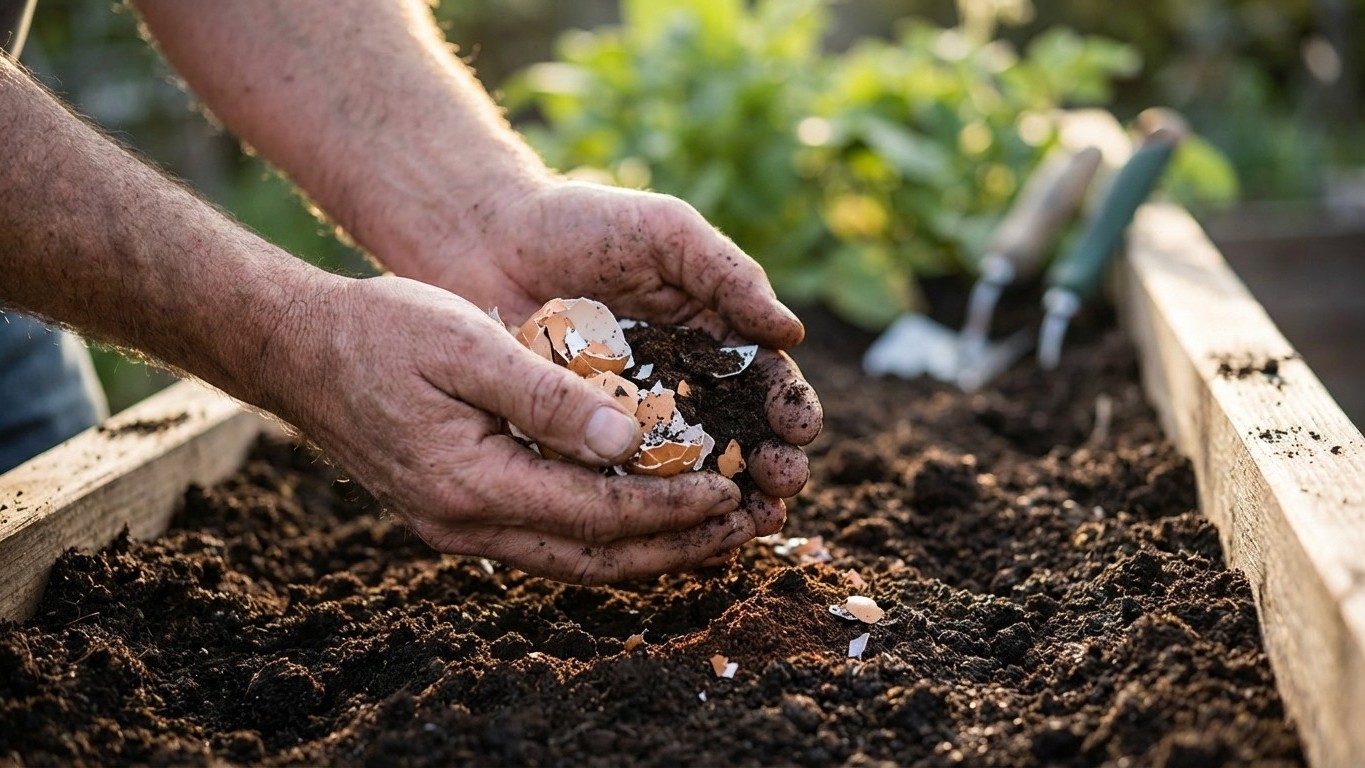
Blossom end rot on tomatoes and peppers has a reputation for being a calcium deficiency problem, and while the full picture involves watering consistency too, adding calcium to your soil rarely hurts. Eggshells are roughly 95% calcium carbonate. Crushed finely and worked into planting holes, they release calcium slowly over months, which is actually ideal, a slow trickle rather than a flood gives roots time to absorb without creating mineral imbalances.
The catch most gardeners miss: whole or coarsely cracked shells take years to break down meaningfully. If you want results within a single season, dry the shells, crush them in a food processor or with a rolling pin until they’re almost powder, then incorporate them into the soil before planting. A dozen shells per tomato plant, worked into the bottom of the planting hole, gives roots something to work with from the start. Some gardeners steep crushed shells in water for 24 hours and use the liquid as a foliar spray, a slower route to the same destination.
Building a System, Not Just Scattering Scraps
The real power of kitchen scrap gardening isn’t any single ingredient. A banana peel here, a handful of grounds there, that’s tinkering. What doubles a harvest is building a consistent system around these materials so they’re working together over an entire season.
A simple approach: keep a small container near the compost pile specifically for the big three (peels, grounds, crushed shells). Add them weekly during the growing season, either directly to a hot compost pile or as direct soil amendments in a rotating pattern around your beds. Peels go deepest (they attract no pests when buried), grounds get incorporated shallowly, shells go into planting holes or around established plants. Within a single season, you’re adding nitrogen, potassium, calcium, and microbial activity to your soil, the same things a balanced commercial fertilizer provides, just slower and cheaper.
There’s also something worth tracking here. Gardeners who document their yields before and after adopting scrap-based amendments consistently report noticeable improvements, not because the scraps are magic, but because paying attention to what goes into the soil makes you more attentive to what comes out of it. Yield improvements of 20 to 30 percent in home vegetable beds aren’t uncommon after a full season of consistent organic amendment, that’s the difference between enough zucchini for the family and enough to leave bags on the neighbor’s porch.
The question worth sitting with as you plan this year’s beds: how much are you currently spending on fertilizer, and how much of that investment is leaving your kitchen in a trash bag every week? The answer might reshape your whole approach to the garden before you even buy a single seed packet.
Sources : home.howstuffworks.com | en.pampas2palms.com