
Ask any gardener who’s been growing tomatoes since before the internet could tell them how, and they’ll mention it almost offhandedly, like it’s obvious. Check the soil before you plant. Not the air. Not the forecast. The soil itself. That small, deliberate act, the one ritual old-timers never skipped in late March, is the single most effective way to stop root disease before it starts. And most home gardeners completely ignore it.
Key takeaways
- Soilborne diseases kill tomato roots long before leaves show wilting—by then it’s too late
- The soil temperature matters more than the calendar, and there’s a specific window that defeats fungal infection
- A $5 thermometer and three weeks of plastic sheeting can warm your beds enough to change everything
The Enemy You Can’t See
Growers who have Planted tomatoes in a single location for several years often notice stunting, yellowing, and reduced yields, and those symptoms frequently indicate soilborne diseases. By the time you see wilting, curled leaves, or a brown-tinged stem, the damage underground is already done. Soilborne disease complexes consisting of Verticillium wilt, Fusarium wilt, corky root rot, black dot root rot, and root knot nematodes are a real threat in tomato production, alongside Rhizoctonia root rot, Pythium root rot, and Sclerotinia white mold. That’s a formidable underground army. And the worst part? Most of these pathogens don’t announce themselves above ground until they’ve already won.
Fusarium crown and root rot, for instance, thrives specifically in cool temperatures (50 to 70°F), low pH soil, and areas of poor drainage prone to becoming waterlogged. Late March in much of the US sits right in that sweet spot. The soil feels workable, the seedlings look vigorous on the shelf at the garden center, and the calendar says spring. Everything tells you to plant. Damping-off is often a problem in plants that are planted too early in the spring, because the fungi are more active in cool, wet, rich soils. Eager timing is the fungus’s best friend.
The Ritual: Reading Your Soil Before Anything Else
Few gardeners check the soil temperature before planting, yet it is probably the most important factor affecting seed germination and plant growth. Planting too early, before allowing the soil to warm up, can lead to seed rot, delayed germination, root decay, poor growth, and disease. That’s the verdict from Ohio State University Extension, not a Gardening blog, not a viral reel, but plant science.
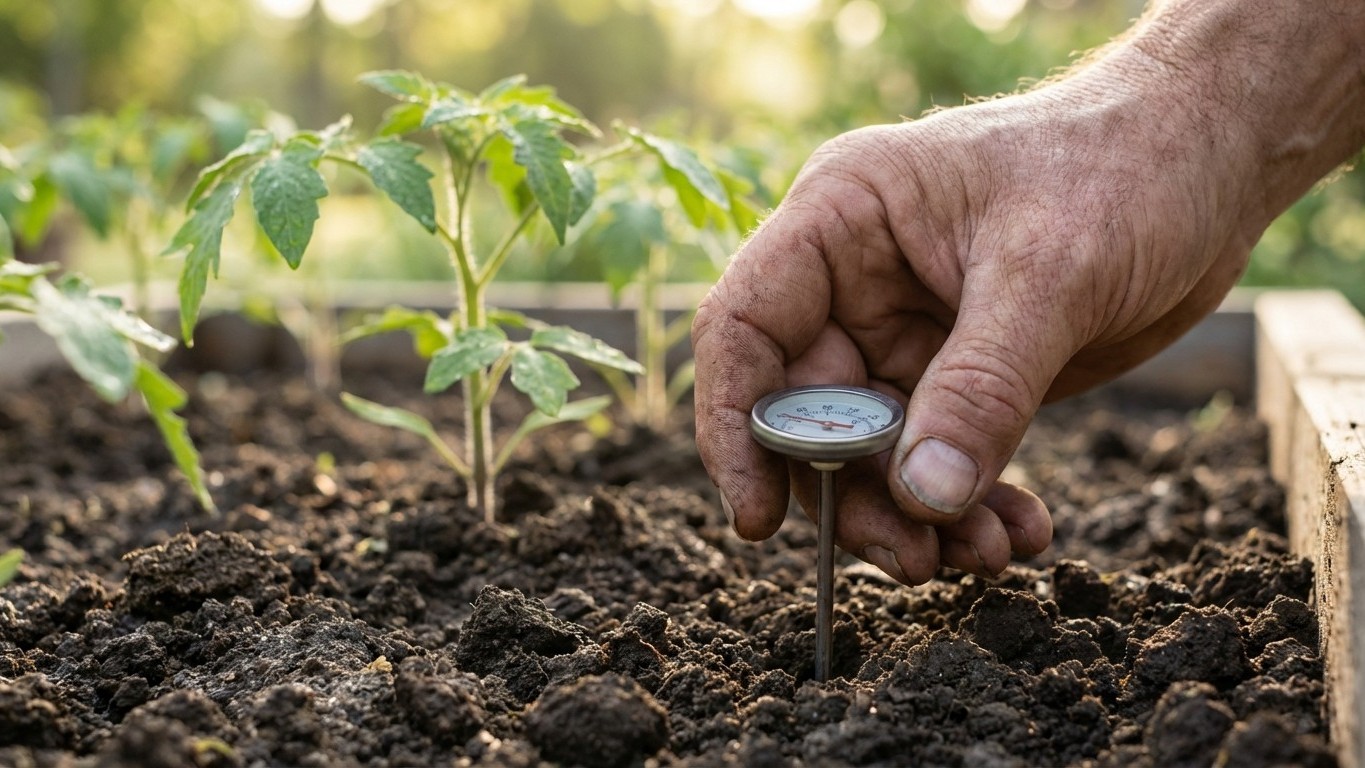
The ritual itself is almost embarrassingly simple. A basic soil thermometer, pushed about four inches into the ground during late morning, gives you what you need. Take the temperature 2.5 inches deep at about 10 to 11 a.m., since temperature variations throughout the day affect the reading, with the lowest readings after dawn and warmest around mid-afternoon. The late-morning reading gives a good average, and you should get consistent readings for four to five days in a row before planting, making sure no cold snap is predicted. Four to five days. That’s the patience the old-timers practiced, and it’s what most modern gardeners skip entirely.
The numbers matter here. The soil should be 60 degrees or more for warm-weather plants like tomatoes and peppers, and for tomatoes specifically, the ideal range is 65 to 70°F. If you plant too early in cold soil, tomato seedlings sulk and will not thrive. Root development is very slow, and the roots have difficulty absorbing nutrients — leading to phosphorus deficiency that shows up as stunted plants with purple leaves on the underside. Purple-leaved tomato seedlings aren’t being dramatic. They’re starving in a soil that can’t feed them yet.
Warming the Bed: What Experienced Growers Do Instead of Waiting
Here’s where the old-timer approach gets genuinely clever. Rather than simply waiting for nature to catch up, many veteran gardeners prepare their beds two to three weeks early using plastic sheeting. Soil stores solar heat, and two to six weeks of solar heating on planting beds can raise the temperature of late winter and early spring soil to the warmth required by seeds and transplants. It sounds almost too simple. It isn’t.
Put the plastic out on your beds at least three weeks before you intend to plant. The difference is striking: covered beds can reach a soil temperature of 60°F while uncovered beds stay in the low 40s. That’s a 20-degree gap, achieved with a sheet of plastic and sunlight. Black plastic mulch is popular for tomatoes specifically because it warms the soil and can push production two to three weeks earlier. Commercial growers have known this for decades.
One detail that even attentive gardeners miss: if you’re not going to use plastic on the soil, hold off on putting down mulch until after the ground has had a chance to warm up. Although mulching conserves water and Prevents soilborne diseases from splashing up on plants, putting it down too early will shade and cool the soil. Your well-intentioned straw mulch, applied too soon, actively delays the warmth your roots need. Timing, always, is everything.
Soil pH is the other piece that tends to get overlooked until something goes wrong. Maintaining a soil pH of 6 to 7 directly reduces the risk of Fusarium, since the fungus thrives in low pH soil. Tomatoes grow best in slightly acidic soil with a pH between 6.0 and 7.0, with the optimum range sitting between 6.5 and 7.0. A basic pH test takes ten minutes and costs a few dollars. Amending it costs a little more. Losing the whole crop costs everything.
At the Hole: The Planting Details That Build Root Armor
Once the soil is warm enough, the actual planting technique carries its own protective logic. Unlike most vegetables, tomatoes do well when planted deeply, roots will emerge anywhere along the stem, and the plants develop healthier root systems that way. More root surface means more resilience, more nutrient uptake, more ability to fight off what lives in the soil.
Compost and composted manure are great additions to the soil for tomatoes, as compost adds basic nutrients and improves soil structure, and a well-structured soil drains properly, which denies root rot the waterlogged conditions it needs to thrive. Compost also loosens compacted soil so roots get the oxygen they need, and for new garden beds, mixing 2 to 3 inches of compost into the top 6 to 8 inches of soil is recommended.
After planting, the discipline continues. Mulch around your tomato plants once soil temperatures are established, straw works in dry climates, but a layer of compost is often preferable in wet conditions. Mulch protects tomato foliage from microbes in the soil that splash up in the rain or when you water, which cause disease. And crop rotation rounds everything out: avoid planting tomatoes on land that had potatoes, melons, or tomatoes the previous year — it’s best to let the land rest from these crops three or four years, as all of them are subject to the same blight disease.
None of this is complicated. A thermometer, a sheet of plastic, a compost amendment, and the patience to wait for the right moment. Old-timers didn’t have access to today’s fungicides or disease-resistant varieties, their only reliable tool was observation and timing. The question worth sitting with, as you eye your seedlings this week, is whether you trust your calendar more than your soil.