
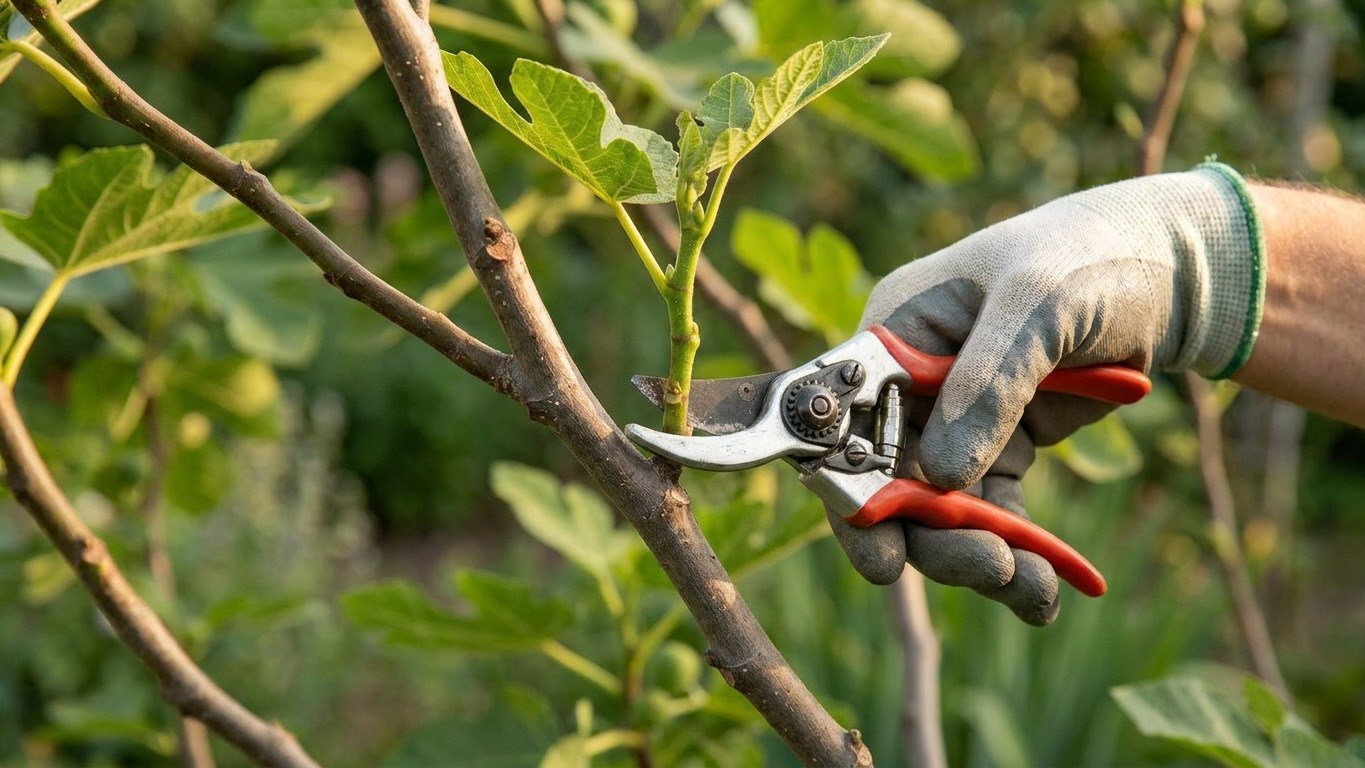
A fig tree that refuses to fruit is one of the most frustrating puzzles in home gardening, lush foliage, vigorous growth, and absolutely nothing to show at harvest time. Old-timers who’ve been growing figs for decades have a simple fix they rarely explain in detail: pinch the right shoots at the right moment, before the end of April, and the tree redirects its energy into fruit production almost overnight.
Key takeaways
- Experienced growers know exactly which shoots to remove and the precise window when it matters most
- A single hormone signal can flip your tree from obsessed with leaves to obsessed with fruit
- The hidden saboteur isn’t the pinching technique itself—it’s something lurking in your soil that stops it from working
Why fig trees waste energy on the wrong growth
Fig trees are opportunistic. Given a mild spring, they push out new vegetative shoots aggressively, long, whip-like growths that race upward and outward, consuming the tree’s carbohydrate reserves without contributing a single fruit. These are called water sprouts or suckers depending on where they originate, and they’re the primary culprit behind trees that look spectacular but deliver nothing edible.
The biology behind this is worth understanding. A fig produces two crops: the breba crop, which develops on last year’s wood in early summer, and the main crop, which forms on current-season growth later in the year. When a tree channels energy into fast-growing vegetative shoots instead of short, fruiting wood, both crops suffer. The breba figs either don’t form or drop early, and the main crop arrives sparse and small. Three seasons of this pattern and most gardeners assume the variety is wrong for their climate, when the real issue is timing and technique.
What experienced growers pinch, and exactly when
The technique passed down through generations of fig growers, particularly in southern European and Mediterranean communities where figs are cultural staples — is straightforward: pinch or tip the new vegetative shoots when they reach roughly five to eight leaves, and do it before late April. That window matters because once the tree commits to a growth trajectory past that point, diverting energy back toward fruit set becomes exponentially harder.
Specifically, the shoots to target are the ones emerging from the main scaffold branches that show no signs of developing small, round fig embryos at the leaf axils. A fruiting shoot looks different from a vegetative one, it’s typically shorter between leaf nodes, and you’ll notice tiny green nubs (the immature figs) forming where leaves meet the stem within the first four or five leaves. A purely vegetative shoot has long internodes, big leaves, and nothing at the axils. Pinch that tip off cleanly, right above a leaf node, using your thumbnail or clean snips.
The effect is twofold. The tree stops pouring resources into that shoot’s upward extension and instead activates lateral buds lower on the branch, buds that tend to produce shorter, fruit-bearing wood. It also signals, in a rough hormonal sense, that the canopy is “full enough,” nudging the tree’s internal balance away from vegetative dominance and toward reproductive mode. Old growers in regions like Provence and Calabria call this practice by different names, but the principle is universal.
The detail most gardeners miss entirely
Pinching alone won’t solve the problem if the tree is root-bound, waterlogged, or sitting in soil with excess nitrogen. This last point deserves emphasis: nitrogen-heavy fertilizers are the hidden enemy of fig fruiting. A tree fed with a lawn fertilizer or high-nitrogen compost will grow like it’s trying to win a competition, and produce exactly zero fruit. Fig trees fruit best in lean soil. The old practice of planting figs near a wall or in a slightly confined space wasn’t just about warmth; it was a deliberate strategy to limit root spread and reduce nitrogen uptake.
If you’ve been fertilizing your fig regularly, stop. Or switch to a low-nitrogen, high-potassium feed, the kind sold for tomatoes works surprisingly well, applied once in early spring and once after the first crop. Then combine that adjustment with the April pinching technique, and you’ll typically see a meaningful change in fruit set within the same growing season.
Watering discipline also plays a role most people underestimate. Figs evolved in dry Mediterranean conditions, and consistent moisture during spring encourages leafy growth over fruiting. Many experienced growers water deeply but infrequently, letting the top several inches of soil dry out between waterings. Mild stress, the kind that doesn’t damage the tree, is often enough to flip the switch from vegetative to reproductive growth.
When to pinch, and when to leave things alone
Not every shoot needs to come off. The goal isn’t to strip the tree, it’s to redirect it. A useful rule of thumb: leave any shoot that already shows developing figs at the leaf axils, and pinch any shoot longer than about eight inches that shows nothing. On a young tree, be more conservative; you need canopy structure before you can worry too much about maximizing fruit. On a mature tree that’s been healthy but fruitless for two or more seasons, you can be more aggressive.
Container-grown figs respond to this technique particularly well. Because their root systems are already constrained, the pinching effect is amplified, the tree has limited reserves to waste, so redirecting growth has a faster, more visible payoff. Growers who keep potted figs on patios or balconies often report that a single round of April pinching, combined with switching to a low-nitrogen feed, transforms a decorative plant into something that actually produces enough fruit to eat.
One more thing worth knowing: in areas with mild winters, some fig trees never fully go dormant, which means they enter spring already running high on stored energy. Those trees are the most aggressive vegetative growers, and they benefit the most from early pinching. If your tree leafed out in February or early March, don’t wait, start checking shoots for fruiting signs by mid-April at the latest, and act before the window closes.