Sunscald took out an entire tray of tomato seedlings in a single afternoon last May. Twenty-four plants, weeks of careful watering, gone, leaves bleached white, stems collapsed, the whole flat looking like it had been torched. The mistake? Moving them straight from a windowsill to full outdoor sun without any transition. Classic rookie error, except nobody tells you about it until after the damage is done.
The phenomenon is well-documented in horticulture but strangely absent from most beginner gardening guides. Sunscald on seedlings happens when young plants that have grown under relatively low light conditions are suddenly exposed to direct, intense sunlight. The leaf cells, never having had to produce the protective pigments and waxy cuticle that outdoor-grown plants develop naturally, simply burn. It looks like drought stress at first, a slight wilting, but within hours the tissue dies. No recovery. The seedling is gone.
Key takeaways
- Young seedlings moved from indoors to full sun experience sudden cell damage that looks like a torched garden
- A single sheet of newspaper acts as a light filter that stops sunscald while still building plant resilience
- Wind exposure and root temperature shock are the real killers that hardening-off advice never mentions
The Newspaper Trick That Actually Works
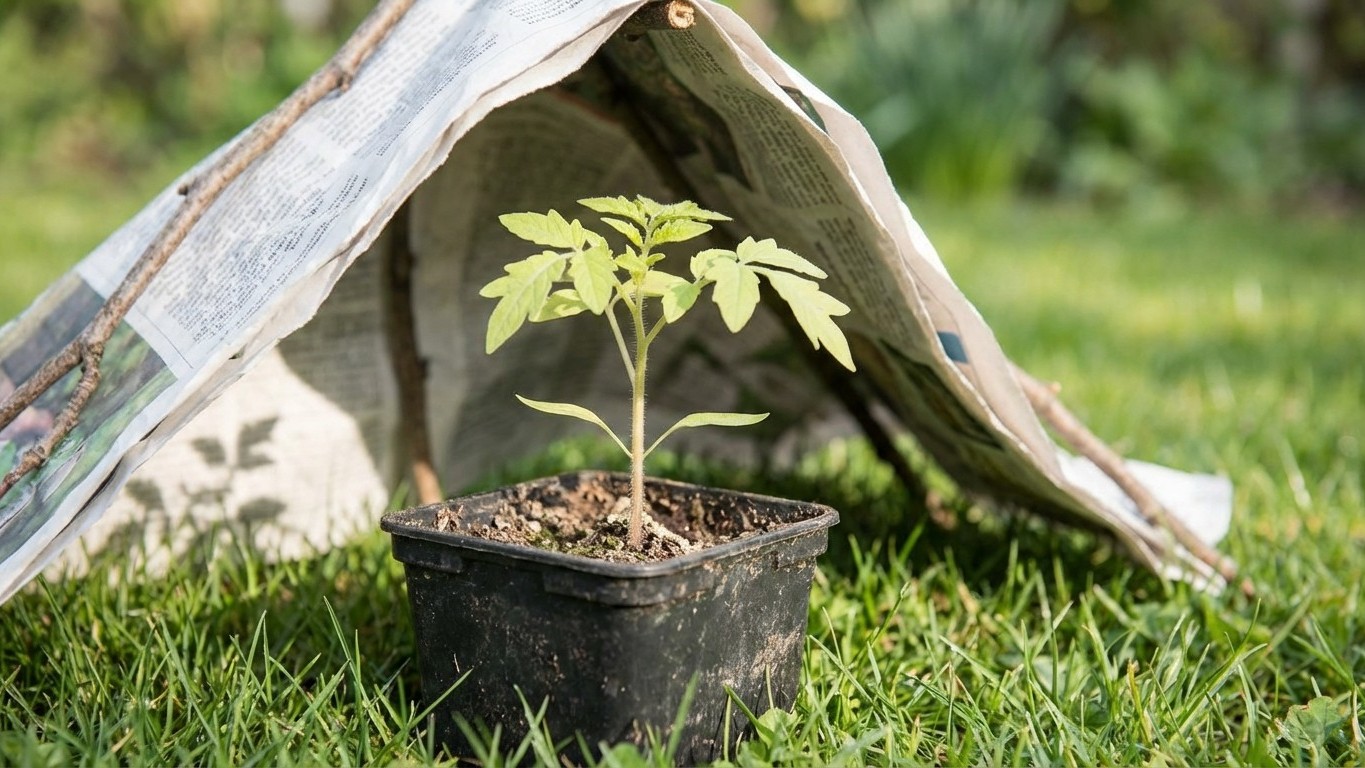
An older farmer at a local market, watching me describe the carnage, nodded like he’d heard this story a hundred times. His solution was embarrassingly low-tech: newspaper. Not as mulch, not as seed-starting medium, but as a shade screen. He explained that during hardening off, the process of gradually acclimatizing indoor-grown seedlings to outdoor conditions — you prop a single sheet of newspaper over your seedling tray, loosely tented so air can circulate underneath. The newsprint filters roughly 50 to 70 percent of direct light while still allowing the plants to experience real outdoor conditions: wind, humidity shifts, temperature variation.
The logic is sound. Seedlings don’t need to be shielded from all light; they need protection from the intensity spike. Newspaper diffuses rather than blocks, creating a dappled-light effect similar to what you’d get under a tree canopy. That’s actually the ideal first outdoor environment for a tomato seedling. You can also adjust the coverage easily, fold the sheet, add a second layer during peak afternoon sun, remove it entirely on overcast days. No shade cloth to buy, no cold frame to build.
He also mentioned timing. Most sunscald damage happens between 11 a.m. and 3 p.m., when UV intensity is highest. Even a partial screen during those hours, combined with open exposure in morning and late afternoon, moves seedlings along the hardening process faster than many gardeners expect. Four to five days with the newspaper method, then a couple of days without it, and most tomato seedlings are ready for full sun.
Why Hardening Off Fails Most of the Time
The standard advice : “put seedlings outside for a few hours a day, increase gradually over one to two weeks” — is technically correct but practically vague. People follow it and still lose plants because the advice ignores two key variables: wind exposure and soil temperature shock.
Wind is the silent killer in this process. A seedling grown on a windowsill or under grow lights has never had to develop the structural cell wall thickness that wind causes. The technical term is thigmomorphogenesis, plants grown in still air are physically weaker at the stem level than plants that have experienced movement. Even a gentle breeze accelerates water loss through the leaves, and a seedling already stressed by new light levels can hit a tipping point quickly. The newspaper tent, incidentally, also buffers wind to some degree during the first days.
Soil temperature is the other overlooked factor. A seedling in a black plastic tray sitting on a concrete patio in direct sun can experience root zone temperatures above 100°F within an hour. Roots that have been living at 65-70°F indoors essentially go into shock. Setting trays on grass, on a wooden surface, or on pavers that have been in shade keeps root temperatures much closer to what the plant has known. Small detail. Significant difference.
Reading Sunscald Before It Kills the Plant
Catching sunscald early is possible if you know what to look for in the first hour of exposure. The earliest sign isn’t the white bleaching that most people recognize, that’s already irreversible damage. The precursor is a subtle grayish or silvery sheen on the upper leaf surface, sometimes combined with a slight downward curl at the leaf edges. The plant is trying to reduce its exposed surface area. At that stage, moving it to shade and giving it water will often allow partial recovery.
Full bleaching, or the appearance of papery white patches surrounded by a yellow halo, means the cells are dead. Cutting off the affected leaves and moving the plant to shade can save it if the growing tip is still viable, tomatoes are resilient enough to push new growth if the main stem and apical meristem are intact. But it sets the plant back by at least a week, sometimes two.
One thing worth knowing: cherry tomato varieties tend to be more tolerant of the hardening-off process than large beefsteak types. The smaller leaf surface area means less total exposure, and many cherry varieties have slightly thicker cuticles to begin with. If you’re new to starting tomatoes from seed, starting with a cherry variety your first season gives you a more forgiving margin for the inevitable learning-curve mistakes.
The deeper issue with sunscald is that it exposes a gap between indoor seed-starting culture and what tomatoes actually are: sun-hardened, Mediterranean-origin plants that evolved under intense light and wind. The coddled windowsill version of a tomato seedling is almost a different organism from what ends up thriving in a July garden. Bridging that gap thoughtfully, with newspaper, with timing, with attention to where you set the tray — is the whole game in those first two weeks outside.