
April looks like tomato-planting season. The sun is out, the garden center is fully stocked, and your seedlings are sitting there, practically begging to go outside. So you grab a trowel, dig a hole, and push them straight into the ground. Done, right? Not quite. That single decision, transplanting tomatoes directly into cold April soil without preparation — is the one mistake that quietly unravels an entire season’s work.
Key takeaways
- Most gardeners plant tomatoes weeks too early, ignoring one crucial number that determines everything
- There’s a mysterious step almost nobody takes that leaves seedlings defenseless against spring conditions
- Tomatoes have a hidden superpower that changes how deep you should plant them—and most people get it backwards
The Ground Isn’t Ready, Even When the Air Is
Gardeners so often concentrate only on air temperature to decide when to plant, but soil temperature is actually just as important. And here’s the thing April keeps getting away with: a warm, sunny afternoon at 72°F feels like perfect planting weather. The thermometer on your porch says spring. The thermometer in your soil says something else entirely. According to horticulturists at Oregon State University Extension, one of the biggest mistakes people make is planting too early, getting excited when it’s sunny for a few days, putting plants in the ground, and thinking they will grow.
Tomatoes should be planted when soil temperature reaches a minimum of 60°F. If you plant too early in cold soil, seedlings sulk, root development is very slow, and the roots have difficulty absorbing nutrients. That’s not just a temporary setback. Early planting in cold conditions results in stressed, stunted plants that might never completely recover their vigor, even as temperatures eventually rise. Often smaller, these plants yield less fruit and are more likely to have problems throughout the entire growing season. You planted early to get ahead. You actually fell behind.
When temperatures are too low, tomatoes become stunted, stop growing, and if the low temperatures persist, become nutrient deficient. Tomato roots struggle to absorb nutrients, particularly phosphorus, in low temperatures, and the leaves gaining a purple hue is usually the easiest way to spot that deficiency. Purple-leafed tomatoes in May are almost always a cold-soil story, not a disease problem.
The Missing Step Almost Nobody Takes: Hardening Off
Cold soil isn’t the only ambush waiting for your seedlings. If they’ve been growing under lights in a warm house or greenhouse, transplanting them straight outside is a physiological shock, even on a mild day. Hardening off is the process of gradually transitioning a plant from its indoor or greenhouse location to the outdoor conditions of fluctuating spring temperatures, wind, and sun exposure. Skip it, and the consequences are real.
Hardening off thickens the cuticle and waxy layers on leaves, which protect plants from UV light and reduce water loss in hot or windy weather. Failure to harden off tomato plants leaves them unprotected, which can result in leaves being scalded by bright sun or plants wilting from moisture loss. Your seedling spent its whole life under a grow light equivalent to a cloudy afternoon. April outdoor sun is something else entirely.
The process takes 5 to 8 days: gradually exposing seedlings to outdoor conditions, starting in shade with no wind, increasing sun exposure daily, and bringing plants inside if they wilt. A week of patience. That’s the price of not losing plants you spent months growing. Leave tomatoes out overnight only when the forecast shows temperatures staying above 50°F. Once seedlings handle their outdoor sleepovers without a problem, it’s time to move them into their new home.
How to Plant for Maximum Root Power
Once your soil has hit 60°F and your seedlings are hardened off, how you actually put the plant in the ground matters more than most people realize. Tomatoes are unusual, almost unique, botanically speaking. Tomatoes break the typical “don’t plant too deep” rule because they actually have the ability to sprout additional roots along the buried stem. These extra roots strengthen the plant so it can support more fruit and better survive hot weather.
When you plant your tomato deeper, the buried stem develops new roots, increasing root growth and strengthening the plant. A deeper, stronger root system helps plants absorb water and nutrients more efficiently, stay upright, and handle stress from heat or wind. Research backs this up. Experiments in which plants were set only as deeply as they had been growing in pots resulted in later fruit production, a smaller total yield, and fewer and smaller fruits. Deep planting also holds the plant erect and reduces injury from strong winds shortly after transplanting.
For gangly or leggy seedlings, the ones that stretched toward a weak light source all winter — there’s a smarter approach than forcing them into a deep vertical hole. Dig a trench about 6 inches deep, lay the plant horizontally on its side in the trench, then bury the stem, leaving only the top of the plant popping out of the soil. It looks bizarre for a day or two. Then the tip bends upward toward the sun and grows straight as if nothing happened, while quietly building an enormous root network just below the surface, right where the warmth and moisture are.
If You Can’t Wait, at Least Warm the Soil First
Some gardeners can’t hold back. (Honestly, fair enough, watching seedlings outgrow their pots while April sunshine streams through the window tests anyone’s patience.) If that’s you, there’s a practical workaround that doesn’t require simply crossing your fingers. You can warm up soil sooner by putting black plastic over the bed to pre-warm the soil. The mechanics are simple: dark material absorbs heat, the soil underneath responds. The soil beneath black plastic warms much faster than other portions of the garden, making a more welcoming environment for tomatoes. When plants are eventually set out in the warmer soil, they acclimate more easily, blossom faster, and produce fruit earlier.
Plastic can be laid down several weeks ahead of normal planting time to pre-warm the soil in late April or early May for the best head start. One important nuance, though: if you can’t resist the urge to plant warm-season vegetables before the soil warms sufficiently, use some sort of protection from the chill, like floating row cover, individual glass or plastic cloches, or even milk jugs or soda bottles with the top cut out and turned upside down over plants. These mini greenhouses buy you a week or two in cooler zones without gambling the whole crop.
There’s also a zone-by-zone reality worth keeping in mind. In southern regions (USDA zones 8–10), early May is often perfect for tomato planting. Mid-Atlantic and Midwest gardeners might find mid-May optimal, while northern gardeners in zones 3–5 may need to wait until late May or even early June. The plants you see on nursery shelves in early April aren’t a signal that planting time has arrived, they’re a signal that retailers want to sell plants. Those two things are not the same.
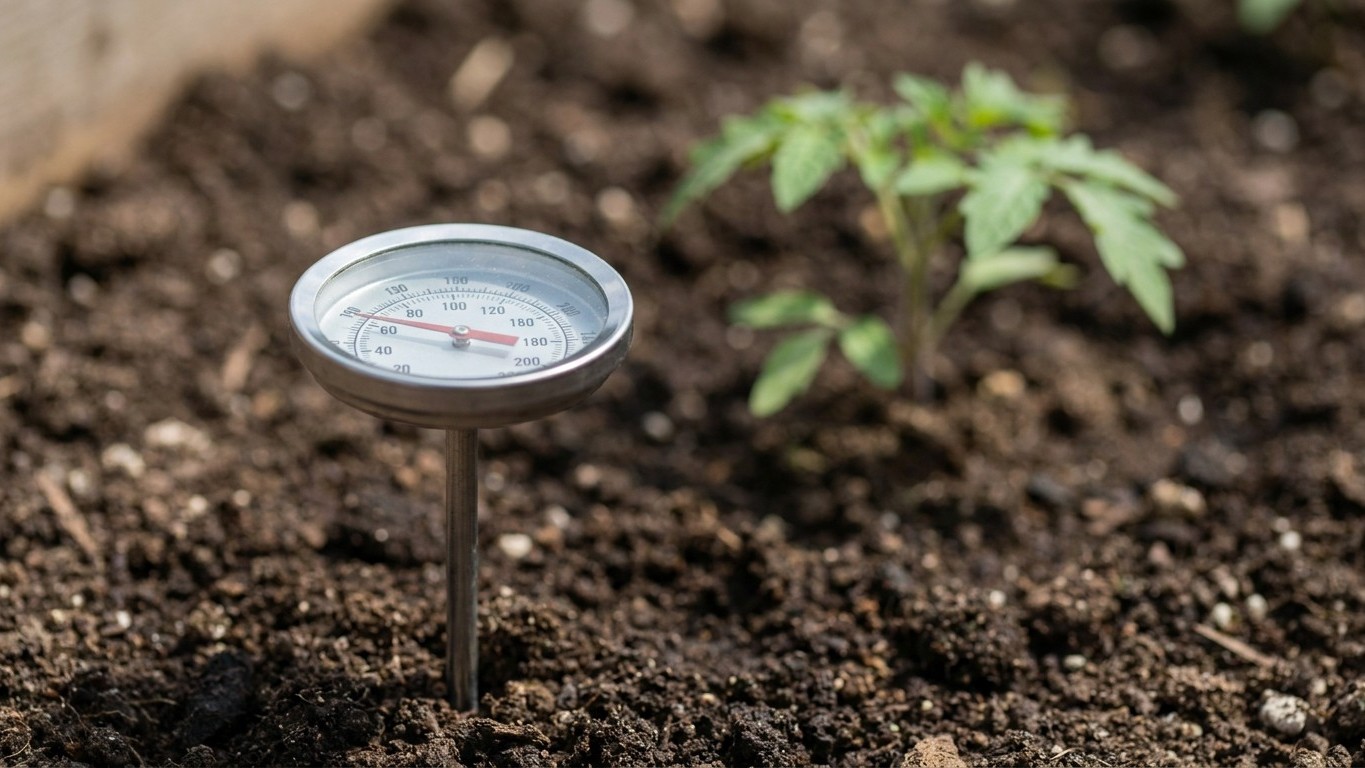
One detail that surprises even experienced growers: tomatoes prefer a slightly acidic soil pH between 6.0 and 6.8, a range that allows for optimal nutrient uptake. Cold soil compounds this problem, even if your pH is perfect, chilled roots can’t access the nutrients anyway. Two variables working against you at once. Knowing this, a simple soil thermometer (pushed down about 4 inches, where the root ball will actually sit) becomes the most useful tool in your April gardening kit — more reliable than any calendar date, and more honest than any sunny afternoon.
Sources : news.oregonstate.edu | canningcrafts.com