
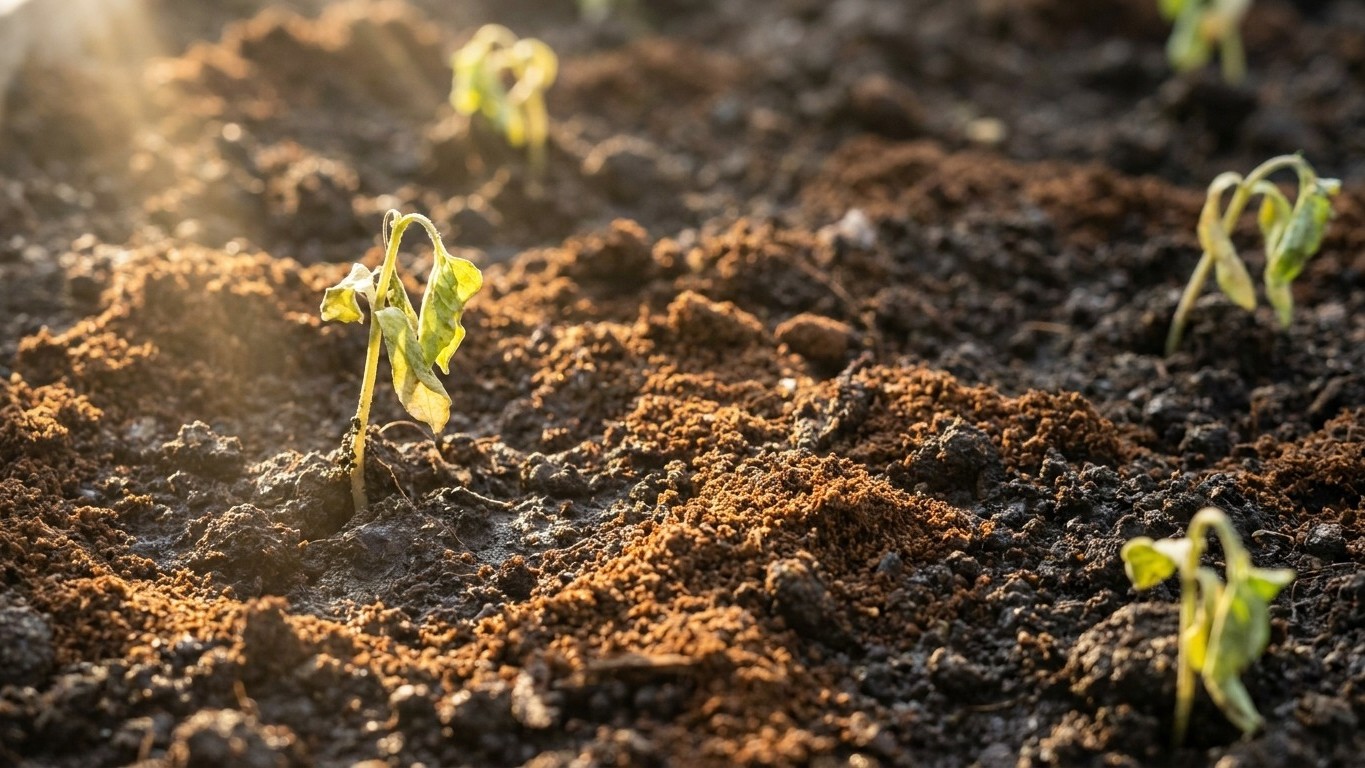
Every morning, the ritual was simple: brew a pot, walk outside, scatter the grounds. The garden beds looked darker and richer each day. A quiet pride in recycling, in feeding the earth. Then, the seedlings stopped coming up. The ones that did emerge looked stunted, pale, reluctant. The coffee grounds were the obvious culprit, but why?
The short answer involves chemistry that coffee plants evolved over millions of years. Coffee bushes produce caffeine, at least in part, as a natural herbicide to suppress the growth of smaller competing plants. The phenomenon is called allelopathy, a strategy many plants have evolved to reduce competition for light, space, water, and nutrients around them. When you scatter grounds on your garden every morning, you’re not fertilizing. You’re deploying an ancient botanical weapon.
Key takeaways
- Coffee grounds contain caffeine that acts as a natural plant poison, not fertilizer
- Raw grounds clump into soil-blocking barriers that suffocate roots and block water
- The internet got it wrong for years—spent grounds are actually neutral in pH, not acidic
The Caffeine Problem Nobody Talks About
Leaching out of the grounds, highly soluble caffeine percolates through the soil and has been repeatedly shown to severely stunt the growth of small, neighboring plants’ roots and slash the rate of seed germination, even at relatively tiny concentrations. This isn’t a fringe theory. Research published in the Journal of Toxicology and Environmental Health in late 2024 confirmed it: coffee extract diminished germination parameters in lettuce seedlings, and decreased growth in another test species regardless of concentration. Researchers also observed an increased frequency of cell cycle alterations in the root cells of lettuce. Disrupted cell cycles in roots. That’s not a slow-down, that’s a structural problem.
Coffee grounds contain caffeine, tannins, and polyphenols. These substances are toxic to plants and are released at the same time as nitrogen, phosphorus, and potassium, inhibiting plant growth. The cruel irony: the nutrients and the poisons travel together. You can’t get one without the other when applying raw grounds directly to soil.
Coffee grounds have allelopathic properties, meaning they can release chemicals that inhibit the growth of nearby plants. While spent coffee grounds can help with managing garden pests and suppressing weeds, they may also negatively impact desirable plants. A useful weed-killer and a garden saboteur, all in the same scoop from your French press.
The Clumping Trap (and the pH Myth)
Caffeine toxicity is only half the problem. Like clay soil, coffee grounds consist of very fine particles that are prone to locking together. This turns them into a barrier that will resist water penetration and eventually result in plants dying of thirst. Applied daily in a thick layer, as many enthusiastic gardeners do, the grounds dry out and form an almost waterproof crust. Roots below suffocate from lack of oxygen and moisture simultaneously. The fine texture of coffee grounds can lead to soil compaction, which inhibits water infiltration and air exchange, critical factors for seedling development.
Then there’s the pH question, and this is where the internet has been consistently wrong for years. Brewed coffee is moderately acidic with a pH of 4.7 to 5.3, but the brewing process pulls most of those acidic compounds into your cup. Spent grounds left behind are close to neutral, typically landing between pH 6.5 and 6.8. Oregon State University soil scientist Linda Brewer puts it bluntly: “The big message is that generally people are too enthusiastic. You really need to take the recommended dosages to heart. I’ve seen raised beds ruined by too much coffee.” Whole raised beds. Gone.
Coffee grounds inhibit the growth of some plants, including geranium, asparagus fern, Chinese mustard, and Italian ryegrass. Conversely, grounds used as mulch and compost improve yields of soybeans and cabbage. In other cases, grounds inhibit seed germination of clovers and alfalfa. The effects vary wildly by species, which means scattering grounds across a mixed garden bed is essentially running a random experiment every morning.
What Actually Works
The fix isn’t to throw the bag of grounds in the trash. While spent coffee grounds are initially phytotoxic, upon composting they can be utilized as a soil amendment. Composting neutralizes the allelopathic compounds before they reach your plants’ roots. The compost pile is where the transformation happens, caffeine breaks down, tannins decompose, and what you eventually add to your beds is genuinely beneficial organic matter.
The solution is to mix coffee grounds with other organic matter such as compost or leafmold before using them as a mulch. Alternatively, rake your coffee grounds into the top layer of soil so that they can’t clump together. If you do want to add them directly, keep the proportion low. As long as you keep the portion of coffee grounds below 25%, you can mix coffee grounds with potting soil mix. Above that threshold, the research shows concentrations of raw grounds at 35% or higher cause large reductions in germination, plant height, and leaf emergence.
A practical rhythm that works: add grounds to a compost bin alongside carbon-rich materials like dried leaves. Gardeners are strongly advised not to make compost that is more than 20% by volume coffee grounds. Once fully composted, spread it freely. The beneficial microbial activity that builds up during decomposition even adds a bonus: as coffee grounds decompose, they appear to suppress several common soil-borne fungal diseases, including Fusarium, Pythium, and Sclerotinia species, fungi that cause root rots and wilts. The mechanism isn’t the coffee itself but the community of beneficial bacteria and fungi that colonize decomposing grounds, essentially crowding out disease-causing organisms.
One more thing worth knowing: plants do not immediately assimilate the nitrogen, phosphorus, and potassium contained in coffee grounds. The nutrients remain trapped in the soil for at least nine months before plants can consume them and reap their benefits. That morning ritual of daily scattering was feeding nothing, while quietly poisoning the very seedlings you were trying to grow. The same grounds, composted and applied once a season, tell a completely different story.
Sources : tandfonline.com | mdpi.com