
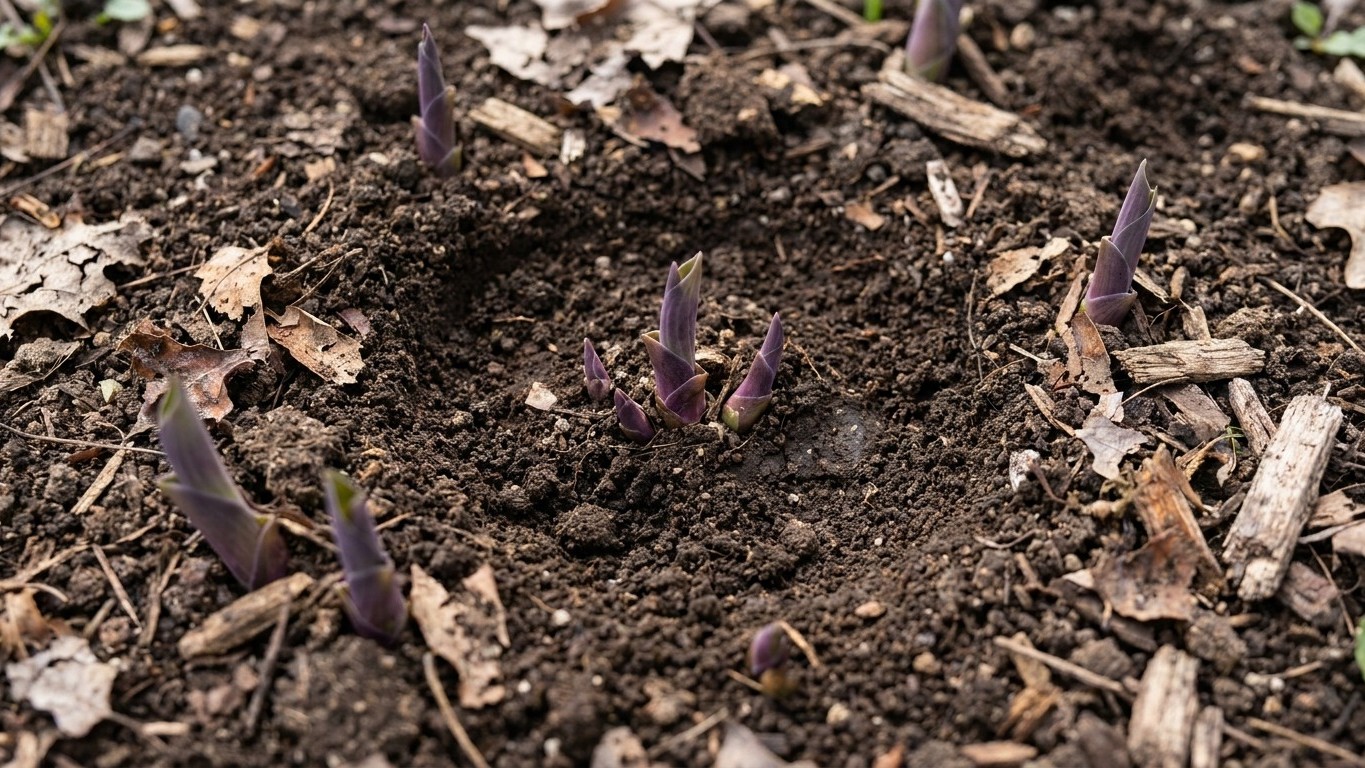
Mulching hostas in spring feels like responsible gardening. You’re protecting the roots, retaining moisture, suppressing weeds, the logic is airtight. For years, I piled a fresh layer of wood chip mulch around my hostas every April, right as those thick, purple-tipped shoots were pushing up through the soil. Then a soil scientist friend asked me to dig a small section of that bed with her. What we found in the top two inches changed how I think about every mulching decision I make.
Key takeaways
- What most gardeners see as protective mulching is actually creating anaerobic conditions and crown rot in hostas
- April is the worst possible time to mulch—and soil scientists have research proving when you should actually do it
- A four-inch gap around the crown and one simple timing shift could save your entire hosta bed from disease
What the soil actually looked like under that mulch
The surface layer was dense, matted, and almost spongy. Wood chips from previous years had started decomposing but hadn’t fully broken down, creating a thick barrier that water was visibly beading off of rather than penetrating. My scientist friend pressed a moisture meter probe into the soil beneath it: the reading was significantly drier than the surrounding bed with lighter coverage. All that mulch I thought was retaining moisture was, in wet springs, actually acting as a thatch layer, intercepting rainfall before it reached the roots.
The fungal picture was more complicated. Some of the white mycelial threads running through the decomposing chips were beneficial, but she pointed out dark, matted zones right at the soil surface that showed anaerobic conditions, essentially, the soil was suffocating in patches. Hostas are woodland plants with fleshy rhizomes that need moisture but are highly sensitive to root rot. Pile mulch directly against those emerging crowns in April, and you’ve essentially wrapped a wet blanket around a plant that’s just waking up.
The real problem, she explained, is what horticulturalists call “mulch volcanoes”, the practice of heaping material directly against the crown of a plant. In hostas specifically, crown rot caused by Sclerotium rolfsii and various Phytophthora species often traces back to this exact habit. The crown sits at the soil surface for a reason: it needs air circulation. Burying it under three inches of damp organic matter every spring creates the ideal condition for those pathogens to establish.
The timing problem is just as significant as the depth
April, it turns out, is the worst possible moment to mulch hostas, at least in the way most gardeners do it. When those pointed shoots emerge, the crown is actively pushing energy upward, and the soil around it is warming. Fresh mulch applied at that moment insulates the soil, yes, but it slows that warming process. Research from the University of Maryland Extension on perennial bed management has consistently shown that delaying mulch application until soil temperatures stabilize, typically after the main flush of spring emergence, reduces disease pressure on shallow-rooted perennials.
There’s also a nitrogen dynamic worth understanding. Fresh wood chip mulch, as it decomposes, temporarily ties up nitrogen in the top layer of soil. Microorganisms breaking down carbon-heavy material consume available nitrogen in the process, pulling it away from plant roots. For hostas pushing out their big, lush leaves in spring, that nitrogen draw-down hits at exactly the wrong time. A light application of compost instead of raw wood chips would avoid this problem entirely, compost has already gone through that carbon-to-nitrogen balancing act.
One fix my soil scientist friend suggested surprised me with its simplicity: wait until late May, after the hostas have fully unfurled two or three sets of leaves, then apply a thin layer (two inches maximum) of aged wood chips or shredded bark, keeping a clear four-inch radius around each crown. The plants are established enough that the mulch genuinely helps at that point rather than competing with them.
What hostas actually need from soil management
Hostas evolved on the forest floors of Japan, Korea, and parts of China, environments where leaf litter accumulates naturally but loosely, never compacting into an impermeable layer. That context is useful. The ideal mulch mimics what the forest does: a thin, airy layer of partially decomposed organic material that allows gas exchange, moderate moisture retention, and slow nutrient release. Shredded leaves from the previous fall come remarkably close to this ideal and happen to be free.
Soil texture matters more than most gardeners realize. Hostas perform best in loamy soil with good drainage and a pH between 6.0 and 7.5. If your beds sit on clay, even perfect mulching technique won’t fully compensate, that water-beading problem I saw in my own bed was made worse by the clay subsoil preventing drainage. Amending with coarse compost directly into the planting hole at establishment makes a far bigger long-term difference than annual mulch applications.
Slug management is often the reason gardeners reach for mulch in the first place, hostas are notoriously attractive to slugs, and conventional wisdom says mulch helps by keeping the soil moist and the foliage clean. The irony is that thick mulch directly around the crown creates the exact humid, sheltered microclimate slugs prefer. A coarser mulch material applied with that crown gap actually reduces slug habitat while still protecting root zones from summer heat.
One detail that rarely comes up in gardening guides: the color of decomposing mulch tells you something. Dark, coffee-ground-colored chips that crumble easily are breaking down correctly and contributing organic matter. Light-colored, stringy chips that smell slightly sour are decomposing anaerobically, they’re generating compounds that can be mildly toxic to plant roots. If your mulch smells like vinegar or sulfur when you turn it, let it air out for a few days before applying. That two-minute smell test could save an entire hosta bed.