
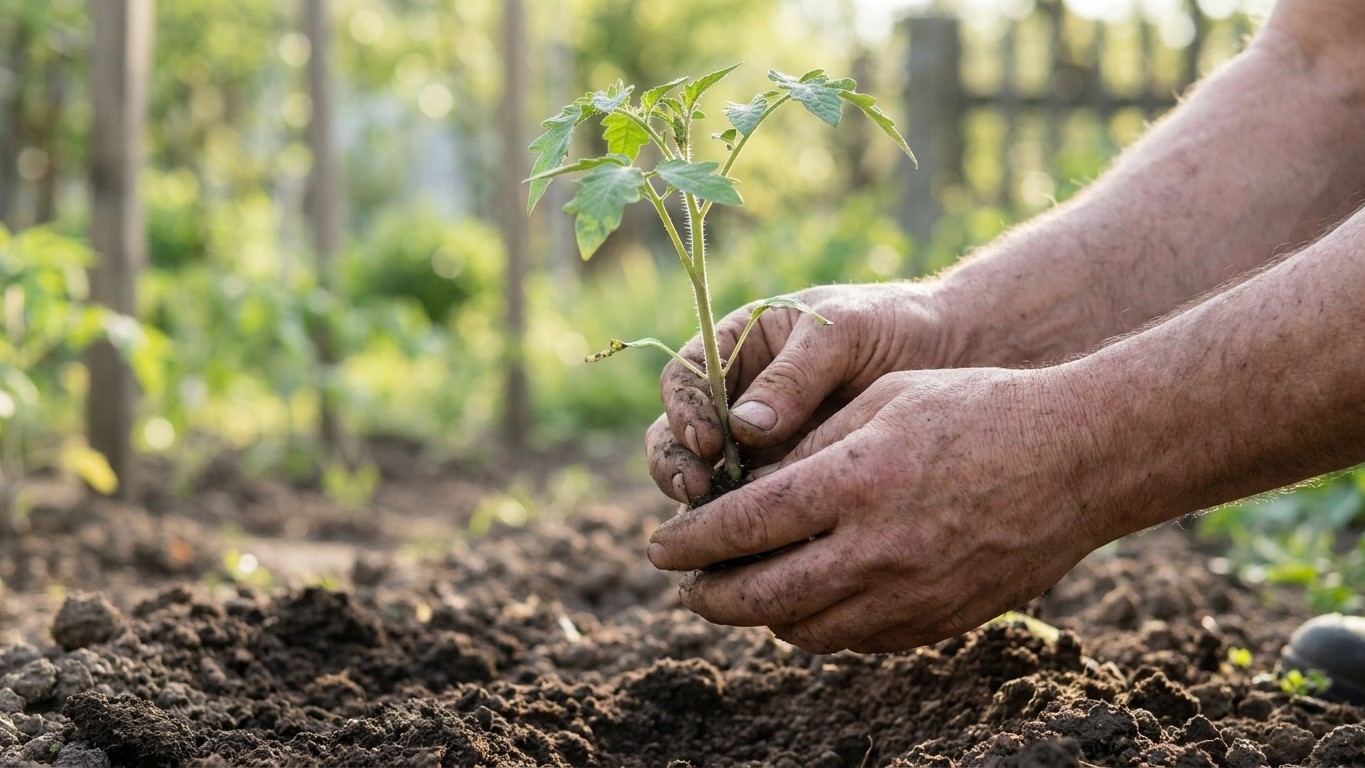
Forty years of tomato growing, two hands weathered by seasons, and one sentence that changed everything. “Bury them up to the neck,” the old man next door said, pointing at my seedlings. He barely glanced at my carefully prepared bed. I thought he was kidding. He was not.
The result that first summer was so jarring that I stood at the garden fence genuinely puzzled. More fruit, bigger clusters, plants that didn’t topple over in July storms. The harvest had almost doubled, not from a new fertilizer, not from a different variety. Just from planting deeper.
Key takeaways
- A weathered neighbor’s one sentence sparked a harvest transformation that still puzzles conventional gardeners
- Tomatoes have a biological superpower most growers never exploit—what happens when you bury two-thirds of the plant
- The timing detail that separates thriving deep-planted tomatoes from complete failure
Why Tomatoes Are Built for Going Underground
Tomatoes have adventitious roots, roots that form from non-root tissue. This means they have the ability to grow more roots along their stems at any point where the stem is buried. Most plants would rot if you tried this. Tomatoes thrive. It’s a biological quirk that sets them completely apart from virtually every other vegetable you grow.
Wherever the stem touches the soil, parenchyma cells grow adventitious roots to anchor the plant more firmly and provide another place to access water and nutrients from the soil. Think of it like this: a standard planting gives you one anchor point. Deep planting turns the entire buried stem into a root-generating machine, the difference between a flagpole stuck in sand versus a tree with a full root ball.
The more roots there are, the more nutrients and water the tomato will absorb. The extra roots also create a stronger anchor in the soil, helping the plant stay upright under wind pressure. Even better, having most of the plant underground right after planting will protect it from early spring frost and cold weather. Three benefits from one shovel. Hard to argue with that math.
Tomatoes, especially heirloom varieties, and other solanaceous vegetables like tomatillos can generate new roots from hairs found on the stem above the root system. These often present as short, fleshy bumps along the stem prior to root formation. Those little nubs you’ve probably noticed and ignored? Future roots, every one of them.
How Deep Is “Up to the Neck,” Exactly?
How deep to plant your tomato starts will depend on how tall they are. In general, you should aim to bury about two-thirds of the plant underground. For a twelve-inch seedling, that means roughly eight inches below the soil line. The top few leaves poke out like a swimmer catching a breath, nothing more.
Before you dig, strip the lower leaves. Pinch off any leaves that will be below the soil line. Buried leaves rot and invite disease. This step takes thirty seconds and saves you weeks of trouble later. Clean stem below ground, healthy foliage above, that’s the rule.
Make sure the soil is not hard or compacted. The new root system won’t be able to grow in and penetrate through compacted soil, making the process of deep planting futile. Add soil amendments like compost to prepare and loosen your soil. The technique only works if you give those new roots somewhere to go. Loosen twelve inches down, fold in compost, and you’re set.
There are two approaches gardeners swear by. The first method is pretty much exactly what it sounds like: planting your tomatoes into a really deep hole. The second is the trench method, reserved for leggy or overgrown starts. Dig a trench about six inches deep, lay your plant horizontal in it, then bury it. This will expand the roots all along the stem and give you extra strong plants. The plant’s tip naturally bends toward the light within days. No drama, just biology.
The One Detail Most Gardeners Skip
Timing matters more than most people realize. If the soil is too cold, the buried stem might not develop roots as quickly, potentially stunting early growth. Wait until the soil temperature reaches at least 60°F (15.5°C) before deep planting to ensure optimal root development and prevent rotting. You can plant the most perfectly stripped, beautifully deep seedling in the world, in cold soil, nothing happens. Worse, you risk losing the plant entirely.
One effective strategy is deep, infrequent watering, which trains the roots to seek moisture further down in the soil. Watering frequently with small amounts rewards shallow roots, making the plant susceptible to heat stress and drought. This is the follow-through that most gardeners miss. You deep-plant the tomato, then shallow-water it daily. The roots have no reason to go deep. Let the soil dry slightly between waterings and those roots will chase moisture downward, building exactly the structure you want.
Stakes and cages go in at planting time, not two weeks later when the plant has grown. Depending on your tomato variety, you may need to add supports to prop up the plant. Placing supports early will help avoid root disturbance at a later stage. Driving a stake through an established root system is a quick way to undo all your careful work.
What the Research Actually Says
Skeptics sometimes wonder whether this is just garden folklore passed neighbor to neighbor. The science, while not extensive, leans supportive. In some years and some locations in Florida, tomatoes planted to the first true leaf were able to be harvested earlier than if they were planted to the top of the root ball. The overall trend was for a bit more and a bit larger fruit per plant. A study of fall-planted tomatoes in Louisiana echoed the result. Small sample sizes, yes, but the direction is consistent.
Research conducted by agricultural universities has shown that deep planting can lead to a more extensive root system. A tomato plant typically develops a taproot that can dive as deep as three feet under optimal conditions. That taproot reaches soil moisture that surface roots never touch, a genuine advantage during the dry stretches that hit most of the country in July and August.
One nuance worth knowing: some researchers speculate that burying tomatoes too deep keeps their roots in cooler soil, which may inhibit productivity in very warm southern climates. If you’re gardening in zones 9 or 10, the trench method, which keeps roots closer to the warmer surface layer, may serve you better than a straight vertical deep hole. Climate matters. Adjust accordingly.
Well-draining, loamy soil is ideal for deep planting because it allows roots to penetrate deeper without becoming waterlogged. Clay-heavy soils pose a risk as they can retain water and suffocate roots. If your beds run heavy, add a generous layer of compost before you even think about planting depth. The technique is the same; the soil prep becomes non-negotiable.
There’s also a quiet bonus for anyone who’s ever babied a leggy seedling that started too early indoors: if you’re struggling with leggy tomato seedlings, planting the stems deep can help fix that legginess altogether. That too-tall, too-thin plant you thought was a write-off? Bury two-thirds of it. By midsummer, nobody will know the difference, except you, at harvest time.
Sources : gardeningincanada.net | canningcrafts.com