Hydrangeas bloomed in every neighbor’s yard. Mine? Lush, leafy, and stubbornly bare every single summer. For three years running, I did everything right, or so I thought. Watered consistently, fertilized in spring, pruned back to healthy green wood in April. The plants looked vigorous. Just no flowers. The answer, when it finally clicked, was almost embarrassingly simple: I had been cutting off every single bud before it ever had a chance.
Key takeaways
- A common gardening instruction is sabotaging blooms for most backyard hydrangea varieties
- Not all hydrangeas follow the same pruning rules—the species matters completely
- The buds you’re cutting off in spring are already set and visible if you know what to look for
The bud problem nobody warns you about
Most gardening advice says “prune to green wood”, and that’s not wrong. The problem is when you do it. For the most popular backyard varieties, specifically the classic bigleaf hydrangea (Hydrangea macrophylla) and the oakleaf hydrangea (Hydrangea quercifolia), flower buds form on the previous season’s stems. Old wood. The growth that hardened off the summer before, sat through winter, and was waiting patiently to bloom the following year. Prune those stems to the ground in April and you’ve removed everything the plant spent months building.
This is what horticulturalists call “old wood blooming” varieties, and they represent the majority of hydrangeas sold at garden centers across the country. A plant can be completely healthy, root system intact, new shoots emerging, and still produce zero flowers if the old wood gets cut away at the wrong time. Which is exactly what April pruning does.
Not all hydrangeas follow the same rules
Here’s where it gets genuinely interesting: hydrangea pruning is not one-size-fits-all, and the species sitting in your backyard determines everything. Smooth hydrangeas (Hydrangea arborescens), like the popular ‘Annabelle’, bloom on new wood. Cut them hard in late winter or early spring and they’ll reward you with enormous white globes by July. Panicle hydrangeas (Hydrangea paniculata), the ones with elongated, cone-shaped flower heads — also bloom on new wood and actually benefit from aggressive pruning.
But bigleaf and oakleaf varieties? Completely different story. These plants need their old stems to remain intact through winter and into the following spring. The buds are already set by late summer. By the time you’re standing in your garden in April with pruners in hand, those buds are essentially ready to open. Cut the stems and you’re not “tidying up”, you’re removing the entire flower crop for the year.
The nursery industry has responded to this widespread confusion by developing “reblooming” bigleaf cultivars, varieties like ‘Endless Summer’ and similar series that produce buds on both old and new wood. Even then, removing old wood reduces the early summer flush of blooms significantly, leaving only the late-season new wood flowers.
What to actually do instead
For old-wood bloomers, the timing window that actually works is right after flowering ends, usually in late July or August. That’s when it’s safe to cut back stems that just bloomed, the plant will spend the rest of the season setting new buds on the fresh growth that emerges, and those buds will overwinter and open the following spring. Pruning after August gets risky in colder climates because there isn’t enough time for new growth to harden off before frost hits.
Winter and early spring maintenance should be limited to removing clearly dead wood, stems that snap rather than bend, that show no green under the bark when you scratch a thumbnail across the surface. This dead wood removal is fine anytime. The mistake is cutting live, green stems that feel productive and healthy but are actually carrying this year’s entire flower load.
A useful rule of thumb from the University of Maryland Extension: when in doubt with a bigleaf hydrangea, don’t prune at all for one season. A year of overgrown stems is a small price for actually seeing the blooms you’ve been waiting for.
Reading your plant before you touch it
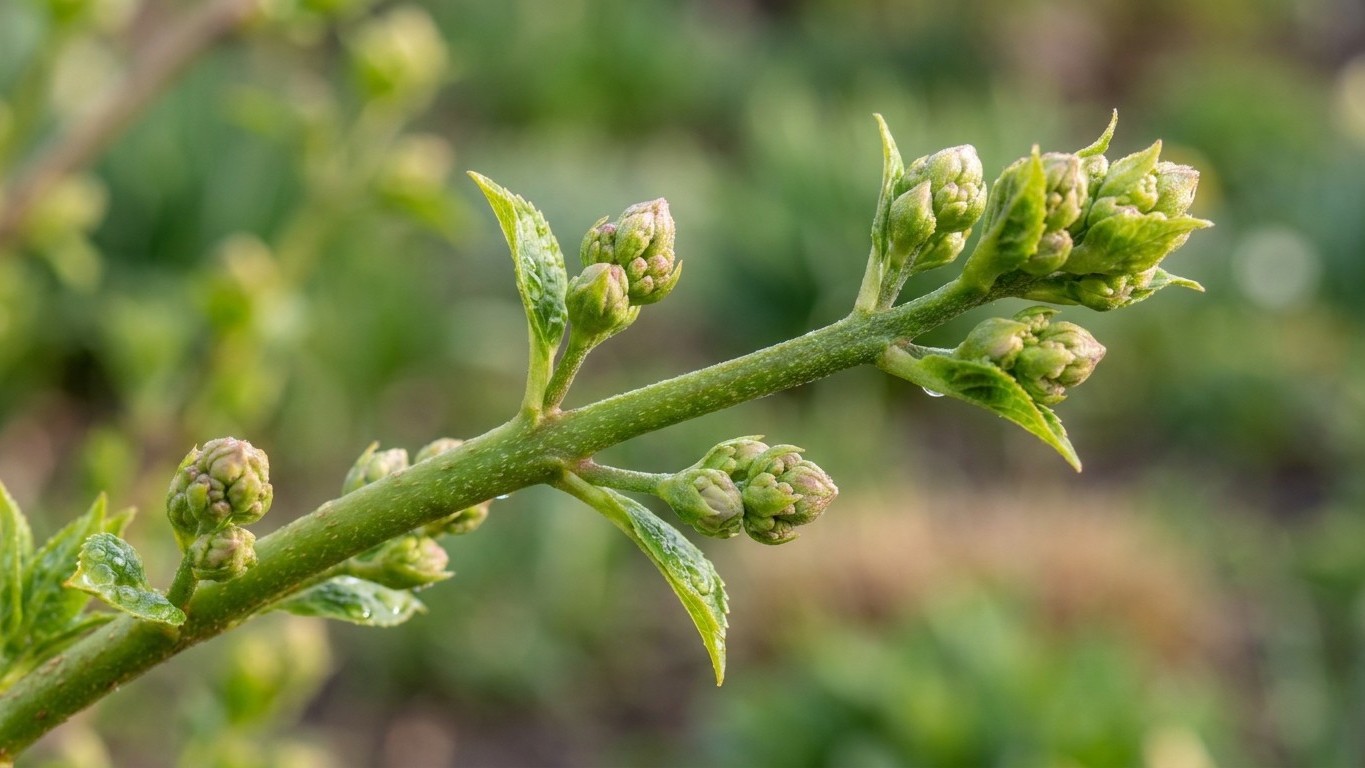
One habit worth building: check the buds before you prune anything. On bigleaf hydrangeas in April, the old stems are already showing swollen buds, sometimes even the first hint of leaf or color breaking from the tip. Those swollen nodes are the flower buds. They’re right there, visible, if you know what you’re looking for. The year I finally stopped and actually looked, I counted dozens of them on a single stem I’d been cutting back for three years straight.
Oakleaf hydrangeas give you another visual cue: their dried flower heads from the previous season can stay on the plant through winter and into spring. Many gardeners (myself included, initially) treat those papery brown clusters as dead material to be removed. They are spent flowers, but the stems holding them are old wood loaded with new buds. Leave the stems. Remove the dead flower head if aesthetics bother you, but cut only the spent bloom, not the stem below it.
One last fact that reframes all of this: bigleaf hydrangeas are native to Japan and coastal Asia, where winters are mild enough that old wood rarely dies back. The pruning habits that evolved with these plants assumed a climate where stems survived intact year after year. In colder American growing zones, heavy winter dieback is common, and that natural dieback already removes much of the old wood without any help from you. Add a hard April pruning on top of winter damage and the plant has almost nothing left to bloom from. The climate your hydrangea evolved for was doing the editing. You just need to let it.