
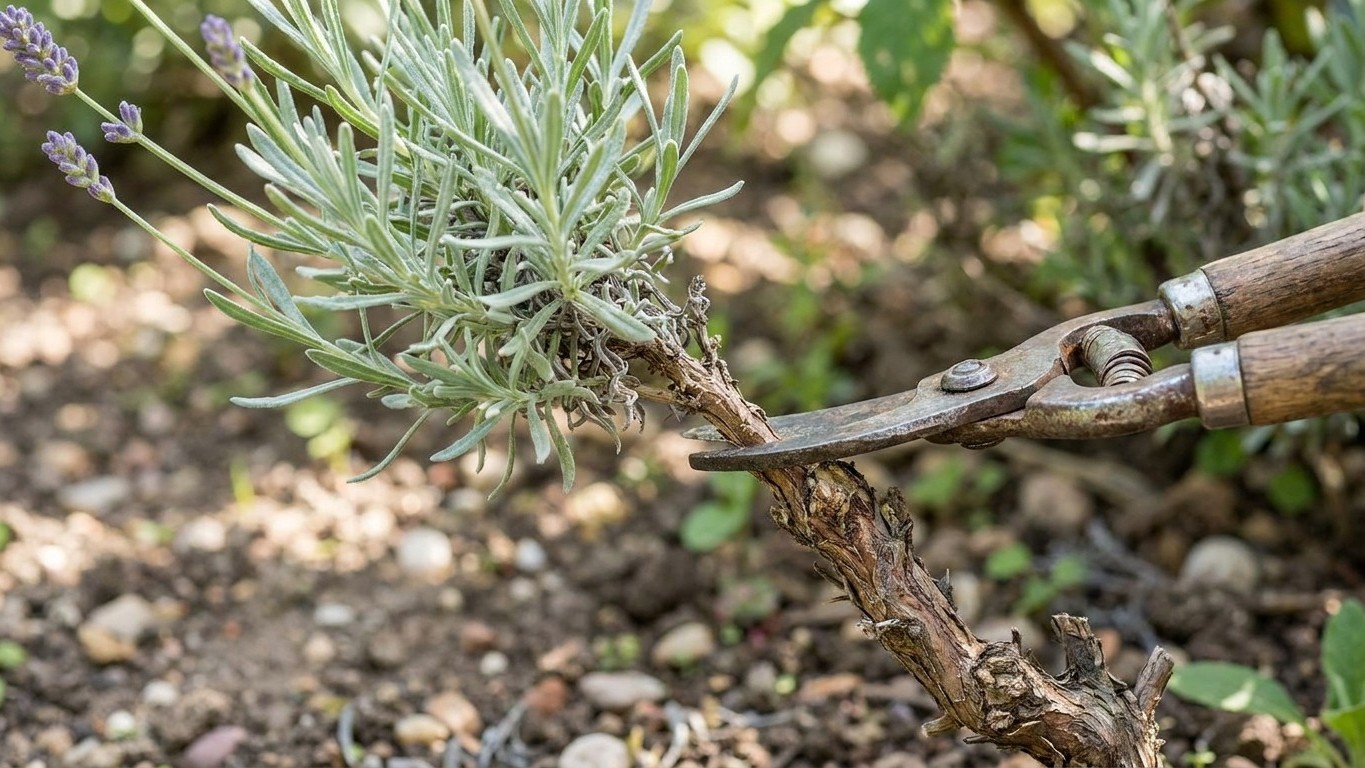
The lavender looked fine from a distance. A little shaggy, maybe, but nothing a good tidy-up couldn’t fix. So out came the shears, and down went the plants, all the way into the gray, woody base. Clean. Tidy. Decisive. Six weeks later, the first bush stopped pushing any new growth. By July, every single one was dead.
This is not an unusual story. In fact, it plays out in gardens across the country every spring, and the reason is both simple and deeply counterintuitive. Lavender looks like it should behave like other garden perennials. It doesn’t.
Key takeaways
- A seemingly simple spring tidy-up can permanently kill every lavender bush in your garden
- Lavender has no dormant buds in old wood—cut below the green zone and the plant has nowhere to regrow from
- There’s a precise two-inch window between new foliage and woody stems where your pruning shears must land
Lavender Is Not a Perennial, and That Changes Everything
Lavender is not a herbaceous perennial. It does not regenerate from bare wood the way hostas spring back from the ground. It is a sub-shrub, partly woody, partly herbaceous, and once you cut into the woody zone, there are no dormant buds waiting to push through. That gray, lignified base you see at the bottom of a mature plant? That gray wood is permanent and, once stripped of green tissue, is functionally dead to pruning.
The biology is unforgiving. Old wood is the brown, hard, woody base of the plant, the stems that have fully lignified and lost their green, leafy tissue. It provides structural support but carries no active growth points. As stems mature and lignify, the axillary buds that form at each leaf node, the growth-initiating cells responsible for new shoots, are gradually lost. Clip below that green zone in May, thinking you’re refreshing the plant, and you’ve removed every single point from which new growth could have emerged. The plant has nowhere left to go.
Many fledgling lavender growers lose their plants by cutting them completely down to the ground in late fall or early spring, like they do their herbaceous perennials. The mistake is logical, it just happens to be fatal.
The One Rule You Cannot Break
Always make your pruning cuts above new leaf growth rather than cutting into the woody sections of the plant, since lavender will not form new growth on old wood. Every expert, every horticulturist, every experienced grower agrees on this single point. What is critical is that you cut to just above a group of new shoots. Go any lower and the lavender will die.
The practical rule is straightforward: using a sharp pair of hand pruners or hedge shears, cut plants back by at least one-third the length of each stem to remove leggy growth, cutting approximately 2 inches above the woody part of the stems. Two inches. That gap between your blade and the brown wood is the difference between a thriving plant and a dead one. Leaving 3 or 4 buds above the woody part of a stem is a good rule.
Before making any cut, take a close look at your plants and identify where the woody base ends and new foliage growth begins. On an older or neglected plant, that green zone can be surprisingly narrow, sometimes just a couple of inches of soft, silver-green growth sitting on top of several inches of hard brown wood. That thin strip is your entire margin for error.
When to Prune (and When to Leave It Alone)
Timing matters as much as technique. “Ideally, you should prune your lavender twice in a growing season, once in early spring and once in late summer, after it’s done blooming.” The spring pass is light work: you can do an initial pruning in early spring, if necessary, to refine the shape of your plants and remove any winter-damaged stems. Be sure to wait for new leaves to sprout so you avoid cutting into old wood, but prune before the buds appear so you don’t remove the first flush of blooms.
The mid-to-late summer prune, after the flowers have faded, is the most important time of year to prune your plants because it will neaten their appearance and control any lanky growth. This is where you can go harder. The plant has had a full season of growth, the green zone is substantial, and there’s enough time before frost for the plant to settle in. Pruning early, sometimes as early as mid-August, gives the lavender a chance to start putting out new growth when the weather is still nice and mild.
What you should not do: prune in May, aggressively, into old wood, as a “tidy-up.” May is peak growing season. The plant is actively channeling energy into flowering. Cutting to the wood at that moment removes all of the green tissue at the exact moment the plant needs it most, and gives the roots nothing to work with.
When the Damage Is Already Done
If you’ve already made the cut and your plants are showing signs of distress, the options are limited. Before reaching for the pruners again, get up close and examine the base and along the woody stems. Look for any tiny green shoots emerging from the old wood, particularly near the ground. This is your best indicator of success. If you see some, it’s a good sign the plant still has life and can potentially regenerate. A quick scratch test also helps: gently scratch the surface of a woody stem with your fingernail. If you see green underneath, that part of the stem is still alive. If it’s brown and dry, it’s likely dead wood.
If the base is completely bare with no green shoots at all, replacement is usually a better option, lavender doesn’t reliably regrow from leafless old wood. Brutal as that sounds, it’s better to accept the loss early and replant with a young, healthy specimen than to wait out a slow decline. Lavender needs regular pruning if you want it to keep flowering, stay healthy and live longer. Properly pruned, some varieties of lavender can last up to 20 years. That longevity is entirely contingent on never putting the shears where they don’t belong.
One silver lining worth knowing: the good thing about propagating lavender is that you can take softwood, semi-hardwood, and hardwood cuttings, giving you a wide window, roughly from May until September or October, to propagate more lavender plants out of your existing stock. If you still have one healthy bush left in the bed, or a friend with an intact plant, a few cuttings taken now could replace an entire row by next spring, at almost no cost, and with the right DNA for your specific growing conditions.
Sources : bloomingexpert.com | bloomingbackyard.com