
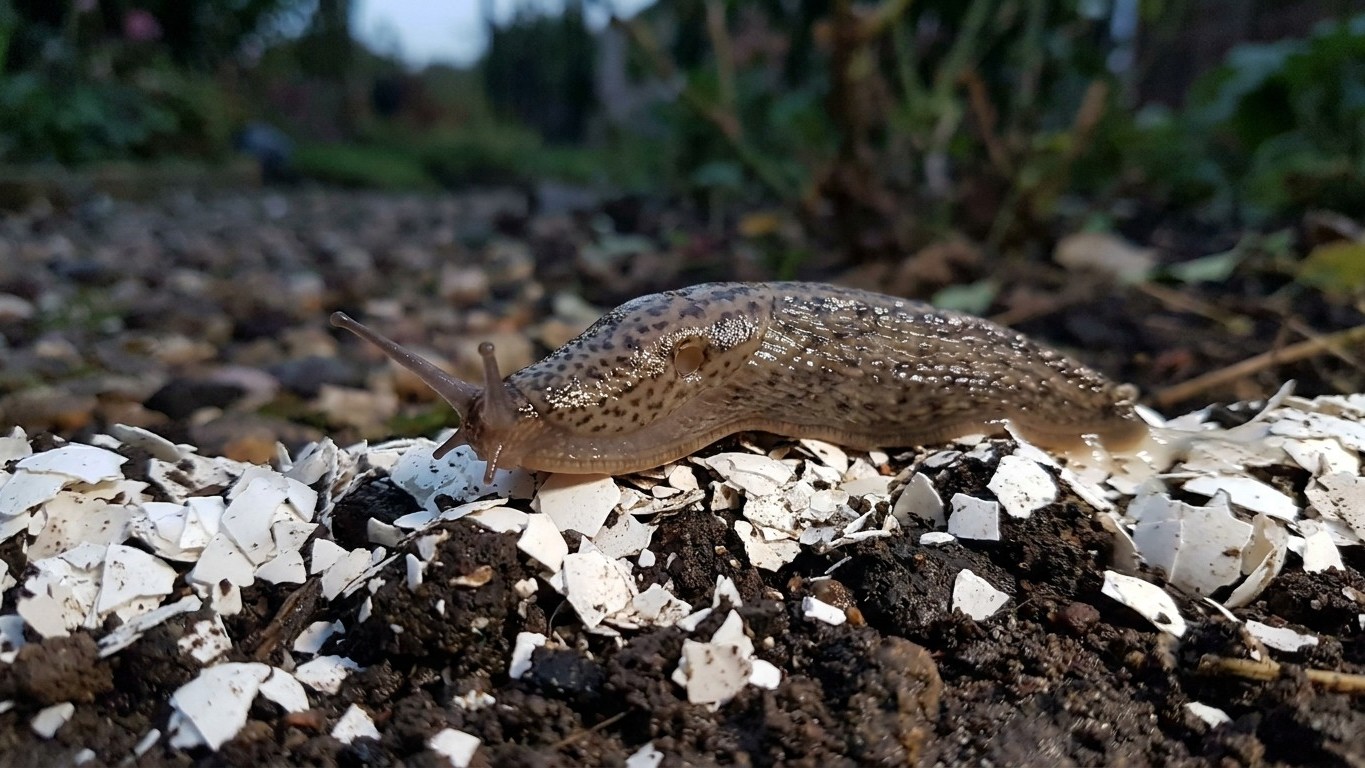
Twelve years of crumbled eggshells. Twelve years of rinsing, drying, crushing, and sprinkling that brittle white powder around every hosta in the garden. Then one humid August evening, crouching with a flashlight, watching a fat leopard slug glide over a ridge of shell fragments without even slowing down, the whole ritual collapsed in about four seconds.
The eggshell trick is one of gardening’s most beloved folk remedies. The logic sounds airtight: slugs have soft bodies, eggshells have sharp edges, therefore slugs avoid eggshells. It gets passed down like a family recipe, repeated in gardening forums, pinned on homesteading boards. The problem is that the science has repeatedly failed to back it up. A 2011 study by researchers at Glyndŵr University in Wales tested eggshells as a slug deterrent under controlled conditions and found they provided no statistically significant protection for plants. Slugs crossed the barriers freely. That study didn’t exactly go viral.
Key takeaways
- A Welsh university study found eggshells provide zero protection against slugs—they cross the barriers freely
- Confirmation bias, not evidence, keeps this myth alive among gardeners who credit shells for weather-related slug retreats
- Copper tape, beer traps, and iron phosphate pellets actually work—plus changing garden conditions matters more than any single trick
Why the myth is so stubborn
Confirmation bias does a lot of heavy lifting here. You scatter eggshells, you don’t see slugs the next morning, and you credit the shells. But slugs are nocturnal and moisture-dependent, they retreat when it’s dry, when it’s cold, when the season shifts. The shells get the credit for what weather and timing were actually doing. Gardeners are pattern-seeking creatures, and gardens are wonderfully unreliable laboratories.
There’s also the sheer appeal of the idea. Using kitchen waste to protect your plants feels virtuous, circular, almost poetic. It fits neatly into the no-chemical, no-waste ethos that many home gardeners now embrace. That emotional resonance makes the myth harder to dislodge than any factual correction. A 2019 poll by the Royal Horticultural Society found that eggshells ranked among the top three home remedies British gardeners swore by, despite the RHS itself flagging the lack of evidence. The belief isn’t irrational; it’s just stubborn.
What actually works on slugs around hostas
Hostas are, essentially, the preferred restaurant of every slug within a 50-foot radius. Their broad, tender leaves hold moisture and offer a cool shaded canopy, perfect slug habitat. Protecting them requires methods that have been tested and observed to actually interrupt slug behavior rather than just appealing to folk logic.
Copper tape is the most frequently cited alternative, and it does have something real behind it: slugs reportedly receive a mild galvanic reaction when their mucus contacts copper, which discourages crossing. The catch is that the tape needs to form a complete, unbroken ring around the pot or raised bed, it corrodes over time, and slugs that are already inside the perimeter (or hatched from eggs in the soil) are completely unaffected. It works better in containers than open beds.
Diatomaceous earth gets recommended almost as often as eggshells, and the mechanism is similar, abrasion to the slug’s body. The results are also similarly disappointing in field conditions. The powder loses its effectiveness almost immediately when wet, which is precisely the condition under which slugs are active. Applying it before rain is essentially applying nothing at all.
What the evidence consistently supports is a combination of physical trapping and targeted baiting. Beer traps, shallow containers sunk into the soil and filled with cheap lager — exploit slugs’ attraction to fermentation. They genuinely work, though they require emptying and refilling every couple of days. Iron phosphate-based slug pellets, sold under several brand names, are considered lower-risk than older metaldehyde pellets (which were banned for outdoor use in the UK in 2022) and have shown real effectiveness in trials. They break down into iron and phosphate in the soil, which is less alarming than it sounds.
The deeper fix: changing the garden itself
Beyond individual treatments, slug pressure around hostas drops significantly when you address the conditions that make slugs thrive in the first place. Dense mulch right up against plant crowns gives slugs a moist, dark refuge during the day, pulling mulch back a few inches from the base of each plant removes that shelter. Watering in the morning rather than evening means the soil surface dries out by nightfall, which reduces slug activity during their peak feeding hours. Simple, free, and genuinely effective.
Ground beetles, hedgehogs, thrushes, and toads are all natural slug predators. A garden with a log pile, a small pond, or even a patch of longer grass near the beds is a more hostile environment for slugs than one kept immaculately tidy. Biodiversity, in this context, isn’t just an environmental talking point, it’s practical pest management.
Some hosta varieties are also significantly more slug-resistant than others. Thicker-leaved cultivars with heavy texture, particularly the blue-leaved types whose waxy coating seems less appealing to slugs, show measurably less damage in gardens where softer varieties get shredded. After years of fighting slugs on the wrong front, switching varieties might be the most underrated move a hosta grower can make.
The eggshells aren’t going to waste, by the way. Crushed into the compost or worked into the soil, they do contribute calcium as they break down over months or years, modestly, slowly, but genuinely. That’s the honest version of the eggshell story. Not a slug barrier. A slow soil amendment. Twelve years of calcium, delivered by hand, one breakfast at a time. The hostas probably benefited. The slugs certainly didn’t mind.