
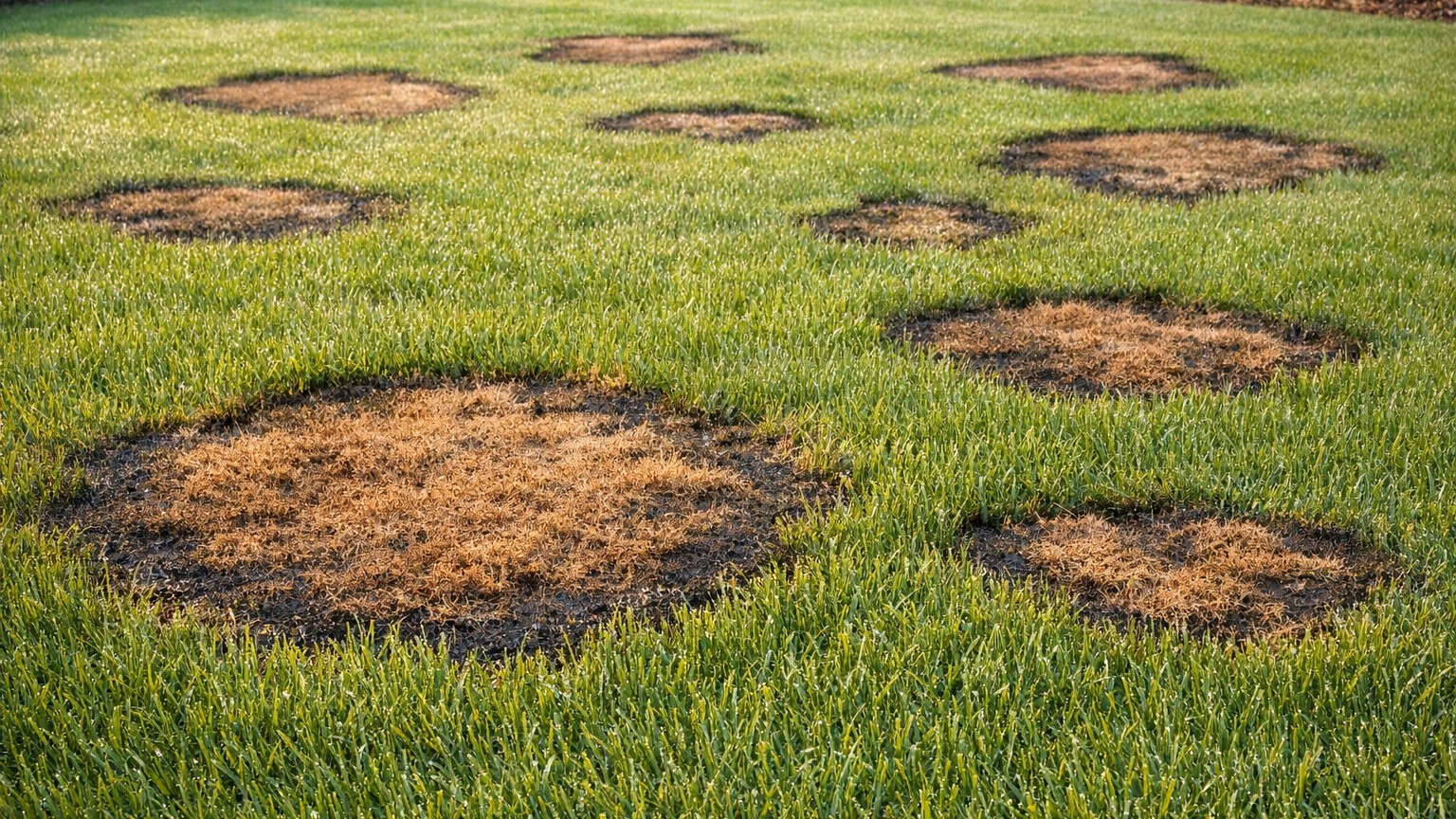
Brown patches spreading across a lawn that looked perfectly green just days before, that’s one of the more demoralizing sights in home maintenance. The culprit isn’t always drought, grubs, or some mysterious fungal invasion. Sometimes, the damage traces back to a single decision made on a cloudy afternoon: running the mower over wet grass.
The problem isn’t immediately obvious, which makes it worse. You cut the lawn, it looks a bit rough, and you figure it’ll bounce back. Then day three arrives, and there are yellowing strips. By day five, the patches have turned a dull, papery brown. The grass isn’t dormant, parts of it are dying.
Key takeaways
- Wet grass blades tear instead of cut cleanly, creating open wounds that brown within days
- Clipping mats trap moisture and block sunlight, creating perfect conditions for aggressive fungal diseases to spread
- Soil compaction from mowing wet ground suffocates roots, with browning appearing weeks later long after you’ve forgotten the mow
What actually happens when you mow wet grass
Wet grass blades bend rather than stand upright. A mower blade designed to slice through an upright stem instead pushes the wet blade sideways, tears it unevenly, or crushes it. The result is a ragged, frayed cut rather than a clean one, and that distinction matters more than most people realize. A clean cut heals quickly; a torn grass blade is an open wound that desiccates from the tip down, turning brown within days.
There’s a compounding factor that most lawn guides mention briefly but rarely explain well: the clippings. Wet clippings clump together into dense mats that settle across the grass surface. Those mats block sunlight and trap moisture against the soil, creating exactly the warm, humid, low-light conditions that fungal diseases need to take hold. Species like Rhizoctonia solani, responsible for brown patch disease, can spread aggressively under these conditions. The patches you see aren’t random. They follow the pattern of where the clumping was heaviest.
Soil compaction plays a role too. A lawn mower, even a lightweight push model, exerts meaningful pressure on the ground. Dry soil distributes that pressure reasonably well. Saturated soil compacts far more easily, and compacted zones struggle to drain, reducing oxygen availability to root systems. Grass roots in compacted soil essentially suffocate slowly, which shows up as browning weeks later, long after the original mow.
The spreading pattern and what it tells you
If your brown patches are expanding in irregular, roughly circular shapes with a slightly darker, water-soaked border, that’s almost certainly a fungal issue triggered or accelerated by the wet mowing. Rhizoctonia-based brown patch can grow outward at a rate that feels alarming, a patch the size of a dinner plate can double in a week under the right conditions.
Striped or linear browning, following the mower’s path, points more directly to the tearing damage itself or the clipping mats. Both are fixable, but they respond to different interventions. Tearing damage mostly requires patience and consistent watering to help the grass recover. Fungal spread may require a fungicide application, and the earlier you catch it, the less ground you’ll lose.
One useful diagnostic: pull a few of the brown blades from the affected area. If they slide out from the crown easily, with the base looking rotted or discolored, fungal rot has already reached the root zone. If they resist pulling and the blade simply looks shriveled from the tip down, you’re dealing with mechanical damage and the root system is likely still intact. That second scenario gives you a much better recovery outlook.
What to do now, and what to do differently next time
If the damage is already done, first step is to rake out any remaining clipping mats. Leaving them in place continues to block recovery. A light application of a nitrogen-based fertilizer can help stimulate regrowth, but hold off if fungal disease is confirmed, nitrogen feeds fungal spread as readily as it feeds grass.
For fungal patches, a broad-spectrum lawn fungicide applied according to label directions is the most direct solution. Most treatments require two applications spaced about two weeks apart to break the cycle. Avoid overhead watering in the evening during the recovery period; watering in the morning gives the surface time to dry before nightfall, which limits fungal activity.
The longer-term fix is simple but requires some discipline: wait until the grass is dry before mowing. A general rule used by professional groundskeepers is to wait at least 24 hours after significant rainfall, and to confirm that the blade tips aren’t visibly wet before starting the mower. Morning dew counts, a lawn that looks dry at 8 a.m. might still be holding enough moisture to cause problems. Midday or early afternoon mowing, on a day that started dry, is the lower-risk window.
Blade sharpness matters more than most homeowners account for. A dull blade tears rather than cuts even on dry grass; on wet grass, the damage multiplies. Sharpening mower blades twice per season, or after roughly every eight to ten hours of use, meaningfully reduces the trauma each cut inflicts on the turf. Some lawn care specialists sharpen blades every four to five hours during peak growing season, a cadence that sounds excessive until you see the difference in cut quality.
There’s an often-overlooked detail worth adding: the mower deck height. Cutting wet grass too short removes more of the blade than the plant can easily recover from. Raising the deck height by half an inch during periods of wet weather reduces stress on the grass, gives each blade more surface area for photosynthesis during recovery, and limits the depth at which clippings can compact against the soil. It’s a minor adjustment that carries outsized protective value, and one that applies even when conditions aren’t ideal.