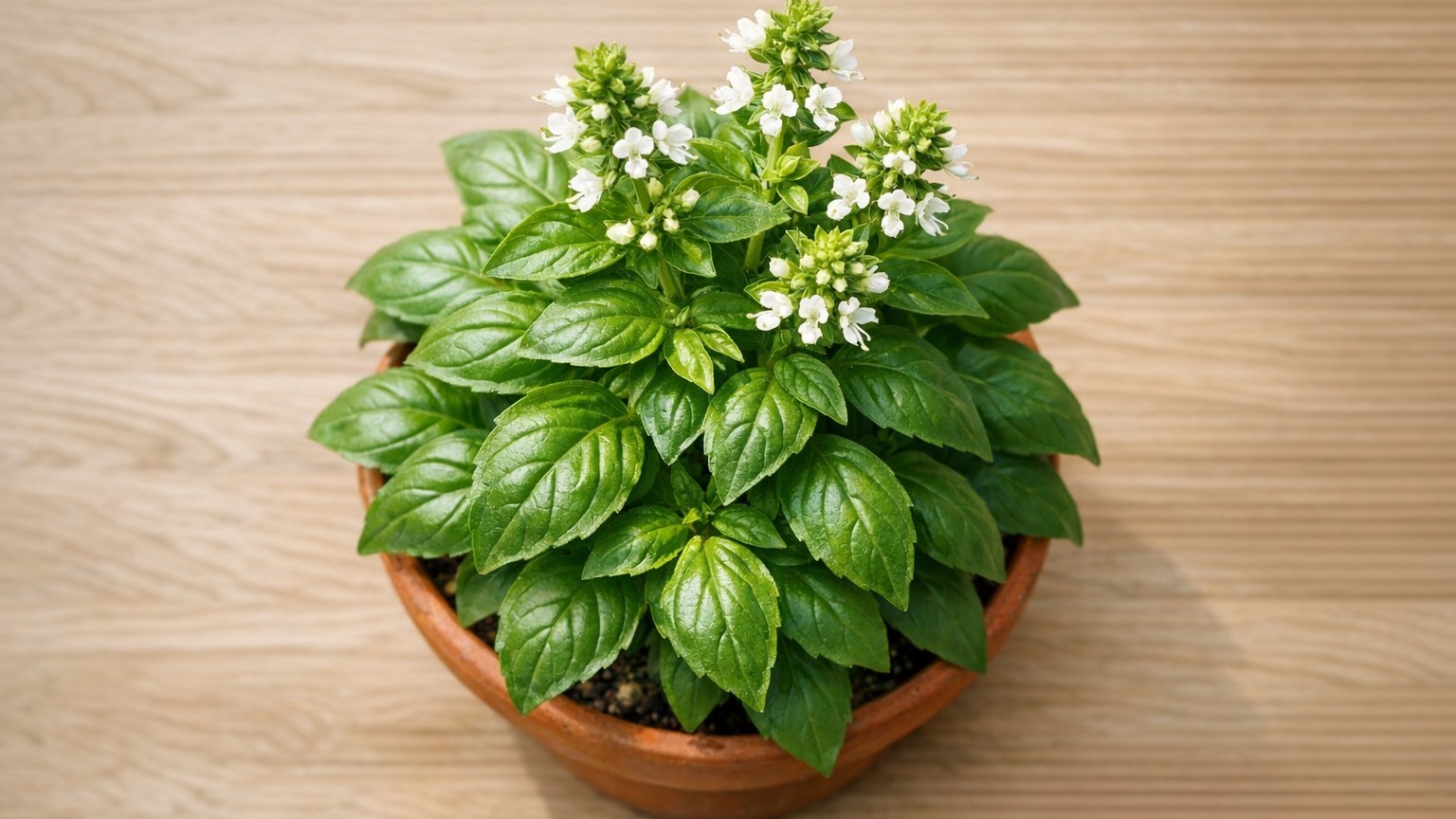
The tiny white flowers appeared one June morning, clustered at the top of the plant like a crown. They looked delicate, almost elegant. So I left them. Two weeks later, the basil was bitter, spindly, and producing almost nothing. The plant had effectively checked out, and I had no one to blame but myself.
This is one of the most common mistakes among home herb gardeners, and it’s so understandable precisely because the flowers are genuinely pretty. But what looks like a sign of health is actually the beginning of the end. When basil bolts, the technical term for when a plant shifts energy toward flowering and seed production — the whole chemistry of the plant changes, and not in your favor.
Key takeaways
- Basil flowers aren’t a sign of health—they’re the plant’s signal that it’s done growing leaves
- One plant can stay productive for 8+ weeks longer with a technique that takes less than a minute per week
- Even seasoned gardeners don’t know which basil varieties resist bolting in hot climates
What “bolting” actually does to your basil
A basil plant has one biological goal: reproduce. Every leaf it grows, every bit of sunshine it absorbs, is in service of eventually making seeds. When conditions signal that the time is right (usually heat, long daylight hours, or stress from drought), the plant accelerates toward that goal. It sends up a flower spike, redirects its sugars and resources upward, and essentially stops investing in leaf production.
The flavor change is almost immediate. The essential oils concentrated in basil leaves, primarily linalool and eugenol, which give the herb its characteristic sweet, peppery aroma — diminish significantly once flowering begins. Studies on Ocimum basilicum have confirmed that volatile compound concentration drops after bolting, leaving you with leaves that taste flat, slightly bitter, and sometimes medicinal. That caprese salad you were planning deserves better.
The leaves themselves also change physically. They become smaller, tougher, and spaced further apart on the stem. The plant puts its structural energy into that central flower spike rather than branching outward. What was a lush, bushy plant turns into something that looks like it’s reaching for escape.
Pinching: the five-second habit that keeps basil productive for months
The fix is almost offensively simple. Pinch off flower buds the moment you see them, before they open, before they develop, ideally when they’re still tightly packed little clusters at the tip of each stem. This process, called deadheading or pinching back, signals to the plant that it hasn’t yet completed its reproductive mission. So it keeps growing leaves, keeps branching, keeps producing.
Done consistently, this habit can extend a basil plant’s productive life by six to eight weeks beyond what it would otherwise give you. That’s a meaningful difference. A plant you’d normally compost in early August can still be your kitchen workhorse through September.
The technique matters a little. Don’t just snap off the flower head. Cut or pinch just above a leaf node, the point where two leaves branch off the stem. The plant will then send out two new shoots from that node, making the plant bushier rather than taller. Over several rounds of pinching, you end up with a compact, dense herb garden in a single pot.
Some gardeners do this every five to seven days during peak summer. That might sound intensive, but the actual time spent is under a minute per plant. The payoff is weeks of fresh leaves instead of a decorative, flavorless spike.
When bolting is inevitable (and what to do then)
Even with diligent pinching, basil will eventually bolt. No intervention keeps it vegetative forever. As days shorten and temperatures shift in late summer, the plant’s internal clock overrides everything. At that point, the gardener has options.
Letting a few plants go to flower is actually worth doing deliberately, just not accidentally. Basil flowers are edible and carry a lighter version of the leaf flavor, making them excellent scattered over pasta or into a cocktail. Bees and beneficial insects are drawn to them with real intensity. If you have the garden space, designating one plant for pollinators while managing the others for leaves is a reasonable strategy.
If the plant has already bolted before you caught it, cut it back hard, by about a third to a half, removing all flower spikes. Water it well, give it a small dose of balanced fertilizer, and put it somewhere it gets morning sun but some afternoon shade to reduce heat stress. Some plants will recover and push out a flush of new growth. Others won’t. It depends on how far along the bolting process had progressed and how stressed the plant already was.
Saving seeds is the silver lining of a bolted plant. Let a few flower heads fully develop and dry on the stem. The seeds inside are viable and can be planted the following spring. One plant going to seed can yield hundreds of seeds, enough to start a small herb garden from scratch, which puts a different frame around the whole experience.
The broader lesson about plant stress signals
Basil bolts faster under certain conditions: high heat, inconsistent watering, root-bound pots, and being grown in too little light. A plant under stress rushes toward reproduction as a survival response. So if your basil is flowering very early in the season, it’s worth reading that as a distress signal, not just a life-stage milestone.
Check the pot size. Basil roots need room, a pot smaller than six inches across will stress the plant. Check the watering rhythm. Basil wants consistently moist soil, not alternating between bone-dry and waterlogged. And check the light. Six hours of direct sun is the baseline; less than that, and you’re already working against the plant before summer heat even enters the picture.
There’s one detail most gardeners don’t know: sweet basil (the standard Italian variety) is actually one of the fastest bolters among common culinary herbs. Thai basil and lemon basil tend to bolt more slowly and tolerate heat better. If you live somewhere with brutal summers, swapping varieties isn’t an admission of defeat, it’s just smarter gardening.