
For years, the fig tree in the backyard was lush, shapely, and absolutely useless. Spring would arrive, the pruning shears would come out, and the tree would respond with a spectacular flush of those oversized, tropical-looking leaves. Zero fruit. A botanical tease.
Then a gardener leaned over the fence one June and asked a single question: “When exactly are you cutting it?” The answer to that question rewired everything I thought I knew about pruning.
Key takeaways
- Spring pruning removes the embryonic fruitlets before they even form—the real reason your fig tree stays barren
- A simple two-finger pinching technique before mid-July shifts the tree from growth mode to fruit mode
- Timing is everything: miss the dormant-season window or the mid-July deadline, and you’ve essentially told your tree to skip a year
The mistake almost every beginner makes
Figs bloom on new wood, and cutting them back drastically in late winter or early spring when they are dormant promotes new growth. That part is correct. The problem isn’t the dormant-season prune. The problem is what happens in spring, when the tree looks overgrown and the instinct kicks in to tidy it up. Avoid pruning in spring when sap is at its highest. At that point, you’re not managing the tree, you’re dismantling next season’s harvest before it even forms.
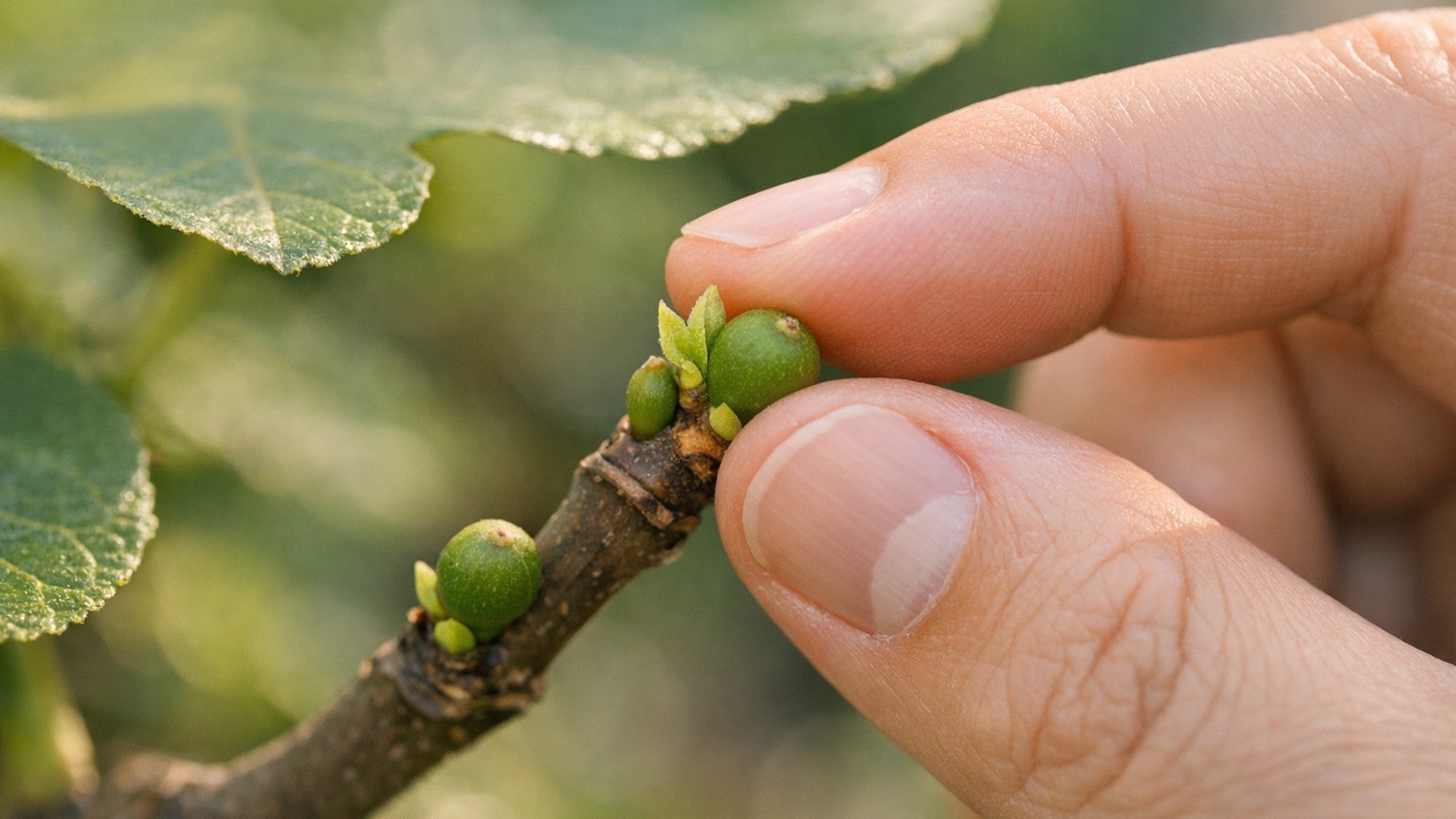
The most common reason a fig produces barely any fruit? You may be pruning off the shoot tips that carry the pea-sized fruitlets. Those tiny, almost invisible embryonic figs sitting at the very tip of each shoot aren’t debris. They are next year’s entire crop, and they look like nothing worth saving.
There’s also the sap problem. Fig trees are bleeders. When cut during the active growing season, they ooze a thick, milky latex sap. This sap isn’t just a nuisance, it acts as a beacon for sap-sucking insects and provides an entry point for pathogens. A spring trim, meant to keep things tidy, ends up being a double wound: stolen fruit potential plus an open invitation to disease.
The one cut that changes everything: summer pinching before mid-July
The technique the gardener demonstrated that afternoon is called pinching, and it’s done with two fingers, not a blade. To encourage more branching instead of longer shoots, pinch out the tip of new shoots once they have five leaves, from early summer until mid-summer. That’s the whole move. No tools. No guesswork. Just removing the growing tip of each new shoot at the right moment in the season.
The timing before mid-July is non-negotiable. Pinching back the new growth encourages branching and the formation of embryonic fruitlets at the tips, which will become next year’s crop. Stop pruning back new growth by mid-summer, when the embryonic fruitlets for next year’s crop will start forming at the shoot tips. Miss that window, and you’ve essentially told your tree to skip a year.
Pinching can also induce fruiting in stubborn fig trees, restoring hormonal balance and promoting fruit bud formation. This is the piece most people don’t realize: it’s not just about shaping. It’s about sending a hormonal signal through the plant that shifts its energy from “grow tall” to “make fruit.” Heading cuts change hormones to favor growth over fruiting, while thinning cuts help maintain size without stimulating excessive growth. Pinching sits in its own category, light, targeted, and biologically precise.
Understanding breba vs. main crop: two different timelines
Uniferous varieties produce only the “main crop” figs later in the season, while biferous varieties produce a breba crop early in the summer, and then a main-crop fig later. This distinction matters because each crop has its own pruning logic, and confusing them is exactly how gardeners end up with nothing.
Breba figs form on branches from the previous year; main-crop figs on new wood. So if you aggressively cut back old wood every spring, you eliminate your early-summer breba crop entirely. Pruning strategies depend on which crop you want to maximize. For breba production, preserve one-year-old branches during dormant pruning. For main crop enhancement, prune back previous season’s growth to encourage more new branches where main crop figs will form.
The summer pinch, done before mid-July, serves both camps. After a branch has five or six little figs growing on it, pinching out the tip slows down shoot growth and formation of any additional figs, directing more energy to those existing figs we’re hoping to ripen. Think of it as a resource allocation decision: instead of spreading energy across 20 potential fruits that will never fully develop, you concentrate it on six that will actually make it to the table.
What proper dormant pruning actually looks like
The dormant-season cut, done in late winter, before buds break, is where structural work belongs. Shorten the fruiting wood (the previous year’s growth) by about one third. This stimulates the production of new wood, which is exactly where your summer crop of figs will appear. One third, not one half, not all the way back to the trunk.
Figs will grow into large, vigorous, leafy shrubs or trees unless pruned regularly and their roots restrained. They may still produce fruit, but harvesting them can be tricky. You can easily reduce a fig’s excess vigor by pruning regularly and restricting its roots. This will also encourage it to produce fruit, rather than too much lush, leafy growth. Root restriction, often overlooked, is as important as any cut above ground. A fig planted in a large container or a root-restricted bed channels its energy into reproduction rather than expansion, which is exactly the trade-off you want.
Severe pruning can delay ripening by two to six weeks, a detail that feels abstract until you live somewhere with a short growing season. Cut too late or too hard in spring, and even if fruit forms, it won’t ripen before the first frost arrives. The whole season, wasted.
One final practical note worth knowing: studies show that fig trees respond well to intentional and consistent pruning, and fruit production increases around year four. Patience and method together. The tree is not broken. It’s just waiting for you to stop pruning it at the wrong time.
Sources : gardeningknowhow.com | onlinefigtrees.com