
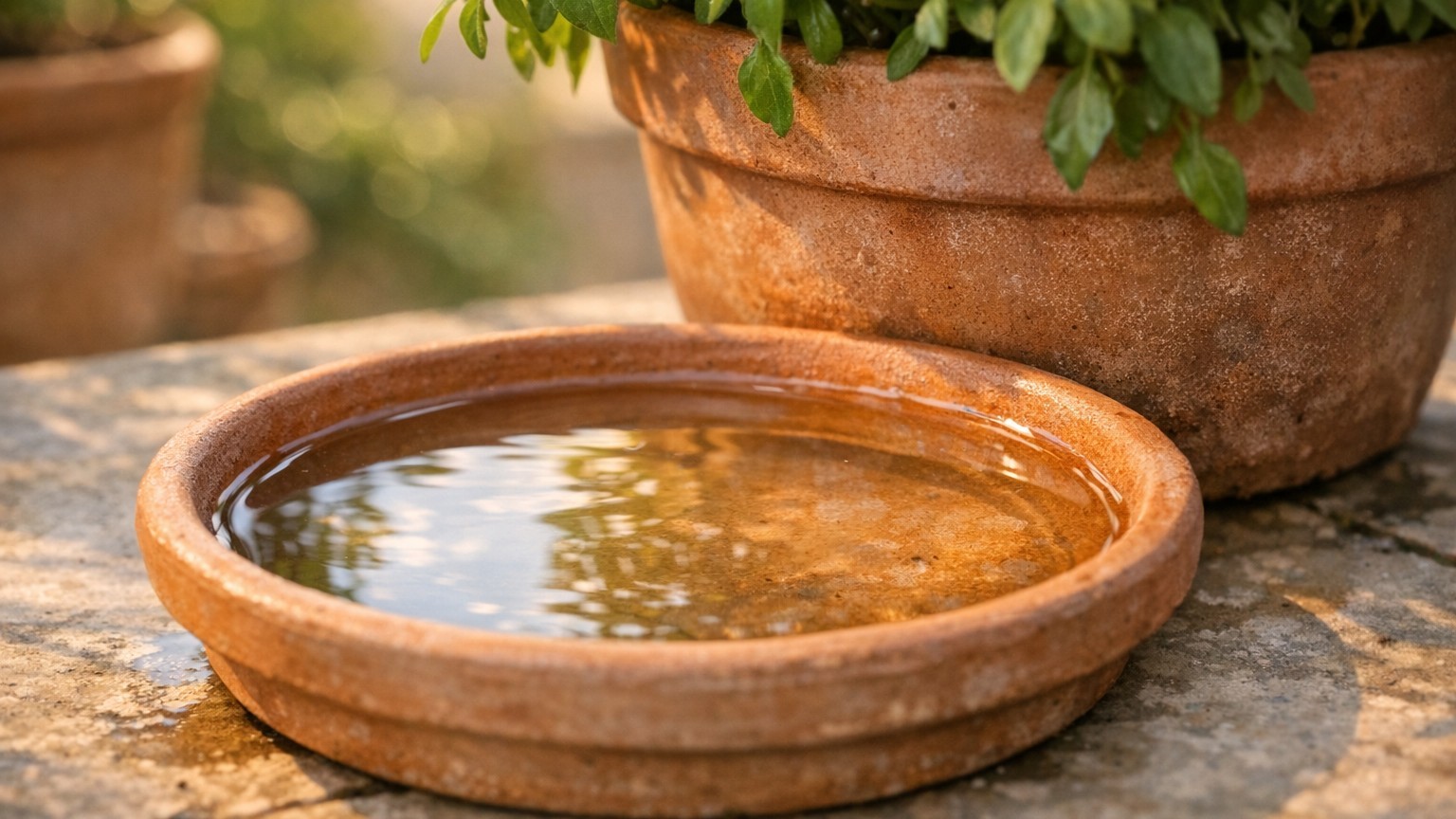
A single saucer holding less than a tablespoon of water. That was all it took. After a particularly wet June, the terrace had turned into something resembling a standing water convention, pots lined up neatly, saucers filled to the brim, and what felt like an exponentially growing population of tiger mosquitoes making every evening outside completely miserable. The connection wasn’t obvious at first. It rarely is.
Key takeaways
- A forgotten saucer under your pot can hatch dozens of tiger mosquitoes in just 7-10 days
- One surprising reason why plant saucers are more dangerous than birdbaths or buckets
- The simple action that eliminates mosquito breeding before it starts
The biology behind the saucer problem
The Asian tiger mosquito (Aedes albopictus) doesn’t need much to complete its reproductive cycle. Research from the CDC confirms that as little as half an inch of standing water is enough for a female to lay a batch of eggs. We’re talking about 40 to 100 eggs per deposit, maturing into biting adults in as few as seven to ten days in warm weather. A June heatwave following heavy rain creates almost perfect incubation conditions.
What makes plant saucers particularly insidious is that they aren’t on anyone’s mental radar for mosquito risk. People dutifully check birdbaths, old buckets, and clogged gutters. The decorative terracotta saucer under the rosemary pot? It blends into the scenery. And unlike a puddle in the yard that evaporates quickly, a shaded saucer under a large pot can hold water for days, sometimes weeks, completely undisturbed.
Tiger mosquitoes are also strategic about where they lay. They prefer small, contained water sources over larger bodies, which are more likely to host natural predators like dragonfly larvae or small fish. A saucer is practically ideal from their perspective: sheltered, still, warm from the sun-heated pot above, and largely ignored by the humans walking past it daily.
Why June specifically makes it worse
June sits at a particular intersection of conditions. Temperatures are warm enough to dramatically accelerate the mosquito’s development cycle, each degree above 60°F speeds up larval growth, and rainfall is frequent enough to keep those saucers perpetually topped up. In many parts of the southern and mid-Atlantic United States, June now delivers the kind of rainfall totals that used to be associated with late summer tropical events.
The tiger mosquito population also follows a cumulative logic. The insects that hatch in early June have time to breed before July, meaning each generation compounds the previous one. By mid-summer, what started as a handful of adults emerging from a few forgotten saucers can translate into a terrace that’s effectively unusable after 5 p.m. Three generations. That’s roughly what fits between the first June rain and the Fourth of July.
There’s another layer to this: tiger mosquitoes bite during the day, not just at dusk. Unlike the common house mosquito (Culex pipiens), which is predominantly crepuscular, Aedes albopictus is active from dawn to sunset. So the breeding happening in your saucers isn’t just creating evening nuisances, it’s populating your entire outdoor day with aggressive, persistent biters.
What actually works (and what doesn’t)
Emptying saucers after every rain is the single highest-impact action a home gardener can take. Not weekly. After every rain event. The seven-to-ten day development window means that water sitting for even five or six days already contains larvae in various stages. Tipping the saucer out completely, rinsing it, and leaving it dry for a few hours resets the cycle entirely.
For gardeners who genuinely need saucers to protect flooring or prevent overwatering stress on plants, there are practical alternatives. Copper mesh placed in the saucer doesn’t affect drainage but creates a hostile environment for larvae. Mosquito dunks, small donut-shaped tablets containing Bacillus thuringiensis israelensis (Bti), a naturally occurring soil bacterium, can be broken into small pieces and placed in saucers that can’t be emptied regularly. Bti is toxic to mosquito larvae and EPA-approved for use around vegetables and pets. It doesn’t harm beneficial insects, pollinators, or anything else in the garden ecosystem.
What doesn’t work? Citronella candles placed nearby, despite their enduring popularity. Studies consistently show they have negligible effect on tiger mosquitoes specifically. A 2017 study published in the Journal of Insect Science found that citronella offered no statistically significant protection against Aedes species at distances greater than about 18 inches. The candles smell pleasant on a summer evening, but they’re essentially decorative when it comes to actual mosquito control.
Covering saucers with fine mesh or removing them entirely during periods of regular rainfall is another underused tactic. Many container plants, especially Mediterranean herbs like lavender, thyme, and rosemary — actually prefer to dry out between waterings and don’t need a saucer at all. The saucer, in many cases, is a gardening habit inherited from nursery practice, not a genuine plant requirement.
Rethinking the terrace setup entirely
Beyond the immediate mosquito problem, this is worth thinking about as a broader design principle. Every decorative or functional element on a terrace that holds water is a potential insect habitat, and not necessarily a welcome one. Decorative bowls used as outdoor accents, the groove in a wrought iron table, the cap of an outdoor umbrella base, even certain sculptural planters with low drainage. A quick survey of any terrace through that lens tends to be revealing.
Some gardeners have shifted to using pot feet instead of saucers entirely. Elevating pots slightly on small ceramic or rubber feet improves drainage, prevents water from pooling at the base, and eliminates the standing water problem without affecting the plant’s health at all. An added benefit: pot feet reduce the dark, damp conditions that slugs and certain fungal diseases thrive in, giving the garden a genuine double advantage from one small change.
The tiger mosquito arrived in the United States in the mid-1980s, hitchhiking in shipments of used tires from Asia. It has since established itself in at least 40 states. Unlike many invasive species stories, this one has a remarkably accessible counter-measure, and it lives under your pots.