
Every spring, for years, the ritual was the same: pull on the rubber gloves, shake the spray bottle, coat every leaf and bud in a chemical mist, and tell yourself you were doing the roses a favor. The plants looked fine. The aphids came back anyway. And the bees, well, there were fewer of those each year, but who made the connection? One conversation with a neighbor changed everything.
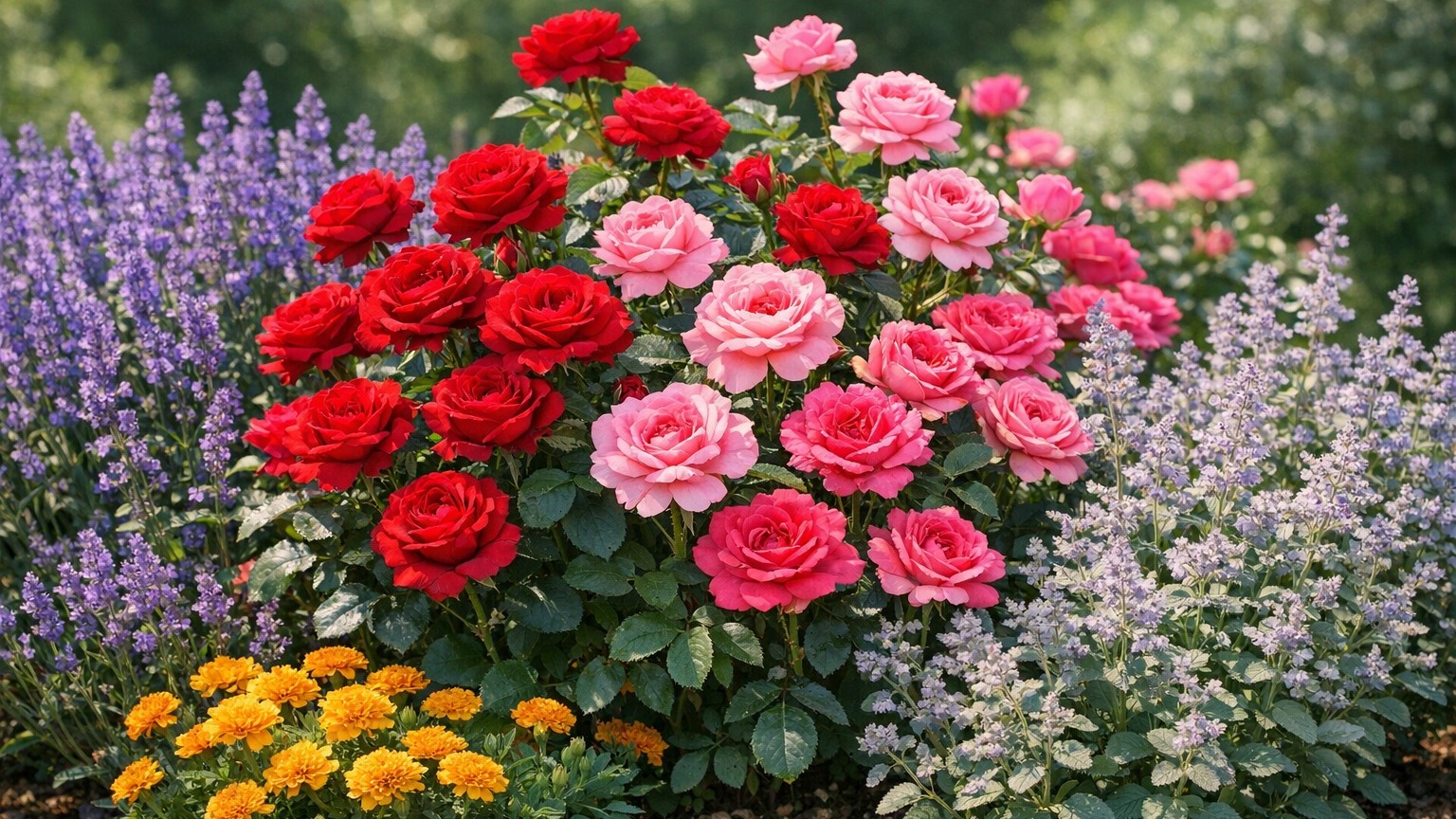
Her rose bed sat three lots down, full and chaotic with purple and yellow, buzzing with insects that were decidedly not pests. No spray bottle in sight. Just roses, and a tangle of plants that looked, at first glance, like beautiful disorder. It wasn’t disorder. It was a system.
Key takeaways
- Chemical rose sprays poison bees and pollinators while actually making pest problems worse over time
- A neighbor’s simple three-lot garden holds the secret: strategic companion plants that repel pests naturally
- Lavender, alliums, catmint, and marigolds create a biological defense system that requires zero chemicals
The Real Cost of Chemical Spraying
The appeal of chemical pesticides is obvious. They work fast, they’re sold everywhere, and the label promises results. The problem is what the label doesn’t mention. While chemical options produce quick and effective results, they can be harmful to beneficial insects such as bees, butterflies, and ladybugs, and cause long-term damage if used regularly. That “long-term damage” part tends to be glossed over at the garden center.
The most widely used class of rose pesticides, systemic insecticides called neonicotinoids, are absorbed directly into the plant’s tissues. Many synthetic pesticides contain chemicals like neonicotinoids, which travel through the plant’s system to kill pests. But they also end up in the nectar and pollen, making your roses toxic to bees, butterflies, and other important pollinators. Spray the leaves, poison the flower. That’s the math.
The scale of the problem is hard to dismiss. Researchers using 14,457 surveys across 2.8 million square kilometers in the western United States found strong negative relationships between neonicotinoids and pollinator populations, with mean predicted occupancy declining by 57% from 1998 to 2020. That’s not a marginal dip. That’s a collapse happening in slow motion across American backyards, farms, and gardens. Bees are responsible for approximately one-third of the food that reaches our tables. The roses look pristine. Everything else pays the price.
There’s another, less-discussed consequence. When growing roses, the use of broad-spectrum insecticides should be avoided as much as possible, as these products can kill off natural enemies that help keep spider mite populations in check. So spraying to solve one pest problem actively creates another. Some chemical pesticides actually stimulate mite reproduction, which means the spray bottle, used annually, may have been making things progressively worse, not better.
What the Neighbor Understood That Most Gardeners Don’t
The insight isn’t complicated, but it runs counter to how most of us were taught to garden. Growing roses in isolation makes them vulnerable to pests and diseases. Companion plants act as natural allies, repelling harmful insects like aphids and beetles or attracting beneficial predators such as ladybugs and lacewings. The neighbor wasn’t ignoring the pest problem, she had surrounded her roses with a working defense system.
Lavender was her first line. Known for its soothing scent, lavender is a powerhouse against aphids when planted near roses, its aromatic oils repel various pests, ensuring the roses remain undisturbed. And it pulls double duty: it attracts pollinators like bees, enhancing the ecosystem around the garden while keeping it pest-free. One plant, two jobs, zero chemicals.
Alliums, the ornamental onion family, including chives, were tucked among the rose bases. These plants release a strong, onion-like fragrance that masks the scent of nearby roses, confusing insects and helping protect the blooms. Alliums also attract helpful parasitic wasps that prey on sawflies. Catmint filled the edges, its silvery-green foliage spilling forward. Catmint’s aromatic foliage acts as a natural deterrent to pests like aphids and Japanese beetles. Between those two plants alone, the rose bed had built-in pest management, no bottle required.
Marigolds completed the picture. Marigolds release a natural compound called alpha-terthienyl that wards off aphids and similar pests. For pest deterrence, companion plants need to be within 12 to 18 inches of the rose base to have maximum effect, this is the zone where root exudates from marigolds and foliar volatiles from lavender and catmint are most concentrated. Proximity matters. A marigold planted across the yard is decoration. A marigold planted at the rose’s foot is armor.
Building a Garden That Defends Itself
The shift from spray-dependent gardening to companion planting isn’t just ecological, it changes the structure of the garden itself. Biodiversity in the garden contributes to soil health and prevents common fungal diseases in roses such as black spot and powdery mildew. A monoculture rose bed, roses and nothing else, is essentially an open invitation to every pest in the county. A mixed bed is harder to invade.
Soil health improves too. Deep-rooted plants like comfrey draw nutrients from the subsoil, enriching the topsoil where roses thrive. Nitrogen-fixing plants like lupines boost soil fertility, while low-growing plants like creeping thyme and lady’s mantle act as living mulch. These companions suppress weeds, retain moisture, and reduce the need for fertilizers on top of pesticides.
There’s also a timing logic to build in. Choose rose companions that bloom at different periods of the season, bulbs in early spring, lavender in summer, and ornamental grasses in late summer and fall. A garden like this never goes quiet. It supports beneficial insects year-round, maintaining the kind of biodiversity that keeps pest populations in check without any intervention. By attracting beneficial insects like lacewings, ladybugs, and parasitic wasps, you can create a balanced ecosystem where nature does the pest control for you.
There is a long tradition of using herbs as pest deterrents, though the scientific research demonstrating specific mechanisms is still developing. That’s worth knowing. This isn’t a guarantee, it’s a strategy, and a garden is always an experiment. But the direction of travel is clear: companion planting to attract and support beneficial insects, combined with proper plant care, pruning, and sanitation, outperforms the spray bottle season after season. One thing the research does confirm is this: the garden that spends years poisoning its own pollinators doesn’t just lose bees. It loses the entire web of interactions that made the roses beautiful in the first place.
Sources : blommaflowerco.com | plantisima.com