
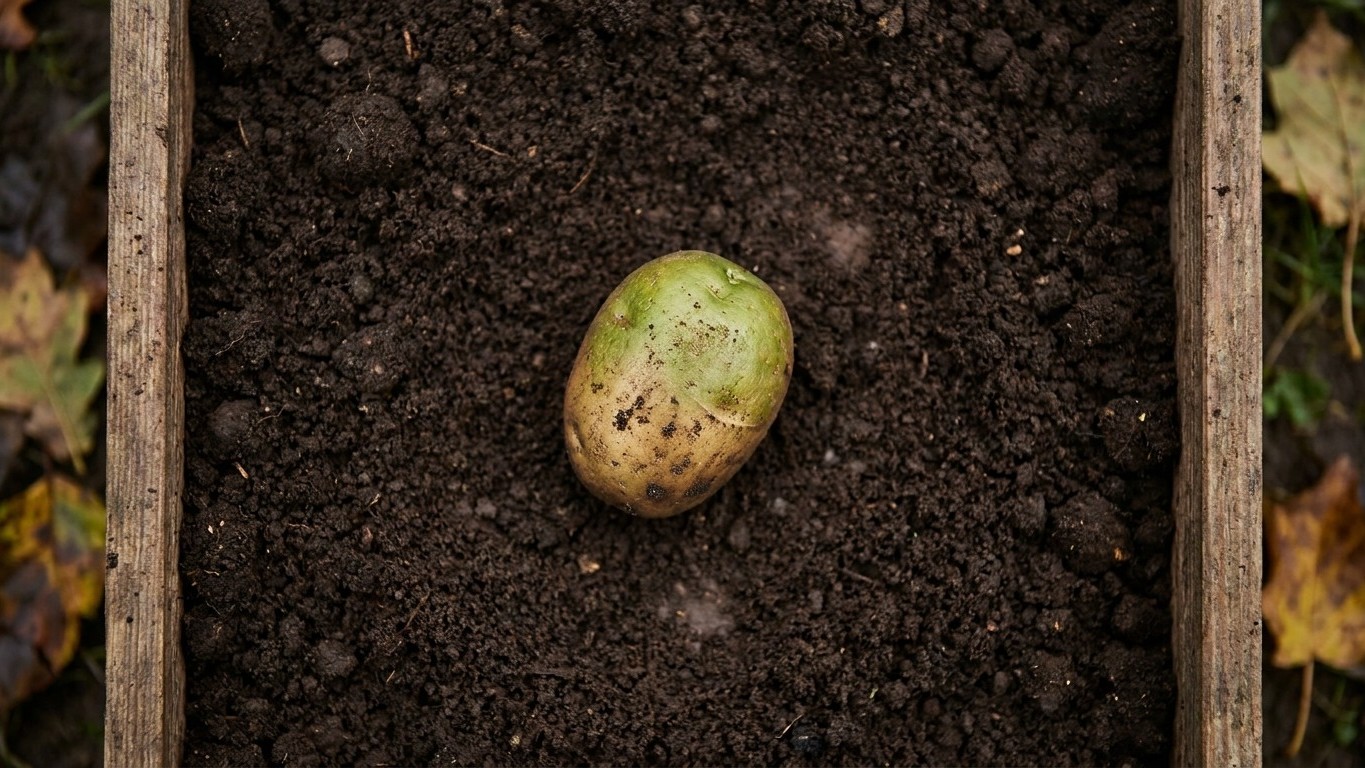
Green potatoes are not a minor inconvenience. They contain solanine, a natural toxin the plant produces as a defense mechanism when its tubers are exposed to light, and eating enough of it can cause nausea, vomiting, and in severe cases, neurological symptoms. The threshold for solanine toxicity is surprisingly low: the FDA has flagged levels above 20 mg per 100g as potentially harmful, and a single green potato left in the pantry can exceed that. Most home gardeners don’t realize this until they’ve already lost a good chunk of their harvest.
Key takeaways
- A potato exposed to sunlight for even a few days starts producing a dangerous toxin called solanine—sometimes invisibly
- Most gardeners skip the one practice that prevents this, not realizing it’s the difference between a safe harvest and a toxic one
- Even ‘mostly green’ potatoes hiding green rings beneath their skin pose a real health risk to children and adults alike
What “hilling” actually does, and why skipping it is a real mistake
Mounding soil around potato plants, a practice called hilling, is one of those gardening tasks that sounds optional until you understand the biology behind it. Potatoes don’t grow from seeds in the ground; they develop along underground stems called stolons, which branch out horizontally from the planted seed potato. Those stolons can travel surprisingly far, sometimes 12 inches or more, and the tubers that form at their tips sit at various depths. Any tuber that pushes close to the surface, or actually breaks through, gets hit with sunlight. Chlorophyll kicks in. And so does solanine production.
The connection to light is direct. Solanine isn’t some slow-developing chemical that builds over weeks; it starts accumulating within a day or two of sun exposure. A potato that’s been peeking out of the soil for even a short time will have developed a green tinge beneath the skin, sometimes invisible until you cut it open. That’s the part that catches gardeners off guard, you can’t always tell just by looking at the surface.
Hilling solves this by burying the developing tubers deeper as the season progresses. You typically mound soil up around the base of the plant every two to three weeks, starting when the foliage reaches about 6-8 inches tall. Each mounding gives the stolons more room to extend and keeps newly forming tubers covered. The result is a larger yield and, more to the point, a safer one.
The visual clues most gardeners misread
Spotting a potato poking out of the soil feels like a small victory, proof that something is actually growing down there. The instinct is to leave it, maybe even photograph it. The right instinct is to cover it immediately. Any exposed tuber should be buried right away, regardless of where you are in the growing season.
Green coloring is the obvious red flag, but there’s a subtler version worth knowing: a potato that’s been partially exposed may show no green on the outside but will reveal a green ring just beneath the skin when sliced. This happens because the upper layers greened out while the deeper flesh stayed protected. Cutting away the green parts doesn’t fully solve the problem either, solanine concentrates in those areas but can leach slightly into adjacent tissue, so trimming generously (at least half an inch past any green) is the safer move.
There’s also the matter of temperature. Storing freshly harvested potatoes in a bright spot, even for a few days, can trigger greening. A cool, dark, well-ventilated space is the standard recommendation, somewhere around 45-55°F, and that guidance exists for the same reason hilling does. Light is the enemy at every stage, from garden to kitchen.
How to hill properly and how often
The mechanics of hilling are simple, but timing matters. Start your first mounding when plants are 6 to 8 inches tall, pull loose soil, compost, or straw up around the base, leaving just the top few inches of foliage exposed. Repeat every two to three weeks through the growing season, building up a ridge that can eventually reach 10 to 12 inches high. Some gardeners use straw or shredded leaves instead of soil, which works just as well and makes harvest easier since you’re essentially digging through mulch rather than packed earth.
One practical note: don’t hill right after watering or rain when the soil is saturated. Compacted wet soil around the base of the plant can restrict oxygen to the roots and increase the risk of rot. Wait for the surface to dry out slightly before mounding.
The variety you’re growing also plays a role. Some cultivars set tubers much closer to the surface than others : Yukon Gold, for instance, tends to push upward more aggressively than a deeper-setting variety like Kennebec. Knowing your variety helps you anticipate how often you’ll need to hill and how high.
What to do with the potatoes you already found exposed
If you’ve already harvested green-tinged potatoes, you’re not necessarily throwing out your entire crop. The solanine is concentrated in and just under the skin, and in any visibly green flesh. For lightly affected potatoes, cutting away all green tissue, and then some, along with a thick peeling is a reasonable approach for cooking. Heavily green potatoes, ones where the green penetrates deep into the flesh or accounts for more than a small patch, should be discarded. Cooking doesn’t neutralize solanine; it’s heat-stable, which means boiling or baking won’t reduce the toxin load.
Sprouted potatoes follow similar logic. The sprouts themselves contain elevated solanine, and potatoes that have been sitting long enough to sprout significantly have often been greening under the skin too. Remove the sprouts and check for any green discoloration before using them.
One detail that often gets overlooked: small children and people with lower body weight are more sensitive to solanine than adults. The same amount of green potato that causes mild discomfort in an adult can be more problematic for a child, worth keeping in mind before serving “mostly fine” potatoes at a family meal. The safe call is always to err on the side of the compost bin.