
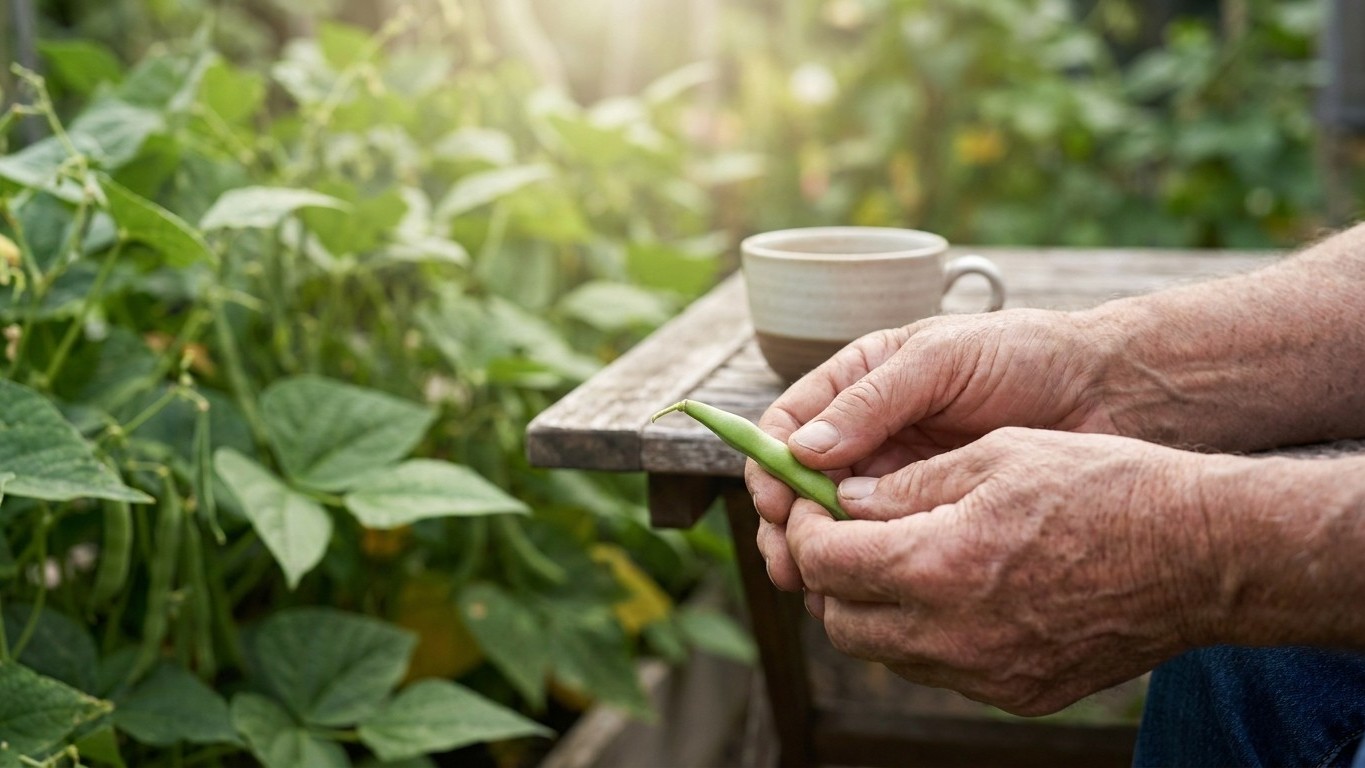
He’d walk out to the garden every other morning, coffee still in hand, and snap off pods that barely looked worth the trip. Some were no longer than a finger. My mother rolled her eyes. My grandfather kept picking. Decades later, garden science backs him up completely: harvesting green beans small and often isn’t impatience, it’s the single most effective way to keep a plant producing all season long.
Key takeaways
- A forgotten overgrown pod can silence an entire plant’s production through a hidden chemical signal
- The difference between tender snap beans and tough, stringy ones is just three days in warm weather
- Consistent harvesting every 1-2 days rewires the plant’s hormonal priority from seed-making back to flower production
The plant is listening to what you pick
Green beans don’t grow pods for fun. They grow them to make seeds, and once a handful of pods on the vine reach full seed maturity, the plant reads that as mission accomplished. Leaving over-mature pods on the plant signals a switch from flower and pod production to seed production, decreasing the harvest. In plain terms: a few forgotten, swollen pods can quietly shut down the whole operation.
The mechanism behind this isn’t folklore, it’s hormonal. Researchers studying flowering termination in plants found that seed-produced auxins act as the main signal in the pathway of flowering termination, providing evidence for the essential role of seeds in triggering proliferative arrest through a long-distance signal involving auxin and abscisic acid. Translated to the backyard: once seeds inside a pod start developing in earnest, they send a chemical message back through the plant that essentially says “stop making flowers, we’re done here.” A gardening resource summarizing the same phenomenon puts it simply, noting that missed pods push the plant toward seed maturity, changing hormone and carbohydrate flow so the plant begins feeding seed instead of starting more flowers.
This is why my grandfather’s timing wasn’t random. During peak production, inspecting plants every 1-2 days catches pods right at that tender window, before the plant gets any signal to wind down. Wait four or five days instead of two, and you’re not just risking one batch of tough beans. You’re risking the plant’s entire remaining output.
Small pods aren’t a mistake, they’re the goal
Here’s the part that took me years to accept: those small pods he picked weren’t premature. They were exactly on schedule. Green beans are picked young and tender before the seeds inside have fully developed, and you’re looking for pods that are firm and sizable enough to snap, generally as thick as a pencil. Anything smoother and smaller than that is still perfectly edible, just younger. Anything with visible lumps where the seeds are bulging has already crossed into tough, stringy territory.
One gardening guide describes the tell-tale sign of waiting too long: a pod that feels smooth and crisp on Tuesday starts pushing visible seed bumps by Friday in warm weather, and once that happens the plant has shifted from making a tender snap bean to filling seed. Three days. That’s the entire margin between a bean you’d want on your dinner table and one better suited for the compost. My grandfather never read a horticulture journal in his life, but he clearly understood that window instinctively, probably from watching his own father do the same thing decades before.
There’s also a physical reason to handle the plant gently while picking that small. Bean stems are brittle, especially during peak production, and a hard pull on the pod can break the flowering tip and cost several future pods. Picking often, with two hands, one steadying the stem and one easing the pod free, protects the very flowers that would have become tomorrow’s harvest.
What happens if you skip a week
Skip harvesting for a week during peak season and the damage isn’t limited to a few overripe pods. The plant has already started reallocating its energy. Leaving mature pods on the vine tells the plant its reproductive work is done, and there’s no simple way to reverse that decision once it’s underway. Removing the overgrown pods afterward helps, but it doesn’t restore the production curve you would have had with consistent picking.
This matters more for bush beans than pole beans, though both suffer. Bush beans grow upright, flower in a shorter span, and produce a concentrated harvest, which means their entire yield is compressed into a narrow window where every missed picking day counts double. Pole varieties are more forgiving because they keep flowering over a longer stretch, but pole beans especially keep producing over a long period if harvested consistently, which is really just the same rule stated from the other direction.
Storage matters too, and this is where a lot of home gardeners undo their own good picking habits. Beans picked at the right size still lose quality if they sit on the counter. Store beans in an airtight container in the refrigerator for up to four days, since they’ll toughen over time even when stored properly. My grandfather’s basket went straight from the garden to the crisper drawer, no detour through the kitchen counter for an afternoon. Another small habit that, it turns out, was never about impatience at all.
Turning an old habit into a repeatable routine
If you’re growing beans this season, the practical version of his method is straightforward. Check the plants roughly every two days once the first pods appear, pick anything pencil-thick or smaller, and don’t let a few overgrown stragglers linger “just in case.” Removing them, even if you won’t eat them, keeps the plant’s hormonal signals pointed toward more flowers rather than seed production.
What strikes me now, looking back, is how much of what felt like eccentricity in an older generation was actually just accumulated field knowledge, tested over dozens of summers, long before anyone published a study confirming the auxin pathway behind it. He wasn’t being impatient in that garden. He was reading signals the rest of us hadn’t learned to see yet, and picking a tiny, unimpressive bean every single time before it had the chance to tell the plant to quit.
Sources : aol.com | evergreenseeds.com