
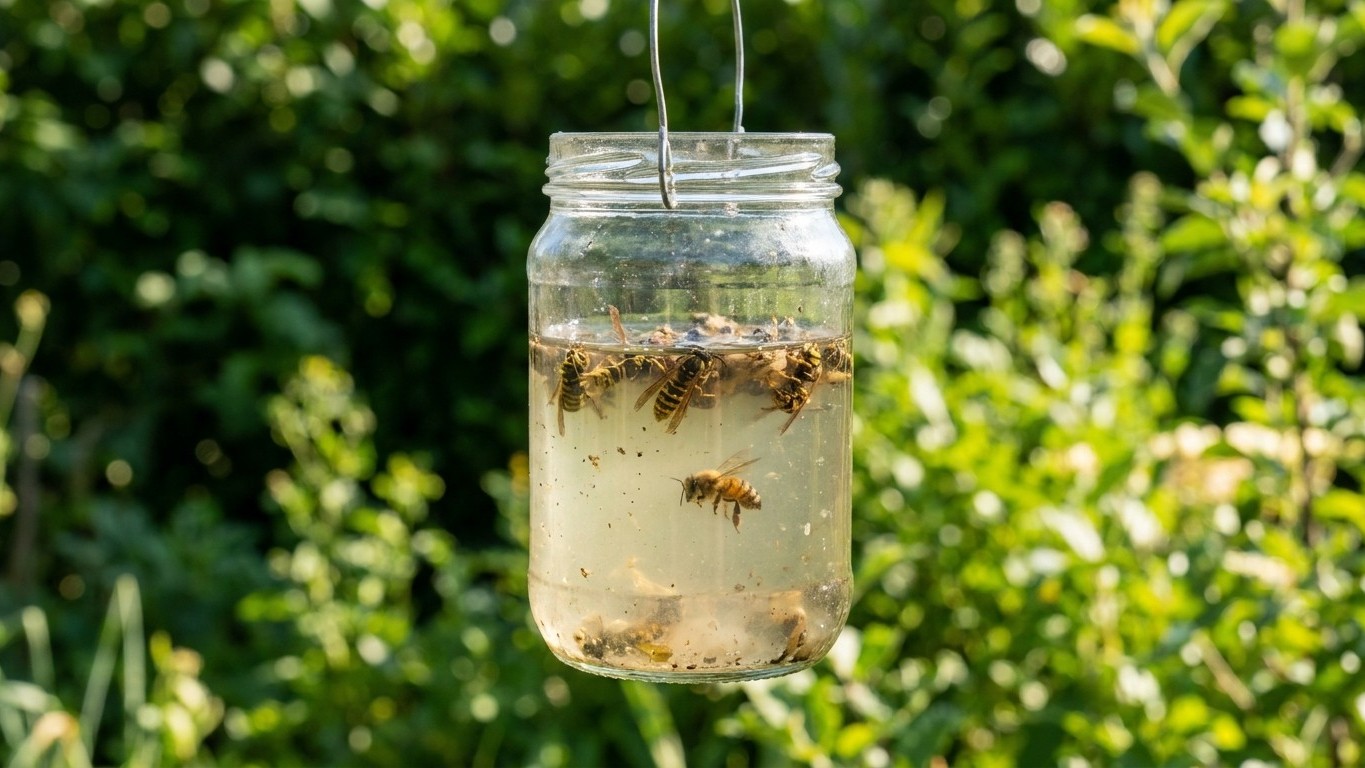
A jar of sugar water hung from a tree branch to keep wasps off the picnic table. A week later, the liquid inside told a different story: not just wasps floating on the surface, but bees too, honeybees drowned right alongside the yellow jackets. That’s the uncomfortable surprise waiting for a lot of backyard trappers this time of year.
The instinct makes sense. Wasps and honeybees look similar enough from a distance, and both show up when there’s something sweet on the table. So a jar, a bit of sugar dissolved in water, a hole punched in the lid, and up it goes into a tree. What most people don’t realize is that the bait recipe itself decides who dies in that jar, and a plain sugar-water solution is basically an open invitation to pollinators that never bothered anyone.
Key takeaways
- Sugar-water traps designed to catch wasps are equally lethal to innocent honeybees trying to find food
- The timing of when wasps seek sugar (late summer) coincides perfectly with peak garden season—and peak bee foraging
- A simple formula using vinegar instead of honey repels bees while irresistibly attracting the wasps you actually want to trap
Why the Jar Works (and Why the Timing Matters)
Wasps aren’t hardwired to want sugar all year. Wasps switch food preferences during the season, focusing on protein for building nests early in the year, then shifting toward sugar for energy later in the summer. That explains why a jar that catches nothing in June suddenly fills up in August. Sugar baits work best in late summer, which lines up almost exactly with peak patio-dinner season, right when nobody wants a wasp anywhere near the grill.
The mechanics inside the jar are simple physics dressed up as pest control. A bait comprising sugar in a liquid is contained in the bottom of the trap such that bees, wasps, and other stinging insects are attracted to the bait through the narrow opening of the funnel shaped insert and become trapped. Once inside, escape is nearly impossible, and most designs finish the job with drowning. It’s effective. It’s also indiscriminate, which is exactly the problem.
The Bee Floating in the Jar Nobody Wanted
Here’s the part that turns a simple garden fix into an ethical headache. Adding honey to a trap will attract honeybees, and those very important, nonaggressive pollinators shouldn’t be the ones dying in a jar meant for wasps. But plain sugar water isn’t much safer. Beekeepers who run traps near their hives learn this the hard way. Sugar water bait will result in dead honey bees instead of wasps if the recipe isn’t adjusted, which is exactly the scenario that turns a well-intentioned jar into a tiny pollinator graveyard.
The fix isn’t complicated, but it does mean rethinking what goes in the jar. A mixture using vinegar, a bit of sugar water, and banana attracts yellow jackets, bald-faced hornets and other wasps while being far less attractive to honey bees. Multiple backyard gardeners and beekeepers converge on a similar formula: one cup of vinegar with four tablespoons each of salt and sugar seems to attract more wasps and fewer beneficial bees. The vinegar changes the smell profile entirely. Wasps are naturally attracted to sweet scents, but the acidic smell of vinegar resembles that of overripe fruit, another food source they seek out, while bees mostly ignore the sour note.
Anyone unsure what actually landed in their jar should look closely before assuming it’s all wasps. Knowing the difference and not killing bees matters, and comparing photos side by side reveals distinct differences between the smooth, slender wasp body and the fuzzier, rounder bee. It sounds obvious until you’re squinting at a jar full of drowned insects trying to sort friend from foe. By then it’s too late for whoever’s floating inside.
Building a Trap That Actually Spares the Bees
Placement matters almost as much as bait. The trap should go away from where people gather, since nobody wants to lure wasps right into the middle of a dinner party. A spot at the edge of the yard, away from flowering plants where bees actually forage, cuts down on accidental catches before the bait even comes into play.
Beekeepers watching for cross-contamination near their hives have a simple test: keep a close eye on the trap for the first few days to make sure only the target insects are getting caught, and there should be few if any honey bees inside. If bees start showing up, that’s the signal to swap the bait, not to shrug and let the jar keep filling.
Commercial alternatives exist for people who’d rather not experiment with vinegar ratios. Research into large-scale wasp control has actually addressed this exact concern at a bigger scale. A protein-based bait containing fipronil has been introduced for wasp control, and in over a decade of reported trials, honeybees have never been observed foraging on it, likely because the bait contains no sugars to serve as a bee food source. A two-year study checking whether that chemical could still slip into hives found nothing concerning: fipronil was not detected in any of the worker bee, bee larva, honey or pollen samples collected from 30 hives over the study period. That’s reassuring news for anyone managing wasps near an active apiary, even if it’s not exactly a DIY weekend project for most homeowners.
Not every wasp species even bothers with a jar in the first place, which is worth knowing before assuming a trap has failed. Paper wasps aren’t especially drawn to traps because they’re more focused on hunting insects and caterpillars than searching for sugary food, so traps may catch a few but usually won’t make a noticeable dent in their activity unless the nest itself is removed. So if the jar sits mostly empty while paper wasps keep patrolling the porch, the trap isn’t broken. It’s just doing exactly what it was built for, and the real culprit is a nest somewhere overhead that no amount of sugar water will ever solve.
Sources : tipnut.com | bobvila.com