
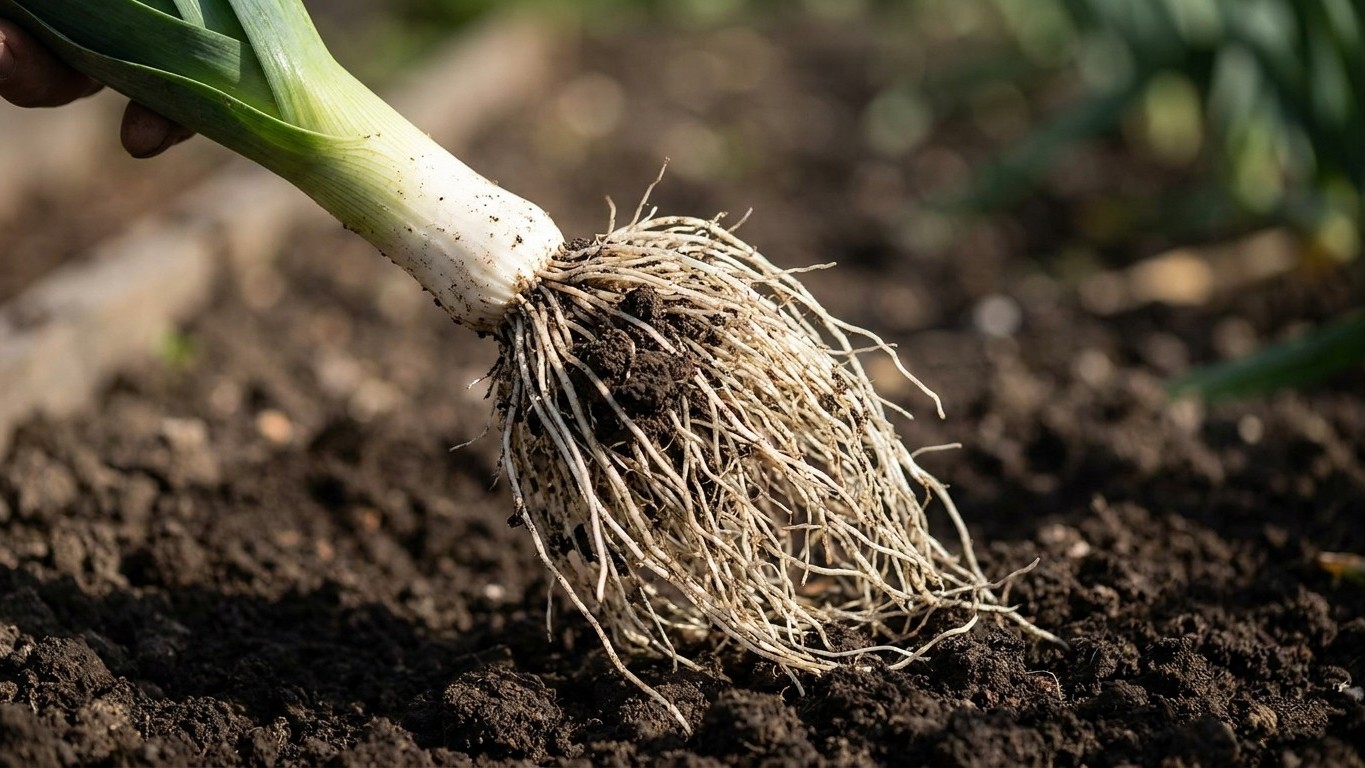
Pulling that leek out of the ground answered a question I hadn’t even known to ask. The shank was still pencil-thin, exactly where it had been a month earlier, and the roots told the whole story: they hadn’t moved an inch since transplanting day. Moving mature leeks whole, with their root ball intact, was supposed to protect them from stress. Instead, it stalled them completely.
Key takeaways
- A whole transplanted leek showed zero growth after a month—but the roots told the real story
- August heat + compact root balls = transplant shock, even without any trimming
- The traditional deep-planting method isn’t just about blanching—it’s survival in summer stress
Why Moving Them Whole Seemed Like the Safer Choice
The standard advice for transplanting leeks usually involves some kind of trimming, either the roots, the leaf tops, or both. Gardeners have argued about this for years. Some growers swear by it: treat leeks the same as green onions or onions from seed – trim repeatedly to thicken up the stems and a light trim at planting time. Others insist it does more harm than good. The Royal Horticultural Society falls firmly in that second camp, warning that shortening of roots or trimming foliage is sometimes recommended to make the plants easier to handle or in a misguided attempt to reduce stress on the plants, in fact this reduces the plant’s capacity to recover. Their advice is blunt: Avoid trimming as far as possible.
So the reasoning behind keeping the root ball whole wasn’t crazy. Fewer cuts, less shock, in theory. But there’s a difference between not trimming roots and not disturbing the soil around them at all. That distinction turned out to matter more than expected, especially in August.
What August Heat Does to an Undisturbed Root Ball
Leeks are cool-season plants by nature. Leeks are a cool-season crop and produce best if the days remain below 75°F. Late summer heat is already working against them before a shovel even hits the ground. When a whole clump gets lifted and dropped into a new spot without loosening or spreading the roots, those roots stay locked in their original shape, tangled and compact, exactly as they were in the nursery bed. They don’t reach outward into the surrounding soil to find moisture. In dry August conditions, that’s a serious problem.
Depth was the other piece of the puzzle. Traditional leek planting calls for something far more deliberate than dropping a rootball into a shallow scoop. The recommended method involves a stick or dowel about 1- to 1¼-inches in diameter to make holes in the soil about 5 to 6 inches deep. Drop a transplant into each hole. Do not fill in with soil, but water gently and the soil will wash in. That loose, watered-in hole does two things at once: it shelters the stem so it blanches into that prized white shank, and it lets new roots push into moist, settled soil gradually instead of fighting through a dry, compacted mass.
Skip that step, and you get exactly what I found a month later. The shank hadn’t thickened because the plant was too busy trying to survive the move to bother growing. Research from Cornell’s vegetable trials backs this up almost exactly: transplanting under difficult summer conditions resulted in significant transplant shock despite immediate overhead irrigation after planting, so recommend not allowing plants to become too large, particularly during a hot, dry spring. Swap “spring” for “August,” and the lesson lands the same way. Bigger, more established plants moved whole don’t necessarily handle stress better. They often handle it worse, because there’s more root mass to disturb and more foliage demanding water while the roots sit idle.
The Fix Isn’t Trimming, It’s Timing and Technique
There’s an easier way to sidestep this entirely, and it starts earlier in the season. One approach for gardeners aiming for a winter harvest skips the whole transplant question: For leeks to overwinter, I plant seeds in flats in August, sowing thinly to avoid transplanting before setting out. That’s worth sitting with. If the plan is a winter crop, sowing directly where the leeks will finish growing removes the risky move altogether. For varieties suited to overwintering, timing still matters: Certain varieties like ‘Giant Musselburgh’ and ‘Scotland’ will overwinter well; just make sure to get the seedlings in the ground before frost.
For anyone who does need to move established leeks, the fix isn’t trimming roots aggressively, but it also isn’t ignoring the planting hole. Water is the real ally here. As one long-running market farming guide puts it, the trick is watering the hole itself rather than the surrounding soil: gently fill each hole with water, either from a low-pressure hose or watering can. The goal is to water the plant roots, adding little or no soil to each hole. The shelter of the hole helps the plant get over the transplant shock, and because leeks have slender tough leaves, they do not lose a lot of water by transpiration. That last detail explains why leeks tolerate hot-weather moves better than most vegetables, provided the roots actually get a chance to settle into moist ground instead of sitting in a dry clump.
Depth still does double duty. Deeper planting isn’t just about blanching the shank white, it’s about giving roots room to establish before hot weather draws moisture out of the top few inches of soil. Transplant deeply to force long, thick, blanched stems remains good advice regardless of the season, but it’s non-negotiable in August, when shallow roots dry out fast.
The reassuring part is that a stalled leek isn’t necessarily a dead one. Leeks are famously tough, tolerant of cold and slow to give up, which is exactly why they make it through winter in the first place. Once temperatures drop back into that 55 to 75 degree comfort zone, the same plant that sat motionless in August root growth resumes, and if the roots finally spread properly, the shank starts bulking up again through fall. The stall isn’t permanent. It’s a pause caused by roots that never got the chance to do their job, and once the season cools and the water routine changes, most leeks quietly pick up right where they left off.
Sources : horticulture.co.uk | harvesttotable.com