
Sow spinach on August 1 and you’re gambling with soil that’s often still too hot to let the seeds wake up at all. Wait two or three weeks, though, and that same patch of dirt turns into a producing machine that keeps handing you tender leaves clear into November. The difference isn’t luck. It’s temperature, and it comes down to a window that most home gardeners miss by rushing the calendar.
Key takeaways
- Soil temperatures above 75°F in early August tank spinach germination rates to just 30% and trigger early bolting
- A two-week delay to mid-August aligns with cooling soil temperatures and dramatically shifts outcomes
- Late-summer plantings can produce harvests stretching 7-8 months—compared to just 2-3 pickings from spring plantings
Why Early August Is the Danger Zone
Spinach seed is fussy about heat in a way few other crops are. According to Cornell University, spinach seeds only take 5 days to germinate when the soil Temperature is 77 degrees, but the germination rate drops to 30%. That’s not a small dip. Plant a hundred seeds in scorching early-August soil and you might only see thirty seedlings poke through, and the ones that do emerge are already stressed before they’ve grown a single true leaf.
The heat problem compounds itself. Spinach will respond to heat by forming flowers and seeds when days are longer than 14 hours and temperatures creep above 75 degrees F. Early August still delivers both of those conditions in most of the country, so even seedlings that manage to germinate can shoot straight to bolting instead of building leaf mass. You’ll bypass the hottest days of early August, which can be tough on spinach simply by holding off. A gardener in Kentucky who tried an August 1st planting summed up the frustration bluntly: August 1st plantings can easily have problems because of the high soil temperatures that keep seeds dormant or push young plants toward premature flowering.
The Real Window: Mid-August to Early September
The fix isn’t complicated, it’s just later than instinct suggests. Planting between August 15 and 20 seems to be the best time for northern gardeners, based on repeated trials across multiple growing seasons. That two-week shift matters because it lines up with the point when soil temperatures finally start easing off their July and early-August peak, giving seeds the cooler conditions they need to sprout reliably.
Timing also depends on counting backward from your first frost rather than fixating on a single date on the calendar. Commercial spinach farmers plant their fall crop eight to 10 weeks before the first hard frost, and that formula holds up well for home gardens too. In practical terms, gardeners in colder zones often land on planting spinach around eight weeks before their frost date, which works out to about mid-August in a zone 5 garden. Further south, the math shifts later. The best time to plant spinach seeds for a fall garden is mid-August in most growing zones, though in the deep south you can wait until mid-September.
The payoff for waiting is substantial. One Iowa gardener who shifted his plantings later than the conventional wisdom suggested reported that he gets tremendous yields in late September from his early-August plantings, calling it by far the best spinach he’s ever grown. Another gardener tracking her own fall beds found the harvest window stretches remarkably far: planting in August and harvesting from September through December, and then again in March through May, adds up to between 7-8 months of harvests from one fall spinach planting. Compare that to a spring-sown patch that often gives you two or three pickings before the heat shuts it down, and the case for patience writes itself.
Making the Late-Summer Window Work in Your Favor
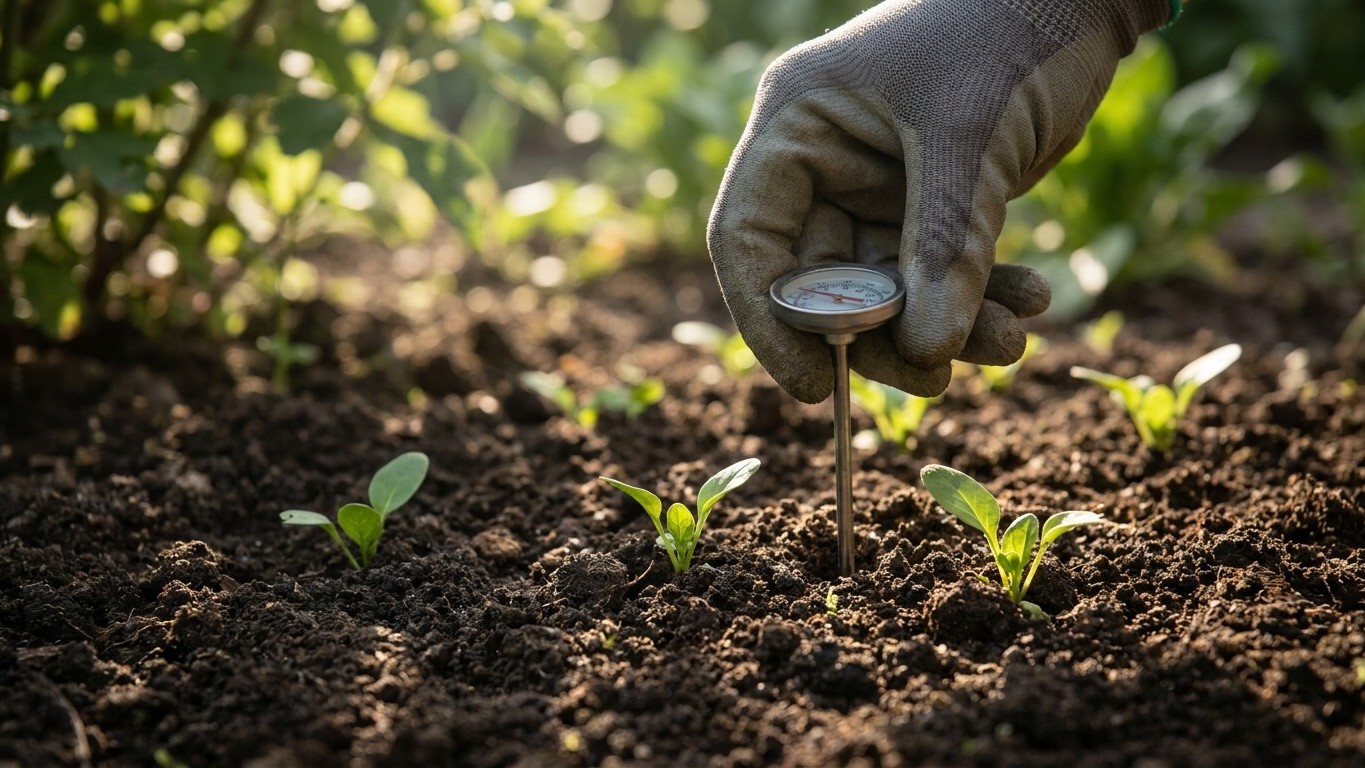
Soil temperature is the number one variable you can actually influence. In the fall, sow seeds when the soil is 70°F or cooler rather than relying on the calendar alone, since a hot spell can push even mid-August soil back into the danger zone. A soil thermometer pushed two inches down costs less than a bag of seed and removes the guesswork entirely.
If your region is still baking when the calendar says it’s time to plant, a few adjustments buy you room. If it’s very hot around the time you’re planting spinach, try planting in a partially shady garden bed, covering the bed with shade cloth to keep the soil cooler, or pushing your planting back a week or two to see if the weather cools. Mulch does double duty here too, since a layer of compost or straw keeps roots insulated from surface heat spikes while also retaining the moisture spinach needs to avoid stress-triggered bolting.
Seed preparation helps close the gap on stubborn soil. Some growers report success chilling seed before sowing: putting the seed in sturdy resealable plastic bags or jars in the freezer for about two weeks, then taking it out the day before sowing without opening the bag until it warms to ambient temperature prevents condensation from ruining the remaining seed. It’s a small trick, but it can mean the difference between a patchy row and a full one.
Variety selection is worth a second look too. Not every spinach behaves the same way once summer heat lingers into the sowing window. In hot August weather, bolt-resistant varieties out-yield the standard varieties that grow faster in spring, so a packet labeled for heat tolerance is a smarter bet for a late-summer sowing than whatever performed best back in April.
What surprises most first-time fall gardeners isn’t the planting itself, it’s how forgiving spinach becomes once the calendar tips past that mid-August threshold. Cooler nights arrive, day length starts shrinking, and a crop that seemed impossible to keep alive in July suddenly turns reliable, sometimes even producing again after a winter mulch and a snowmelt come spring. The rows that stay in leaves right into autumn aren’t the ones planted earliest. They’re the ones planted on purpose, at the moment the soil finally agrees to cooperate.
Sources : tendingmygarden.com | gardeningknowhow.com