
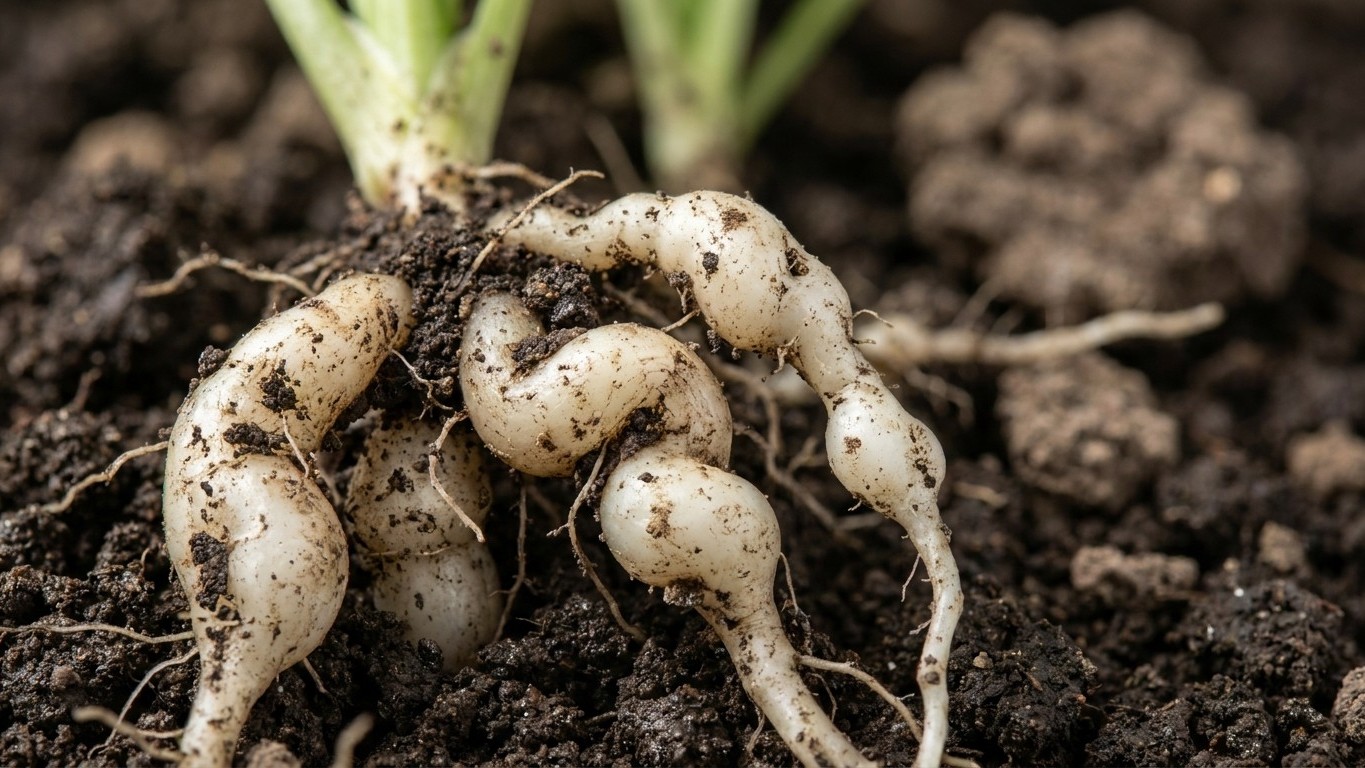
Mustard has become the default green manure for backyard vegetable gardens across the United States. It grows fast, smothers weeds, and adds a satisfying tangle of green to bare beds. The problem: if you just pulled cabbage, broccoli, or kale out of that same patch of dirt, sowing mustard next is one of the worst things you can do for your soil’s long-term health.
The reason has nothing to do with mustard being a poor plant. It has everything to do with what mustard actually is. Botanically, mustard belongs to the Brassicaceae family, the exact same family as cabbage, cauliflower, kale, and turnips. It is a brassica, so never sow it before or after cabbages, broccoli, or other brassica crops as it can harbour clubroot. That single fact undoes most of the good a green manure is supposed to do.
Key takeaways
- Mustard and cabbage are botanical cousins in the brassica family—planting one after the other traps a soil disease that survives for 10-20+ years
- Clubroot is a soilborne pathogen that deforms roots into useless clubs and can silently wreck entire brassica harvests before you notice wilting
- Phacelia offers identical green manure benefits—fast growth, weed suppression, organic matter—while staying neutral to crop rotations and attracting pollinators
The clubroot problem hiding under your cabbage patch
Clubroot is not a passing inconvenience. It’s a soilborne pathogen, classified as a member of the group of protists named Cercozoa, that distorts roots into swollen, useless clubs and can quietly wreck an entire brassica crop before you even notice the leaves wilting. All members of the cabbage family are susceptible to clubroot, including cabbage, cauliflower, broccoli, Brussels sprouts, kohlrabi, kale, radish, turnips, rutabaga, mustard greens, collard greens, arugula, bok choy and canola. Notice mustard greens right there on the list. Sowing mustard as a “cleansing” green manure after cabbage doesn’t break the disease cycle. It feeds it.
What makes this especially frustrating is how long the pathogen sticks around. It has the potential to survive for ten to twenty years in the absence of a host crop, and some sources push that estimate even further. Some research has shown that clubroot has a half-life of four years and is undetectable after 17 years, while other reports claim that resting spores can last for 20 years or more. Once you understand those numbers, mustard’s fast growth stops looking like a virtue and starts looking like a liability. You’re not just wasting a season, you’re actively topping up a soil reservoir that will outlast your next several harvests.
Gardening forums that deal with real clubroot outbreaks are blunt about it. One allotment guide puts it plainly: mustard is a member of the brassica family and will act as a reservoir for the club root. Extension services echo the same warning about weedy relatives lurking in hedgerows and rotation plans. Control wild mustards and other weedy brassicas if they are a problem during rotations.
Phacelia does the job without the risk
Phacelia tanacetifolia, sometimes sold as lacy phacelia or “bee’s friend,” solves the exact problem mustard creates. It fills the same role, fast cover, weed suppression, organic matter, without belonging anywhere near the cabbage family tree. As one seed supplier notes, because it’s not a brassica or legume, phacelia is easy to incorporate into crop rotations.
The growth speed rivals mustard’s. It germinates rapidly and covers soil within 4-6 weeks, thanks to fine fibrous roots and rapid canopy cover that also help reduce erosion and improve soil structure. Where mustard leaves you with bulk and little else, phacelia brings a genuine bonus: it’s highly attractive to bees, hoverflies, and other beneficials. Plant it where your brassicas used to be, and instead of stockpiling disease spores, you’re building a small pollinator waystation right in your vegetable patch.
The soil chemistry benefits stack up too. Recent agronomic coverage highlights significant green manure biomass that translates to higher soil fertility, along with improved water percolation that protects against both drought and flooding. One study cited in gardening research even found that phacelia’s carbon-storage potential outpaced other green manures tested over a short window, a detail that matters if you’re trying to rebuild organic matter after years of intensive brassica cropping.
Building phacelia into a real rotation
Timing Matters More Than most gardeners assume. Phacelia isn’t meant to sit in the ground forever. Guidance from cover crop specialists suggests terminating it 8-10 weeks after sowing, by mowing, incorporation as green manure, or letting it flower for pollinator benefit before tilling. Chop it in too late and you lose the nutrient timing window; too early and you sacrifice the pollinator payoff.
Phacelia also plays well with other non-brassica green manures if you want more nitrogen alongside the organic matter boost. A phacelia-vetch mix is a common pairing precisely because vetch is a legume, not a brassica, and the mixture protects and improves soil over winter while remaining neutral in terms of crop rotation, since it doesn’t contain any brassicas or cereals. Fields trials in the UK have gone further, testing clover and other break crops specifically to interrupt brassica disease cycles. Rotating into soybean, corn, and clover may decrease clubroot levels in subsequent Brassica crops.
None of this means mustard is worthless as a green manure everywhere. On a bed that never grows cabbage, kale, or their relatives, it remains a legitimate quick-cover option. Mustard grows faster than any other green manure, and sown from March to September, you’ll have a dense stand in 4-6 weeks. The fix isn’t banning mustard from your garden shed. It’s simply keeping a mental map of which beds grew brassicas last, and reaching for phacelia, vetch, or clover on exactly those patches instead.
Sources : farmonaut.com | fruithillfarm.com