
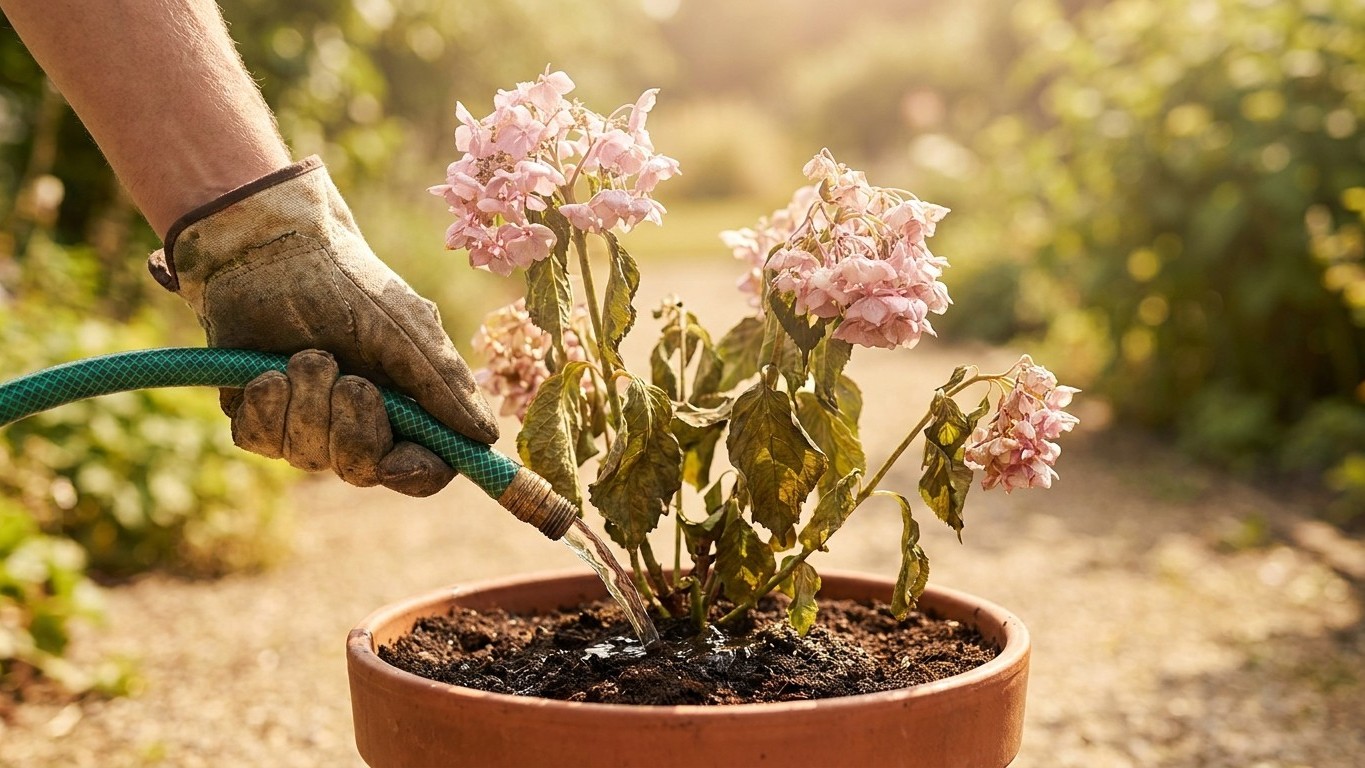
August afternoons turn hydrangea leaves into limp, drooping flags, and the instinct kicks in: grab the leftover coffee grounds from this morning’s pot and sprinkle them at the base, hoping for a miracle fix. That ritual has been repeated in gardens for generations, but the truth is far less romantic. Brewed coffee grounds barely touch your soil’s pH, and the real rescue for a wilting hydrangea happens with a hose, not a coffee filter, timed for the cooling hours of the evening.
Key takeaways
- The acidic coffee grounds myth has been debunked by soil science — brewed grounds are far too weak to shift soil pH or change bloom colors
- Wilting hydrangeas in August aren’t suffering from soil chemistry; they’re desperately thirsty and need properly timed, deep watering
- One overlooked detail changes everything for container hydrangeas: they need watering every 2-3 days during heat waves, not just once
Why Coffee Grounds Aren’t the Miracle You Think
The whole coffee-grounds legend rests on the idea that they’re acidic enough to nudge soil pH down and turn hydrangea blooms a deeper blue. Soil scientist Linda Brewer at Oregon State University Extension puts it plainly: spent coffee grounds are only slightly acidic, with a pH of 6.2 to 6.9. The confusion comes from the coffee you drink, since brewed coffee is acidic with a pH of 4.8 to 5.1, which may be the source of the belief that coffee grounds can lower soil pH, but the acidity washes out of the coffee beans when they are ground and brewed.
Even if a small pH shift did occur, it wouldn’t last. Research shows that whatever change coffee grounds bring to the soil is short-lived, so gardeners shouldn’t depend on them to keep a lower soil pH. Worse, some studies found the opposite of what people expect: there have been reports of gardeners getting mixed results, and one researcher tracking soil treated with grounds found that soil treated with spent coffee grounds got more basic over the course of 2 to 3 weeks and then gradually decreased in pH after that. That’s the opposite direction of what a pink-to-blue conversion requires.
None of this means coffee grounds are useless in the garden. Used coffee grounds can help you grow bigger and better hydrangea blooms simply because they help enrich the nutrients in the soil and can aid in water retention. Think of them as a light compost booster, not a color-changing potion. If you’re after genuinely blue blooms, the science points elsewhere: for a hydrangea to undergo that color change, the soil must contain aluminum, and it must be acidic, because only in acidic conditions are the aluminum ions free from their bonds so the plant can take them up.
The One Evening Gesture That Actually Revives the Plant
Here’s what nobody mentions over coffee: a wilting hydrangea in August is almost never a soil-chemistry problem. It’s a water problem, and the fix is a deep, well-timed soak. Hydrangeas aren’t big fans of the heat and sun, so you’ll likely see them bounce back in the evenings when the weather cools down. That drooping you see at 3 p.m. is often just the plant protecting itself, not a distress signal that requires drastic intervention.
Still, thirsty roots need real hydration, and timing changes everything. While you can opt to water your hydrangea in the evening, it’s often preferred to do so early in the morning, so the roots can properly absorb the water and rehydrate before the heat of the day arrives. When mornings aren’t an option, evening becomes the second-best window, the next best option during prolonged periods of extreme heat, but avoid watering in the middle of the day when much of that moisture is lost before roots can absorb it.
Technique matters as much as timing. Skip the overhead sprinkle and go straight for the root zone. You shouldn’t water over the shrub, but rather go straight to the base of it, watering the soil, not the foliage and flowers. Wet leaves overnight are an invitation for trouble: fungal spores love moisture, and when water sits on leaves for six to eight hours overnight, those spores have all the time they need to settle in and start spreading. A slow trickle at the base, given generously, does more in one evening than weeks of grounds scattered on the surface ever could.
How do you know if the plant actually needs it? Skip the guessing game. Watering without checking is often the cause behind overwatering hydrangeas, so figure out if the plant needs it by sticking your finger into the ground; it should be damp at the second knuckle, and if not, give it a drink. That thirty-second check prevents both underwatering and the soggy, root-rotting mess that comes from watering on autopilot.
Beyond the Hose: What Really Keeps Hydrangeas Thriving
Mulch is the unsung hero of August hydrangea care, and most people skip it entirely. A few inches of organic material around the base does what neither coffee grounds nor sporadic watering can: deep watering prior to a heat event keeps the root zone well hydrated, and placing mulch, such as bark, around plants helps keep in moisture. Just steer clear of certain materials, since gravel or plastic sheeting will backfire by trapping heat instead of blocking it.
Resist the urge to reach for pruning shears or fertilizer the moment a heat wave hits, too. Extension horticulturists are consistent on this point: avoid pruning, since the resulting lush new growth will be sensitive to further damage from heat waves later in summer, and avoid fertilizing since excess fertilizer can attract pests to the plant. A stressed hydrangea needs stability, not a growth spurt it can’t support in 95-degree weather.
One more overlooked detail: containers behave nothing like garden beds when the mercury climbs. During heat waves, potted hydrangeas need extra water every two to three days, since container plants dry out much faster than those in the ground. If your hydrangea lives in a pot on the patio, that evening watering ritual isn’t optional garden folklore. It’s the difference between a shrub that limps through September and one that never really recovers until next spring.
Sources : aol.com | homesandgardens.com