
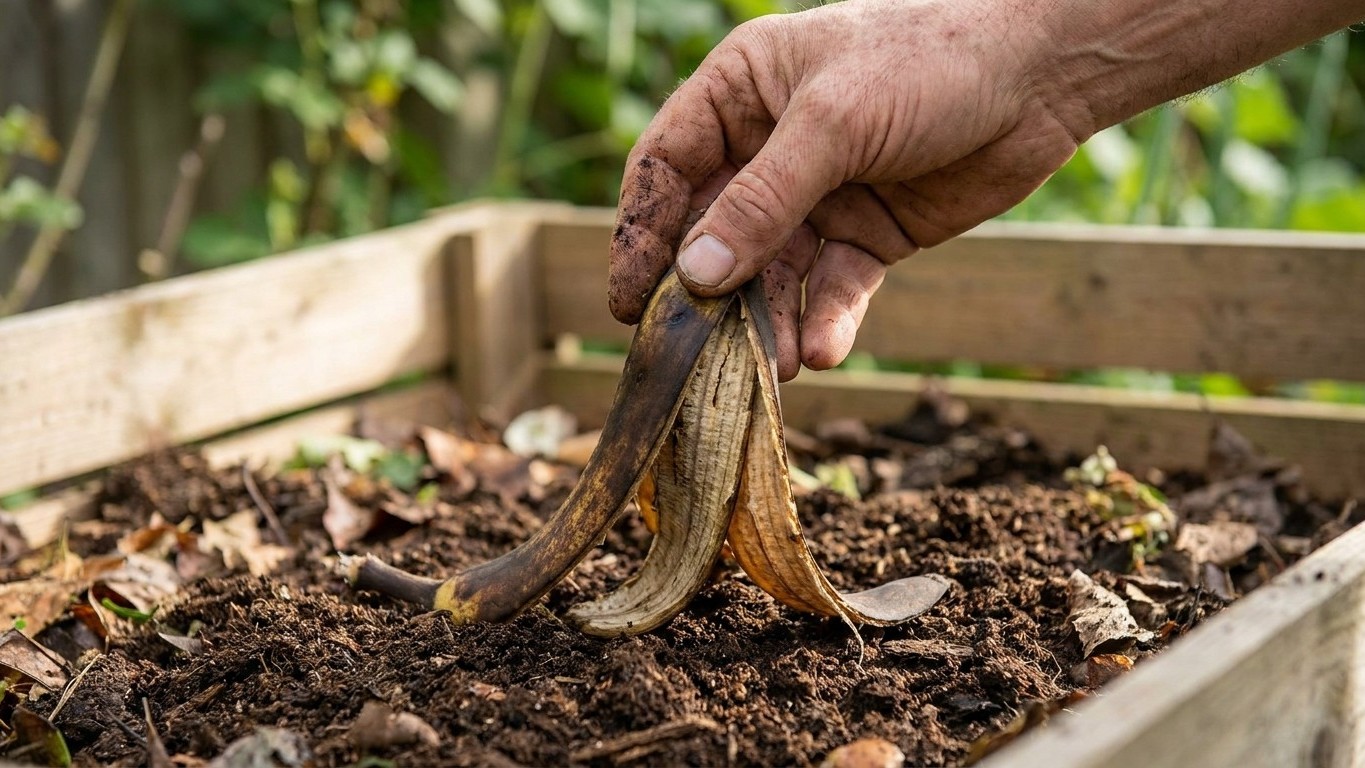
Ants. Dozens of them, marching in and out of a soggy, blackened mass that used to be banana peels. That’s what I found last month when I finally dug up the little “fertilizer” trench I’d built at the base of my rose bushes four weeks earlier. No golden burst of nutrients, no visibly happier canes. Just a colony that had clearly decided my rose bed was prime real estate.
I’d read the same advice you’ve probably seen scrolling through gardening forums: bury a banana peel or two near your roses, let it rot, and watch your blooms explode with color. It sounded almost too easy, too free. Bananas are cheap, everyone has peels to spare, and the idea of turning kitchen trash into rose food feels like the kind of win every home gardener wants. So I tried it. What I actually attracted was a lesson in how garden folklore survives long after the science has moved on.
Key takeaways
- Banana peels don’t decompose fast enough in shallow soil, creating conditions that attract ants, flies, and rodents instead of feeding plants
- Even fully decomposed peels contain far too little potassium (0.9%) to meaningfully fertilize roses compared to standard fertilizers
- Burying raw organic matter near roots can trigger nitrogen tie-up, temporarily starving plants of nutrients they need
The pests showed up before the nutrients ever did
The peels hadn’t really decomposed the way I expected. Instead, they’d turned into a slick, half-rotten layer that clearly wasn’t feeding anything yet. Fresh peels can create anaerobic conditions in soil, leading to root rot and other moisture-related problems, since the thick, waxy coating on banana peels resists breakdown and can create barriers that prevent water and air movement in soil. That waxy resistance is exactly why my trench looked more like a swamp than compost after a month underground.
And the ants weren’t an isolated incident. Sweet-smelling scraps can draw more pests and produce odors, attracting flies and rodents when placed directly in rose beds, since the high sugar content and moisture create ideal breeding conditions for insects and can lead to unpleasant odors as decomposition begins. I didn’t get rats, thankfully, but I can see exactly how a neighbor with a less tidy yard easily could. One gardening resource dealing with a real rodent problem put it plainly: whole peels buried in garden soil decompose slowly and can attract rodents, ants, and fruit flies, something anyone dealing with a local rat population would want to avoid.
The potassium promise falls apart under scrutiny
Here’s the part that actually surprised me most: even if the peels had broken down perfectly, they wouldn’t have delivered much. A fresh banana peel contains roughly 0.9% potassium by weight, along with small amounts of nitrogen and phosphorus, a very low concentration compared to even a basic organic fertilizer, which might contain 4 to 6% potassium. Put another way, you would need to bury dozens of peels around a single tomato plant to match what a tablespoon of balanced fertilizer provides. My two or three peels per rose bush weren’t feeding anything meaningfully, pests aside.
There’s a second, sneakier problem that I hadn’t considered before digging in. Research from the University of Florida Extension notes that burying undecomposed organic material near plant roots can temporarily rob nitrogen from the surrounding soil as microbes work to break it down, a “nitrogen tie-up” that can actually slow plant growth in the short term. So not only was my trench not feeding my roses potassium, it may have been quietly starving them of nitrogen while the soil microbes scrambled to digest all that sugary peel matter. And roses are demanding plants to begin with: the phosphorus content in banana peels is also inadequate for supporting rose root development and flower production, since roses produce multiple bloom cycles throughout the season, each requiring substantial phosphorus reserves that banana peels can’t supply.
Potassium is real, the delivery method just isn’t
None of this means banana peels are garden trash. The kernel of truth in the whole trend is legitimate: roses do appreciate potassium, which supports flower quality and general vigor, and compost already provides that, along with better drainage and nutrient holding. The mineral is in there. The problem is timing and access, not the presence of the nutrient itself. For plants to utilize the potassium, it first has to get broken down either by fungi or soil microbes, which is precisely what a shallow, month-old trench in cool soil doesn’t reliably accomplish. A soaking bucket of peel water has the same limitation: the potassium extracted into the water won’t transfer to plants easily, since it is not readily available through extraction alone and most plants require it to be broken down by fungi or microbes first.
If you still want to try the direct-burial route despite everything above, depth is non-negotiable. Gardeners who’ve had better luck bury peel pieces far deeper than I did, cutting them small and burying them in the soil at least 4 to 6 inches deep to ensure they don’t attract garden pests. Chopping and drying also change the equation, since dehydrated peels have less moisture to advertise themselves to hungry wildlife and no sugary surface for ants to swarm.
What I’m doing instead this season
I’ve swapped my trench for the compost bin, where banana peels actually belong. You can use banana peels as fertilizer and it won’t harm your plant, but burying them under a plant can slow down the process that breaks them down and makes their nutrients available, a process that needs air. A properly turned compost pile, by contrast, does that breakdown work in weeks rather than dragging it out underground where oxygen barely reaches. Once that compost is finished and crumbly, a top dressing around the rose canes in spring does more for bloom quality than any amount of raw peel ever will, without the ant highway.
One thing worth remembering if you switch to peel tea or compost from grocery-store bananas: those fruits are rarely organic. Pesticide residue is a safety consideration, since most bananas found in grocery stores are treated with fungicides and insecticides during growth. Composting, with its heat and microbial activity, breaks that residue down far more reliably than a quick soak or a shallow trench ever could. My roses will get their potassium eventually, just through a slower, less dramatic route than a viral gardening tip promised, and without the surprise ant colony waiting for me next time I pick up a trowel.
Sources : tastingtable.com | housedigest.com